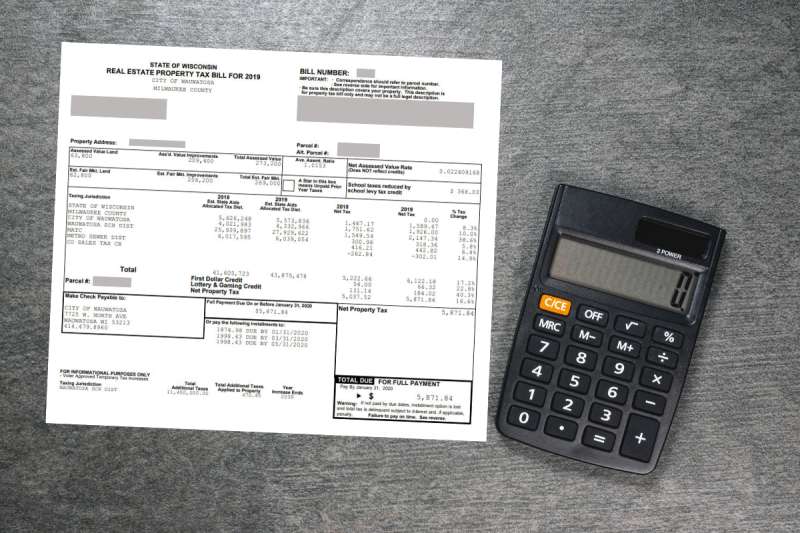
It was big news when Democratic Gov. Tony Evers and Republican leaders in the Wisconsin Legislature announced they had agreed on a spending plan that would use the state budget surplus for property tax relief, special education relief, and direct checks to Wisconsin families.
It was equally big news that the bipartisan package failed after bipartisan criticism.
Question of the Week: Did Gov. Evers make a good deal with Republicans?
From a purely political standpoint, leaders from both parties may feel content to wait until after the November elections for governor and legislative seats, but for property taxpayers and struggling school districts, the need for action remains.
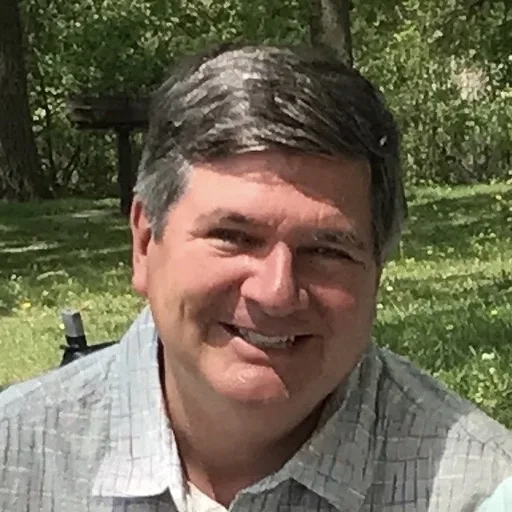
“I think it’s really important to note that there still is time,” said Dr. Joe Gothard, superintendent of the Madison Metropolitan School District. “There’s always time for lawmakers to come back together and participate in true negotiations, where if the whole amount isn’t spent the way that it was determined, maybe they could look at ways to shave some things back. To truly say that our students matter in the state of Wisconsin and that there is funding available for both this year and for next year.”
Part of the failed package included $300 million in state reimbursement to cover local school districts’special education costs.
“We’re underfunded $62 million in special education in Madison,” Gothard said. “So that means every year we’re using $62 million in general funds to cover the unreimbursed costs of special education. So, of course, when I saw the runs on the [proposal] that we would see $4 million additional this year and an almost $11 million additional for next year, it was a really good thing to celebrate.”
Instead, beleaguered school districts appear to be left in fiscal limbo until voters decide who controls the Legislature and the governor’s office. Then, relief will depend on whether those winners can cobble together a better package.
“It’s unfortunate,” said Milwaukee County Executive David Crowley, one of seven Democratic candidates for governor, “because the only folks who actually lose are Wisconsinites. And so what I see moving forward is that we need to bring more people to the table. We have to right size these solutions to fit each community’s needs and we have to broaden the amount of voices that are actually lending to the types of deals that we’re seeing today.”
“We need to make sure that we’re supporting our public schools,” Crowley said. “We need to make sure that we’re providing relief for many of our families here in the state of Wisconsin. But this particular deal that was struck didn’t provide relief for our most vulnerable residents.”
Another candidate for governor, Sen. Kelda Roys, was an early critic of the deal Evers made with Republicans. Roys said she knows the presumptive Republican nominee, Rep. Tom Tiffany, will try to frame legislative Democrats as being opposed to property tax relief because of this week’s vote, but she contends property taxes would not be at crisis levels if it weren’t for a cycle that Tiffany helped start more than a decade ago.
“Tom Tiffany is the reason our property taxes are so high,” Roys said. “The first thing that gentleman did when he was elected by the voters is come down to Madison, vote to defund public education, attack our nurses and our teachers. And that has led directly to the skyrocketing property taxes that we are now facing after 15 years of Republican budgets. If you don’t like how your property taxes are, that is a result of the decisions that Republican legislators, starting with Tom Tiffany, made.”