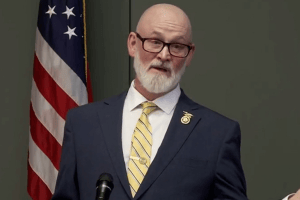
After backing Trump’s “One Big Beautiful Bill” and the 2026 Farm Bill, Rep. Tom Tiffany helped push tens of thousands of Wisconsin residents off FoodShare—while running for governor.
Over the past year, more than 15,000 Wisconsinites have fallen off the state’s main food assistance program, SNAP—also known as FoodShare—following a wave of federal changes. Starting May 1, nearly 40,000 more were put at risk of losing help buying groceries altogether. Here’s how Rep. Tom Tiffany, the northern Wisconsin Republican now running for governor, voted on the bills that got us here.
RELATED: WATCH: Tom Tiffany puts Trump and special interests over Wisconsinites
The first chance
In July 2025, Tiffany backed President Donald Trump’s “One Big Beautiful Bill,” a Republican-favored budget package that cut taxes for the wealthy and slashed funding for programs like Medicaid and SNAP nationally. Tiffany called it a “game changer” and a major win, earning him a Trump-endorsement for governor. On paper, the bill delivered more than $187 billion in cuts to SNAP nationwide over 10 years, making it the largest reduction in the program’s history. It raised work-reporting requirements and froze the formula that determines how much help families get, even as food prices rise.
READ MORE: The ‘real’ GOP primary for WI governor: Trump endorses Tom Tiffany
That’s when Wisconsin officials tried to translate those abstract numbers into real-world consequences. In a 2025 analysis, the state Department of Health and Human Services warned that the Republicans’ “big beautiful bill” would cost Wisconsin taxpayers roughly $314 million a year in lost federal FoodShare funding and new administrative costs. The department said the law would make it harder for parents, children, and older adults to get food assistance by expanding red-tape work requirements and eliminating SNAP-Ed programs that help families stretch their benefits.
Nearly a year later, community groups using federal data found that the number of people on FoodShare had dropped by more than 15,000 in Wisconsin since the bill was signed. A Better Wisconsin Together, a progressive advocacy organization, put the blame directly on Tiffany.
“Tom Tiffany enthusiastically signed off on taking food away from the children and families he’s paid to represent, all so he could score cheap political points and give tax breaks to his billionaire buddies,” the organization said in a statement. “Tiffany clearly values bowing down to Trump and his billionaire buddies over the lives of his constituents. Wisconsinites deserve better.”
The second chance
Tiffany’s second chance to show up for Wisconsinites came at the end of April, when the US House took up a long-delayed reauthorization of the Farm, Food, and National Security Act of 2026. While SNAP is one of the largest and most-reliable markets for farmers, the Farm Bill governs everything from crop insurance to rural broadband. But for low-income families, its most immediate stakes are in the nutrition title—the part that deals with FoodShare.
WATCH: Video: Farmers tell Mandela Barnes what they need in a new governor
During this time, lawmakers had the choice to undo or soften the earlier cuts made from Republicans’ “one big beautiful bill,” or they could cement them.
The bill they advanced did not restore any of the food assistance stripped away by Trump’s budget. Instead, it kept the $187 billion in SNAP reductions in place, maintained the freeze on the benefit formula, and preserved tougher work-reporting rules that anti-hunger advocates say will continue to knock eligible families off the rolls for missing paperwork.
By the end of April, the US House passed the measure on a 224-200 vote. Only three Republicans opposed it, and Tiffany was not one of them.
In the same round of votes, Tiffany also opposed an amendment that would have allowed FoodShare recipients to use their benefits to buy hot prepared foods, like grocery-store rotisserie chicken. Thirty-five House members, including Tiffany, voted against allowing those purchases, even for seniors, people without kitchens, and families juggling multiple jobs who may not have time or the ability to cook every meal at home.
Despite public concern, Tiffany has defended the changes by arguing that they target “able-bodied adults without children” who refuse to work and that the bills do not cut SNAP for those who “truly need them.”
But the makeup of Wisconsin’s SNAP rolls tells a different story. More than 700,000 Wisconsin residents rely on the program in a typical month. Over 60% are in households with children, and about a third are in households that include someone who is elderly or disabled. Many working-age adults who can work already do, and many use FoodShare to close the gap between low wages and rising grocery prices.
State officials have warned that the new rules don’t simply separate workers from non-workers—that’s because they layer on reporting obligations that make it easier for eligible people to lose benefits if they miss a deadline, don’t receive a notice in the mail, or struggle with online systems.
Wisconsin’s state health department has already sought tens of millions of dollars from the Legislature just to keep the FoodShare program functioning under new federal mandates. Millions more are estimated to bleed through just to make ends meet from federal responsibility to state and local responsibilities—hurting Wisconsin taxpayers further.
READ MORE: Tom Tiffany is working to roll back 150 years of birthright citizenship in Wisconsin