Republican Tom Tiffany’s immigration record sketches a far-reaching effort to narrow who can become American and who gets counted at all.
No matter where you live or what you do in Wisconsin, if you’re an American citizen, odds are that your family has gotten their citizenship from the 14th Amendment to the US Constitution.
If your ancestors came to the US after 1868, when the 14th Amendment was ratified, then the children they had here had “birthright citizenship”—in other words, babies born on American soil are Americans.
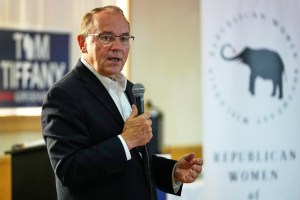
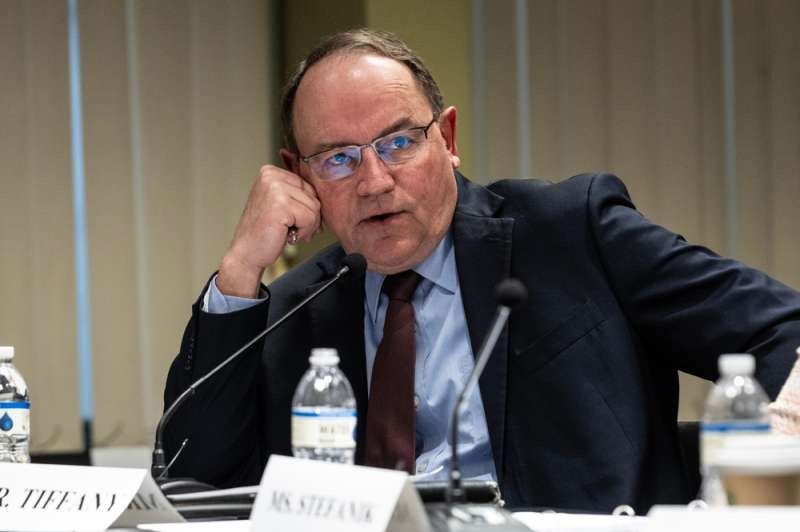
But Wisconsin Congressman Tom Tiffany (WI-07) is working to put an end to that rule.
In 2025, President Donald Trump issued an executive order denying birthright citizenship to children born in the US to parents who are undocumented or in the US on temporary visas. Civil rights groups sued, arguing the order violates the 14th Amendment.
Then, in early April, the US Supreme Court heard oral arguments on the issue, with several justices expressing skepticism about the idea that a president can unilaterally narrow the 14th Amendment. A decision is expected from the Court as early as June.
In Wisconsin, the state joined a multistate lawsuit arguing that Trump’s order would sow chaos in schools, hospitals, and basic government services. But Republican Congressman Tom Tiffany, who is currently running for governor of the Badger State, is going in the opposite direction.
Tiffany’s record on birthright citizenship
Last year in Congress, Tiffany voted in favor of the “Big Beautiful Bill,” which made the US Immigration and Customs Enforcement the highest funded federal agency by awarding them $75 billion in funding in addition to its usual annual budget of $10 billion per year.
Tiffany also co-sponsored the Birthright Citizenship Act, a bill written to mirror Trump’s executive order, effectively codifying his citizenship stance into federal law.
In addition to that, he has also taken to social media to say outright that birthright citizenship “should not be allowed” and praised Trump for trying to end it. Civil rights and immigrant-rights groups warn that if those ideas become law, it would create a permanent class of nationless children born in the US who grow up without the rights and stability that citizenship is supposed to guarantee.
Tiffany’s broader hardline immigration record
This year, Tiffany turned his attention to what he calls “birth tourism,” and to Chinese families in particular. In March, he and Texas Rep. Chip Roy (R-21) introduced the “One Nation, One Visa Policy Act,” a bill that would stop Chinese nationals from entering US territories without a visa and bar them from any visa-free travel program.
“US citizenship is valuable, not something foreign holidaymakers should be able to pick up like a hotel gift-shop souvenir,” Tiffany said when he rolled out the bill, accusing “Communist China” of exploiting an “Obama-era” program.
The Senate version of the bill is sponsored by Florida Sen. Rick Scott (R), who has described the Visa Waiver Program as a “backdoor breeding ground to infiltrate our nation.”
Additionally, after federal immigration agents shot and killed Alex Pretti, a Wisconsin-born ICU nurse for veterans, video of the murder circulated widely on social media and major news outlets. Forty-eight hours later, Tiffany told reporters he still had not watched the footage, even as he called for patience and declined to hold the Trump administration or federal immigration agencies responsible—a response Democrats in the state blasted as a “pathetic excuse” from a man seeking to be governor.
Wisconsin takes Trump to court
In 2025, Wisconsin Attorney General Josh Kaul, backed by Gov. Tony Evers, signed on with a coalition of states suing to block Trump’s order, arguing that it violates the 14th Amendment and would throw basic systems into chaos. They’ve warned that in mixed-status families, where parents may be undocumented or on temporary visas, children born here could suddenly find their status questioned, even though they’ve never lived anywhere else.
School districts are currently barred from denying enrollment based on immigration or citizenship status, and federal civil rights guidance warns that asking about status can unlawfully stop immigrant families from enrolling. If birthright citizenship is narrowed, legal experts say those rules could be thrown into flux, forcing districts to revisit who they treat as “eligible” and what paperwork they require.
For hospitals and clinics, Trump’s plan could upend how staff talk to families about birth certificates, coverage, and follow-up care, and raise fear that seeking care will invite new scrutiny instead of offering a safe place to deliver a baby. State agencies that run programs like Medicaid, BadgerCare, and other safety-net services could be forced to build new systems to sort which Wisconsin-born children “count as citizens and which do not, with families caught in the middle.
What’s at stake for Wisconsin families
For immigrant communities in Wisconsin, the details may change from one bill or court case to another, but the idea is easy to follow. On one side, state leaders are in court arguing that children born here deserve the protections that the Constitution has promised for more than a century, joining with other states to keep those guarantees in place. On the other hand, Tiffany is not just standing with Trump in an effort to redraw that promise—he’s actively proposing angles to do so in case Trump’s efforts fail in the courts.