Wisconsin summers are wonderful times to catch a few shooting stars, take a closer look at the moon, and see all the beautiful, late-night celestial things. With all the open spaces, parks, and trails, there are plenty of great places around the state to stargaze.
According to Reddit, some folks’ favorite spots include Cooper Falls State Park, Harrington Beach State Park, Ellison Bay, Kettle Moraine State Forest, and more.
With at least one event occurring every month this summer, you’re sure to enjoy a celestial event or two. From a blue moon (no, we aren’t talking about Wisconsin’s favorite blue moon ice cream) to meteor showers or even a partial solar eclipse, be sure to carve out some time for stargazing in Wisconsin this summer.
May 31: Blue moon
Have you heard someone refer to an uncommon, special event that happens once in a blue moon? Believe it or not, the color blue has very little to do with the actual event. What actually makes a blue moon, a blue moon, is that it’s the second full moon in a single month.
It is rare for a month to start and end with a full moon. So rare, it only happens seven times every 19 years. May’s second full moon is called a blue moon and will peak on May 31 before sunrise. While you don’t need binoculars to see the blue moon, having them can enhance the experience, but a clear night is your best chance for a great view of this blue moon.
June 21: Summer Solstice
Even though it’ll have been warm for a while by the time the summer solstice arrives, it technically kicks off summer and is the longest day of the year. Featuring the longest day and the shortest night, you’ll have plenty of time to enjoy this summer day to the fullest.
To celebrate the summer solstice, you can find festivals and celebrations around Wisconsin, notably the Summer Solstice Music Festival in Oak Creek. The event runs the entire weekend, but on Jun. 21, everyone will be around beginning at 12 p.m. to 7 p.m. with live music, food trucks, and more!
July 30-31: Alpha Capricornids meteor shower
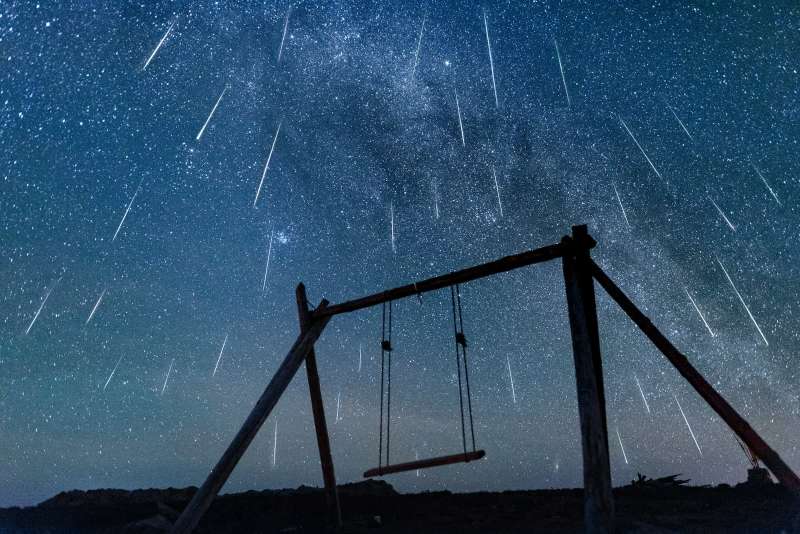
Every year, the Alpha Capricornids meteor shower puts on a show that lights up the sky from approximately early July through mid-August. When it’s at its most active from Jul. 30 to 31, this shower is showing off about five meteors an hour.
If you’re able, get to an area with limited light pollution, meaning the further from the city with all the bright lights, the more likely you are to have a clear view of this shower.
July 30-31: Southern Delta Aquariids meteor shower
Feeling up for a late-night, double feature? You’re in luck. From Jul. 30 to 31, not only will the Alpha Capricornids meteor shower be on display, but you can also catch the Southern Delta Aquariids meteor shower. This shower tends to produce more meteors per hour (closer to double digits), but they aren’t as bright.
For this event, a dark, rural location is even more important because of the full moon a few days earlier, which will brighten up the night sky, making these meteors harder to see. Experts recommend getting to your stargazing location and giving your eyes at least 30 minutes to adjust to the dark.
August 12: Solar eclipse
Between just after noon for about 44 minutes (from 12:04 p.m. to 12:48 p.m), a partial Solar Eclipse will be visible in Wisconsin. Since it’s a partial eclipse, the entire sun won’t be blocked out, but you’ll still get to catch a peek.
Even though it’s only a partial solar eclipse, it’s still important to make sure to wear the proper protective eyewear and not to look directly into the sun.
August 12-14: Perseids Meteor Shower
This meteor shower in August will yield even brighter results than the showers in July because of how dark the moon will be. The Perseids meteor shower peaks. Conditions are excellent as it coincides with a new moon with a darker sky. Stargazers can expect to catch around 50 to 60 meteors each hour. Even though the shower is technically active from Jul. 17 through Aug. 24, you’ll get the best views on these days.
Astronomy fanatics recommend Newport State Park in Ellison Bay, mentioning that this is a great spot to watch meteor showers, as it’s Wisconsin’s only designated International Dark Sky Park.
August 27-28: Partial lunar eclipse
There are three different types of lunar eclipses: penumbral, partial, and total. This summer, Wisconsin will be able to catch a partial lunar eclipse, where the Moon, Sun, and Earth don’t quite totally align. Unlike its daytime counterpart, watching a lunar eclipse doesn’t require any special equipment, just dark skies and great vibes.
Where to watch celestial events this summer
Although Wisconsin only has one designated dark sky park in the state, there are a handful of other spaces that host events for hobbyist astronomers and stargazers alike.
Pringle Nature Center
Location: Woods Park, 9800 160th Avenue, Bristol
Anyone who wants a front row seat to the Perseid Meteor Shower on Aug. 12 can stop by the Pringle Nature Center in Bristol. Viewers will learn a bit more about this celestial event before relaxing back and taking in the view.
Milwaukee Astronomical Society
Location: 18850 W Observatory Road, New Berlin
If you want to catch a glimpse of the beauty of the starry night sky, add a stop to the Milwaukee Astronomical Society to your summer bucket list. Check out the open house dates for the summer, including Jun. 20 and Aug. 27.
Chippewa Valley Astronomical Society
Location: Hobbs Observatory, Beaver Creek Reserve, Fall Creek
Event dates: Friday, Sept. 11 to Sunday, Sept. 13
Join the Chippewa Valley Astronomical Society for Northwoods Starfest from Sept. 11 to Sept. 13. This event promises astronomical observation, presentations, and an incredible time to get to know other astronomers and stargazers.
This article first appeared on Good Info News Wire and is republished here under a Creative Commons license.
Related: Why Wisconsin’s dark skies are disappearing (& how to get them back)