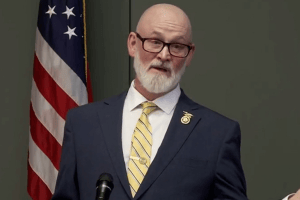
Most people using the internet have heard of algorithms and likely assume that nothing can be done about the mysterious and complex formulas that determine what you see in your social media feeds and what prices you pay when shopping online, but former Lt. Gov. Mandela Barnes says he can make Wisconsin a leader in online consumer protection if he’s elected governor.
Barnes, one of more than a half-dozen Democratic candidates competing in the Aug. 11 primary, released details of a plan to make it illegal for companies operating in Wisconsin to use artificial intelligence (AI) computing tools to charge different prices to different consumers based on data that’s been scraped off the internet—things like browsing histories or even personal and financial information—otherwise known as surveillance pricing.
“Did you ever see a commercial for a service or a product and they’ll go down the rules and they’ll say ‘except in certain states’?” Barnes said to UpNorthNews. “We have to be one of those ‘certain states’ that stands up and fights for people, fights for consumers, and protects the people of Wisconsin from these sorts of scams.”
The Barnes plan would also apply to health insurers who would not be able to deny coverage to patients based on AI technology, and he wants the state to go after social media companies that enable scam artists to use AI features to defraud their customers.
“It is very clear that the system is rigged,” Barnes said, “and artificial intelligence is making that even easier. We will hold these platforms accountable for taking advantage of people across Wisconsin.”
The plan also calls for companies to provide full pricing upfront, without hidden fees that can be tacked on later.
The Biden administration aggressively tackled hidden fees in areas ranging from airlines to event ticket sales and credit card fees. The Trump administration is being equally aggressive in trying to roll back those federal regulations, which is why Barnes believes a state like Wisconsin should lead the way in putting consumers first.
“I think it can be addressed at the state level,” Barnes said. “I think this is one of the areas where we have to show some leadership.
Hot topic among all candidates
Barnes isn’t alone in wanting to rein in the excesses of AI. All of the candidates for governor have been asked repeatedly about AI protections and the rapidly growing construction rate of data centers to house a rising number of computer servers needed for AI’s calculations.
Sen. Kelda Roys has introduced a bill that would prohibit health insurance companies from using AI to deny prior authorization for healthcare. Lt. Gov. Sara Rodriguez devotes a page on her website to demand not only transparency and accountability on AI use but to “make sure Wisconsin workers share in the economic gains instead of just absorbing the losses.”
Joel Brennan, former Secretary of Administration to Gov. Tony Evers, supports a pause on data center construction. Rep. Francesca Hong incorporates a data center construction moratorium in her plan that also bans surveillance wages and would require employers to tell workers and job applicants if any decisions about hiring, firing, and promotions are made using AI rather than human judgement.
Missy Hughes served under Evers as head of the Wisconsin Economic Development Commission and on the Governor’s Task Force on Workforce and Artificial Intelligence, which studied the opportunities for AI in Wisconsin as well as its impact on workers—and emphasized creating paths for education and worker training in AI-related careers.
Milwaukee County Executive David Crowley expressed frustration that the Republican leadership of the state Legislature ended this year’s session without addressing the need for better AI and data center oversight.
Democratic voters in the state’s Aug. 11 primary will choose the nominee who runs in November against US Rep. Tom Tiffany, the presumptive Republican nominee. Tiffany was asked by TMZ what he would tell college graduates worried that AI could cause significant harm to their career prospects.
“Find a job that AI can’t replace, that would be my message,” Tiffany said, promoting technical colleges while acknowledging concern for people who put their “heart and soul into a career, especially a white collar career, that maybe some of those jobs are going to go away.”
“There are gonna be a lot of jobs that are gonna be in high demand. I think you’re gonna find more and more young people that are gonna want to get technical skills that AI can’t replace,” Tiffany said.
“Nothing more out of touch than a DC politician saying it’s on young people to deal with AI replacing their jobs,” Barnes responded at the time.