Nobody ever told me how hard it is to make friends as an adult. In school, you make friends with the person you sit next to on the first day of class. It’s almost effortless. A couple of questions about an assignment turn into long conversations about your favorite TV show or next week’s big game.
As an adult, work replaces school. You can still make friends there, but it’s not as easy. Everyone you work with, unlike at school, is in a different phase of their life. It’s a place where a twenty-something right out of college might sit next to a 60-year-old about to retire. Of course, they can still become friends, but it’s not quite the same. And that’s not even factoring in those of us who work remotely—then you really don’t have an option to make friends at work. Apart from the occasional Slack message or awkward Zoom call, there’s not much time to interact organically.
Right now, I work in the office three days a week, but I’ve recently realized I’ll need to work remotely more often because my office building is undergoing a 40-month renovation. Faced with this inevitability, I started thinking about places to go outside of my apartment. I began searching for a third space.
What is a third space, you ask?
A third space is the place you go when you aren’t at home (your first space) or work (your second space).
Back in the day, there were tons of third spaces in small-town Wisconsin. I think back to my grandparents’ youth, and the stories they told about polka dances and roller rinks. In the 1960s, you didn’t have to “build community” in Wisconsin; you just had to walk outside. The social network was baked into the landscape, from the corner dime store to the old tavern and the small white church on the hill.
But as time went on, convenience and efficiency grew in importance. Instead of a few small shops downtown to get your groceries and supplies for the week, you went to a mega store like Walmart, where everything is in one place. And then online retailers made it so you don’t even have to leave your house to run errands.
You don’t need to go to a bookstore to buy books or to a movie rental place to get movies. Anything you could possibly want to watch, read, or listen to is just a tap away on your phone, unlocked by a monthly subscription fee. While the convenience can be nice, this lack of friction has also taken with it many of the opportunities to build community organically.
I think we were so excited by the progress that we didn’t take the time to think about what we were leaving behind. That is, until the pandemic in 2020 forced us all to slow down and think about what technology and convenience can’t replace—genuine human connection.
Being stuck in our first and second spaces exclusively for the better part of two years was a wake-up call. It showed us how important those third spaces really are for our communities and our own mental health and happiness.
So now I’m right back where I started, searching for third spaces in my small town. And I’m happy to report they seem to be coming back.
Local businesses building community
They don’t look exactly like the polka halls of my grandparents’ youth, but they serve the exact same purpose: places to gather simply for the sake of being together. You can see it in spaces like Collect and Gather, which hosts free workshops and crafting events for the community. You see it at CREATE Portage County, where a former convent has been renovated into an idea center for local artists and creators to collaborate. And then there’s Back to the Vinyl in downtown Waupaca.
Just a few years ago, Waupaca’s Main Street felt a bit empty—haunted by the quiet aftershocks of the pandemic and the long-term migration to big-box retail. But a recent city grant helped fund a complete downtown renovation, paving the way for small businesses that encourage people not only to shop but also to linger.
Back to the Vinyl
Back to the Vinyl is one of those businesses creating a third space, having opened its doors for the first time during the summer of 2023. The original store could fit only a handful of people at a time, and that was fine at first, until owners Jenn and Marty Milner started hosting listening parties—events where fans gather and hear an album before it’s officially released.
Their first listening parties were relatively quiet, but that changed when “Clancy” by Twenty One Pilots came out in May 2024. There were too many people to fit in the store, so a speaker was pointed outside, and the music was cranked up. A simple patch of woodchips served as the venue, but that didn’t matter.
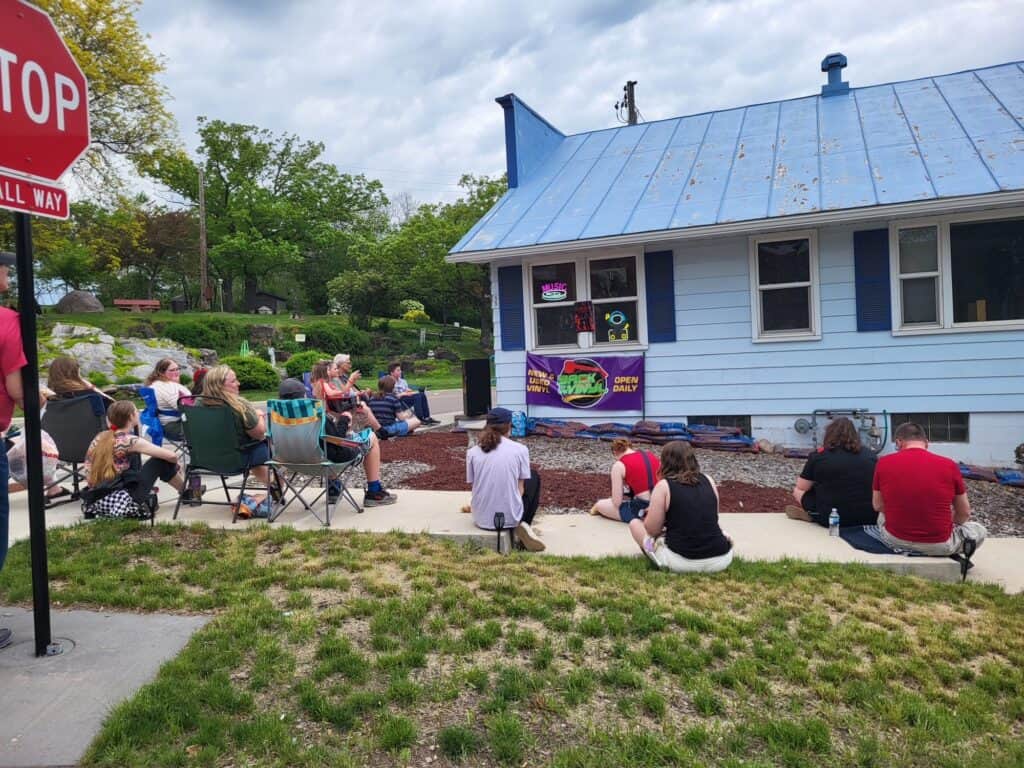
Jenn noted that while many locals still didn’t know the shop existed yet, the Twenty One Pilots fanbase was so deeply connected that the store became a natural meetup spot. “They’ve created enough community that we were just a convenient place for them to gather and celebrate,” she said. “It’s nice having people gather, share the same interest, and all be able to do it at once.”
As the listening parties continued to grow, the store moved to the larger downtown building it’s in now, with plenty of space for everyone to gather inside—an important requirement for cold Wisconsin winters.
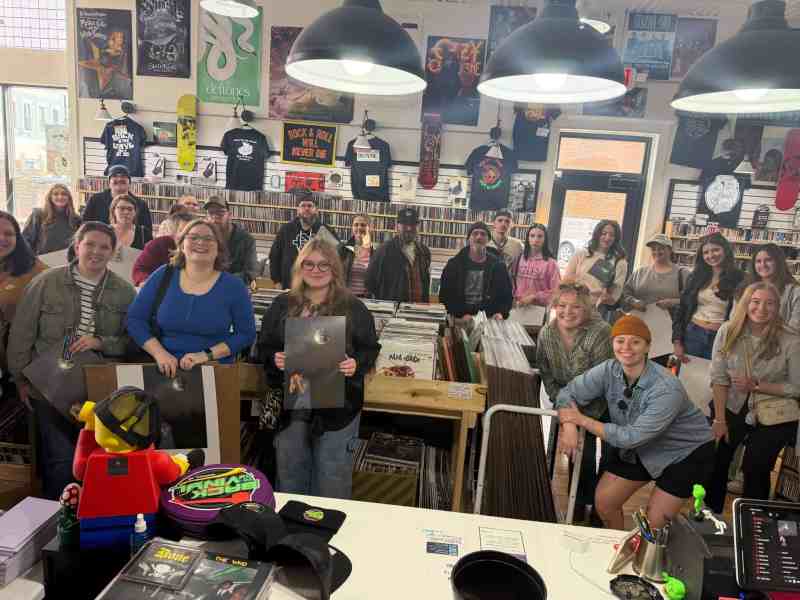
Today, if you walk into the shop, you’ll see a variety of people, from the loyal band of high school students looking for their favorite artists to the Gen-Xers looking to rebuild the vinyl collections of their youth.
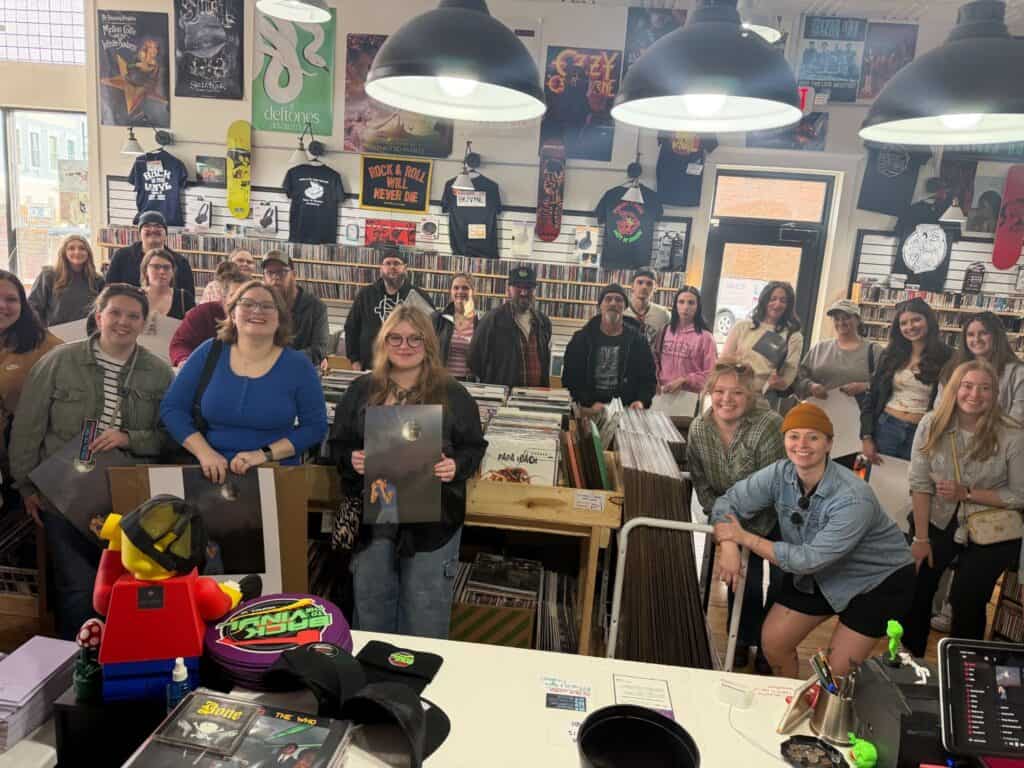
“We get people from all over the place—older people, younger people, single people, couples, parents and kids, people that could use a friend. People come in by themselves and just want to talk,” she continues. “Music bridges generations in a lot of ways. It’s a way to relate to people of all different ages and lifestyles, and if we can connect in this one way, maybe we can connect in more ways.”
It is a beautifully simple philosophy, and it’s the reason why the future feels a little less lonely.
As my own office building prepares for its long renovation, the reality of working from home feels a little less daunting, knowing that spaces like these are finding their way back onto our Wisconsin Main Streets. They are places where you can trade the sterile convenience of Amazon for a little social friction that brings with it plenty of genuine human connection.
Online algorithms can track our data and predict what we might want to buy or listen to, but they can never truly know us the way a person can. When we step outside our apartments and embrace that bit of real-world friction, we aren’t just running an errand; we are reclaiming the third spaces we’ve unknowingly been craving.
This article first appeared on Good Info News Wire and is republished here under a Creative Commons license.
Related: This Wisconsin Community Worked Together To Solve A Problem