Subscribers to our weekly political newsletter saw this story first. Subscribe here.
It’s difficult to say when the proliferation of data centers officially became a hot topic around the country, but there’s a pretty good benchmark of when it broke through as an issue in Wisconsin: Charlie Berens stepping beyond his comedic boundaries to rally opposition to their unchecked growth.
The Guardian newspaper has taken notice with extensive interviews of the man behind the “Manitowoc Minute” videos, following him to town halls in places like Juneau.
“This is the most bipartisan issue since beer,” Berens is quoted as saying at the event..
While it’s clear the general public has bipartisan concerns—with 70% of Marquette Law School poll respondents saying data centers create more costs than benefits—that sentiment has not caught on in the state Capitol. In the recently-completed session, Republicans blocked a Democratic bill to strengthen oversight of data center construction—but they also failed to pass their own bill containing much weaker protections for Wisconsin utility ratepayers and the state’s natural resources.
The lack of any new oversight is troubling, say data-center critics.
“We need regulation for communities, but we also need it for good business,” said Rep. Angela Stroud (D-Ashland), co-author of the Democratic bill. “I mean, we all know that certainty is what investors are looking for. And so, communities need it. The state needs it. These businesses need it. Everybody needs us to regulate this industry. And so the failure to do that in this session is really a glaring failure of the majority.”
Big tax breaks, few guardrails
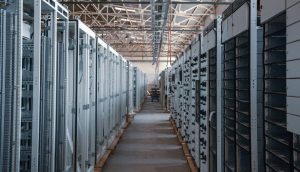
Stroud and others are calling for improved regulation of data centers because they say they are not going away. Proponents say that like similar efforts to fend off the automobile, television, and indoor toilets, opposition to data centers altogether is futile. As computing becomes more complex, especially with the growth of artificial intelligence (AI), there will be an ever-expanding need to create and store the servers that do complex calculations and store infinite files, photos, and other data points.
“The question is not whether our region will be part of this story,” said Trevor Jung, a Racine city council member and Democratic candidate for the Wisconsin State Senate. “The question is who will write the rules, and who will they favor?”
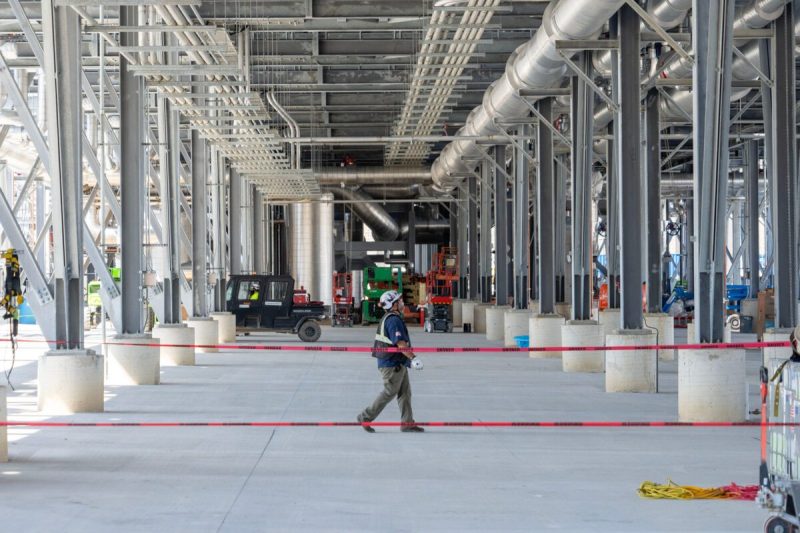
Of the 53 data centers currently operating in Wisconsin, 31 are located in the southeast corner of the state, according to industry resource Data Center Map. At least a dozen more are proposed throughout the state. The counts vary as some locations have more than one data center at their sites.
Wisconsin and its neighbors are being courted because data centers are hot commodities, literally. All of those active servers generate heat, so operators need cooling systems that are cost effective. Cooler weather in the Midwest helps address this issue, as does proximity to fresh water that could be pumped in massive quantities, if allowed.
Another reason for the courting is the potential for tax breaks. Wisconsin is already losing out on about $2 billion in tax revenue because the 2023-25 state budget created an exemption from state and local sales taxes on the purchase of equipment and building supplies to construct multibillion-dollar facilities.
There was an additional incentive to build data centers in Wisconsin that has recently fallen out of favor: Secret deals. Public opposition mushroomed as more became known about the number of local governments that signed nondisclosure agreements (NDAs) with large technology companies, only revealing the proposal to build a massive data center in their communities after months of discussions out of the public eye.
Bills were introduced in Madison to ban NDAs for data centers, but like other related legislation, they failed to advance.
Dueling oversight bills
The authors of a brief Republican bill— Rep. Shannon Zimmerman (R-River Falls) and Sen. Romaine Quinn (R-Birchwood)—claim it would allow the Public Service Commission (PSC) to “ensure in rate-making orders that no costs associated with the construction … of a data center are allocated to any other customer.” Stroud said the PSC-submitted testimony said the bill’s language would not do enough to protect ratepayers.
“They just barreled through, which told me they weren’t serious,” Stroud told UpNorthNews. “In contrast, our bill actually did the work of finding the language to partition customer classes and put data centers in their own customer class to protect residential customers and other businesses from the increased cost.”
The Republican bill would not have required the use of renewable energy sources, but if a data center wanted to use renewable energy, it would have to be generated on-site. Democrats called that unworkable and an intentional favor to fossil-fuel utilities.
“Not only would (an on-site energy facility) be more invasive for the communities that are hosting these data centers,” Stroud said, “We can’t actually co-locate in every instance. It was really shocking to me to have to be making the free-market argument to [Assembly Speaker] Robin Vos about how we should let the market help guide us to renewable energy.”
The Democratic bill would have required data centers to get 70% of their power from renewable sources before they could be eligible for the tax breaks offered by the state. It also would have required construction workers to be paid a prevailing wage, the hourly wage and fringe benefits paid to the majority of workers in a particular county, to guard against the hiring of low-wage and out-of-state workers being brought in to undercut the local workforce. An amendment to the Republican bill would have only encouraged the hiring of Wisconsin workers.
Water used for cooling data centers would have to be in a “closed loop” or fixed amount system under the Republican bill. The Democratic bill would have required quarterly reports on water and energy use; and water utilities would have to publicly report if a single customer is using 25% or more of the total water usage among all customers.
What’s next?
Control of the state Senate, Assembly, and the governor’s office are at stake in November, which will determine the fate of potential data-center oversight. All of the Democratic candidates for governor are also speaking out on the need for better protections.
“To have that legislation passed,” Missy Hughes, one of those candidates, told UpNorthNews, “That I would sign as governor and would help me say ‘This is what Wisconsin says is the table stakes for these conversations,’ would be incredibly helpful. Every time we talk with a business about coming to Wisconsin or expanding here, we want businesses that are partners. We don’t just want what the cat has dragged in and we don’t need to accept that in Wisconsin.”
Hand in hand with data center oversight is one of its principal outputs: AI computing, which the candidates also say requires state-level protection for users, consumers, and employees. For example, former Lt. Gov. Mandela Barnes (D), who is also running for governor, has proposed a ban on AI-based algorithmic price-fixing, where different consumers pay different prices depending on consumers’ personal data, buying habits, and even financial status.
“Large grocers like Walmart are setting different prices for the same goods based on your Internet history,” Barnes said. “As governor I’m going after every greedy corporation that thinks they can scam Wisconsinites.”
And citizen-activists like Berens also plan to keep the heat on these issues through the election and beyond, despite criticism that they are straying outside of their lanes of expertise.“I will stick to comedy when our politicians stick to policy and stop protecting big tech—and start protecting the people that put them into office,” Berens said in Juneau to applause.