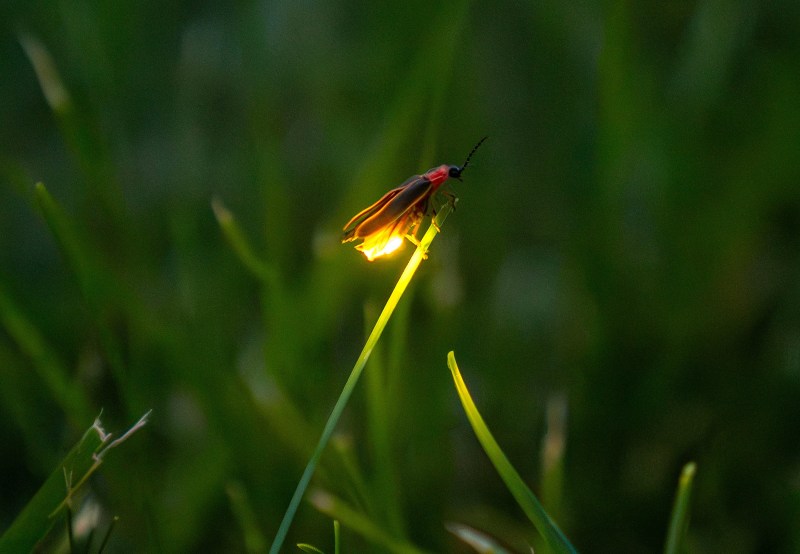
In Wisconsin, the first fireflies of the season typically start to appear in June and stick around until August. The timing is largely dependent on moisture. During years with more rain, fireflies tend to hatch sooner and become more abundant.
P.J. Liesch, director of the UW-Madison Insect Diagnostic Lab, told the Journal Sentinel he hasn’t heard any reports of flashing fireflies yet but expects it will happen soon.
Wisconsin has had minimal drought conditions so far in 2026, likely a result of record-breaking rain from January to April. Only 2% of Wisconsin is currently abnormally dry, according to the U.S. Drought Monitor.
UW-Madison Insect Diagnostic Lab director P.J. Liesch, aka the Wisconsin Bug Guy, said he hasn’t heard any direct reports of flashing fireflies yet, but expects some news imminently.
Liesch – also known as the “Wisconsin Bug Guy” – said fireflies respond to yearlong trends, not momentary changes in climate. While mosquitoes can pop up in a dry year with one good rainstorm, fireflies typically take an entire year or more to properly develop.
When are the best times to see fireflies?
Most fireflies east of the Mississippi River are flashing fireflies, meaning they flicker their bioluminescent abdomens on and off. There are 24 species of fireflies known to call Wisconsin home, and some of them don’t light up at all.
The light-up fireflies are relatively easy to spot, but there are still preferred times to watch their glowing spectacle.
Flashing fireflies emit light to attract mates. Since they need their light to be seen, they usually begin courtship with their twinkling lights at twilight.
From day to day, fireflies prefer warmer, more humid days when courting other fireflies. If it’s a swampy day, chances are fireflies will be dancing about.
Where are the best places to see fireflies in Wisconsin?
Similar to their preference for humidity, you’ll find fireflies in places with lots of moisture.
If you don’t see them in your backyard, venture to a nearby swamp, lake, damp meadow, forest or marsh. During the day, fireflies hide around leaf litter, moss, tree bark and other places with access to moisture.
In the eastern United States, some fireflies have been observed using irrigated lawns and agricultural fields as temporary habitats.
Liesch said southwest Wisconsin will probably get the first fireflies in the state because it warms up sooner than other regions. In general, he said to look for valleys and other similar landscapes where fireflies can dig in.
Liesch had a few suggestions for attracting fireflies:
- Minimize or cut out pesticides, especially mosquito sprays. Mosquito sprays target a wide net of insects, and fireflies are vulnerable to these pesticides.
- Turn off outdoor artificial lights when not in use. Flashlights and decorative lights can disrupt firefly communication if left on unnecessarily.
- Create diverse plant ecosystems in your greenspaces. A variety of native plants and structures will develop a more thorough ecosystem for insect life to prosper.
This article originally appeared on Milwaukee Journal Sentinel: Looking for fireflies? Here’s where you can find them in Wisconsin
Reporting by Caden Perry, Milwaukee Journal Sentinel / Milwaukee Journal Sentinel
USA TODAY Network via Reuters Connect