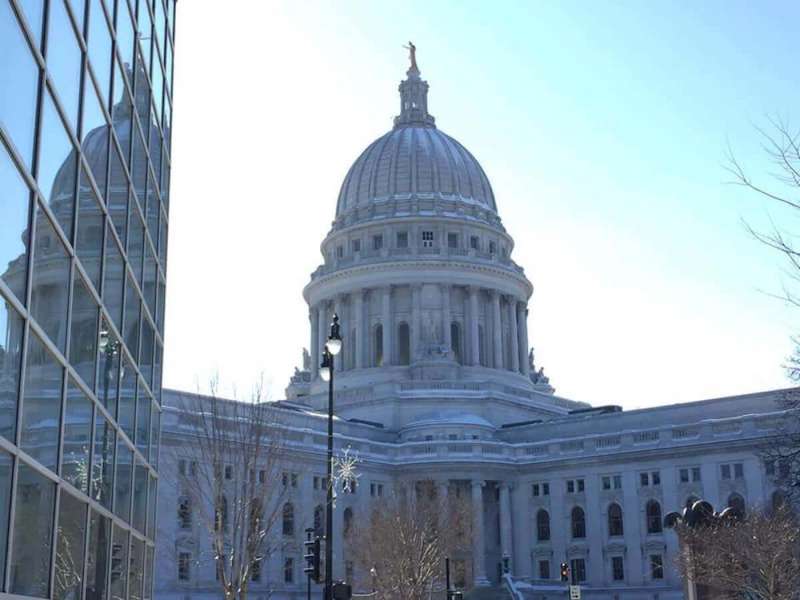
Put yourself in the office of a Republican state legislator in Madison, having won your race in 2024 even though Democratic Vice President Kamala Harris also won your district. You have two options for how to handle the next two years: Show some independence in what is clearly a swing district or hitch your wagon to President Donald Trump, vote consistently with GOP leadership, and hope voters back home agree with you.
In Wisconsin, swing district Republican lawmakers chose the “ride or die” path with Trump and their party leadership on every major issue in the recently completed 2025-26 legislative session.
A review of votes by the liberal group A Better Wisconsin Together (ABWT) found what they call a “striking pattern.”
“Republican legislators voted in lockstep with their leaders, in spite of their districts’ needs and constituents’ opinions,” said its analysis, “after receiving significant financial campaign support.”
It is not a surprise, of course, that Republican or Democratic lawmakers tend to vote a certain way, but it is also not normally surprising to see legislators in closely divided districts style themselves as “mavericks” willing to vote against their party colleagues on issues that might be rewarded by independent voters back home.
Money trumps mavericks
One way that party leaders can discourage maverick tendencies involves a checkbook. Legislative campaigns are expensive affairs and party leaders can steer cash from a variety of sources. The ABWT analysis looked at what the swing district legislators received from Assembly Speaker Robin Vos (R-Rochester) and his campaign committee, the Republican Assembly Campaign Committee (RACC) controlled by Vos, and the Jobs First Coalition, a political action committee run by Michelle Litjens Vos, the speaker’s wife and a former legislator.
Whether political calculations were based in campaign funds, political ideology, or other factors, episodes of independent voting did not happen in any meaningful way with these swing district legislators, the ABWT review revealed:
District 21: Rep. Jessie Rodriguez (R-Oak Creek) – Trump lost the district with 47.9% of the vote compared to her 51.4%, but she voted in lockstep with Vos in 99.66% of floor votes. For example, she voted twice against capping copays for insulin. An absence from a floor session makes it impossible to say if her record would have been 100% in line with Vos. Prior to the session starting, Rodriguez had received $2.1 million from accounts tied to Vos.
District 51: Rep. Todd Novak (R-Dodgeville) – Trump lost the district with 48.2% of the vote compared to his 51.7%, but he voted in lockstep with Vos on 100% of the floor votes in this analysis, including votes against increased funding for schools in his district. Instead, schools received no new state funding and local districts have repeatedly gone to referendum to seek help from property taxpayers. Novak had received nearly $2.4 million from funds with connections to Vos.
District 61: Rep. Bob Donovan (R-Greenfield) – Trump lost the district with 48.9% of the vote compared to his 51.6%, but he also voted in lockstep with Vos on 100% of key votes. That included voting three times against expanding Medicaid to provide healthcare coverage for new moms up to one year postpartum. Only after Vos withdrew his opposition (the night before he announced his retirement), did Donovan vote in favor of the measure. Donovan received $1.5 million in contributions with connections to Vos.
District 88: Rep. Benjamin Franklin (R-DePere) – Trump lost the district with 49.8% of the vote compared to his 50.3%, but voted 100% with Vos on key issues, including two votes against capping insulin costs at $35. Franklin received $675,000 in Vos-adjacent campaign contributions.
The review revealed similar voting patterns among the Wisconsin Republicans who came from districts won narrowly by Trump.
District 30: Rep. Shannon Zimmerman (R-River Falls) – Trump won but trailed Zimmerman’s 54.2% share of the vote. Zimmerman voted 100% with Vos on issues in the ABWT study, but he also missed six Assembly floor session days and more than 200 individual votes on various measures. Among the votes in line with Vos was a measure that would have protected healthcare consumers from insurance company abuses. Zimmerman received $1.1 million from Vos-affiliated entities.
District 85: Rep. Patrick Snyder (R-Weston) – Trump did narrowly win this Marathon County district, but trailed Snyder’s 53.2% total. Snyder also had a 100% voting record in line with Vos on important issues such as rejecting a proposal to fully fund “sparsity aid,” a way to provide extra state funding to rural school districts. Snyder received nearly $1.2 million from groups in Vos’ orbit.
District 92: Rep. Clint Moses (R-Menomonie) – Trump trailed Moses’ 53.2% vote total in this western Wisconsin district. Moses had a 100% record of voting alongside Vos on measures that included failure to improve the state reimbursement rate to school districts for special education. Moses received $255,000 from Vos or groups where he had influence.
There will be multiple swing districts in state Senate races as well. In one example, Sen. Howard Marklein (R-Spring Green) comes from a district where voters in every county favored Supreme Court Justice-elect Chris Taylor over conservative Judge Maria Lazar. Marklein, co-chair of the Joint Finance Committee that writes the state budget bill for the legislative majority, has received $228,000 in contributions from groups connected to Senate Majority Leader Devin LeMahieu (R-Oostburg)—and he voted in lockstep with LeMahieu in 98.84% of covered topics.
Both LeMahieu and Vos have announced they will not be running for reelection, leaving Republicans to choose new leaders in the Senate and Assembly next year.