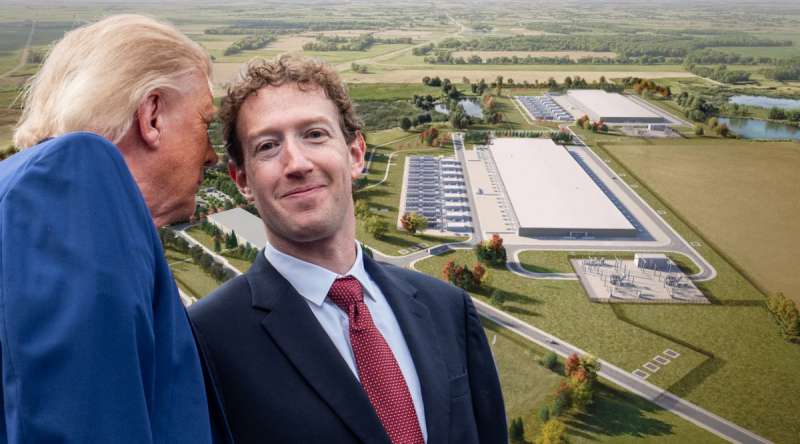
With construction underway despite pushback from surrounding communities, more eyes are on Meta’s AI data center in Beaver Dam as new reporting reveals the trillion-dollar company is exploiting a tax break from the 1980s intended to support research and experimentation—and even its own accounts call it a risky gamble.
Here’s what Wisconsinites need to know.
Related: What are data centers and why are they popping up in Wisconsin?
Meta’s legal loophole
In 1981, as President Ronald Reagan and his administration worried the US would fall behind Japan in the race for technological innovation, Congress created the Research and Experimentation Tax Credit to ease the financial burden of creativity for companies interested in investing in new and exciting inventions.
Three years later, a report from the House Subcommittee on Oversight highlighted that several companies that received the tax credits used them to develop drugs to treat cancer and heart disease or to research different techniques for extracting minerals and fossil fuels.
While tax rules at the time already let tech companies write off research expenses from their taxable income, they could also use the Research and Experimentation Tax Credit, but only if they met criteria showing they were running an experiment, not just launching a new product.
Fast forward to the summer of 2024, and Big Tech companies were racing to see where and how many data centers they could build across the US, encouraged by President Donald Trump and his administration. To offset the cost of computer chips and data center construction, Meta tapped the Reagan-era tax credit despite concerns that the IRS could challenge Meta’s use of the credit to characterize commercial production as research.
Meta has acknowledged the risk in a securities disclosure called “unrecognized tax benefits,” essentially a $19 billion gap between what the company paid to the IRS and what it might owe if the federal tax authority ever challenged Meta.
Despite these concerns, Meta’s use of the tax credit has helped them shave nearly $6 billion off their taxes—a massive spike from the $700 million the company reported in 2023, the year before Meta entered the data center race—which has also helped Meta build over two dozen data centers across the US, including one in Wisconsin.
Last year, Meta announced it would invest $1 billion to build a 700,000-square-foot data center in Beaver Dam that would be “optimized for AI workloads.”
“Meta is thrilled to call Wisconsin and Beaver Dam home, and we look forward to having a strong partnership for years to come,” wrote Meta in a press release, adding that the city in Dodge County has “robust access to reliable infrastructure, a skilled workforce, and great local partners that have been instrumental in propelling this project forward.”
What’s next for Wisconsin?
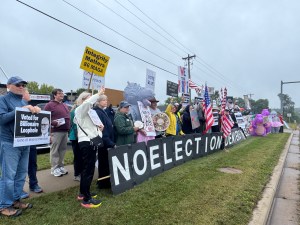
Wisconsinites are pushing back against the construction of data centers like the one in Beaver Dam as news spreads that developers are asking local governments and city officials to sign non-disclosure agreements and keep building plans secret from residents—all while continuing to receive a state tax break—as utility customers’ rates skyrocket.
Related: 3 ways Wisconsinites can get involved as data centers try to creep into their communities
While Wisconsin lawmakers remain deadlocked over data center regulation, Milwaukee County Executive David Crowley said that if Wisconites elect him as governor on Nov. 3, he will review the state sales tax exemption to see whether higher standards would ensure higher construction and employment standards.
“If a data center wants that tax break, it has to earn it: 100% clean power, no secret deals, real money back to the community, and no increase on consumer rates,” Crowley said during a recent event, adding that if tech companies don’t abide by those rules, they won’t “get a dime of public support.”
Crowley faces opponent Rep. Tom Tiffany (R-Wausau) during the Nov. 3 general election. Tiffany has a clear record of supporting lower corporate taxes, deregulating environmental laws, and has even voted in favor of a bill that would have put a decade-long ban on state laws regulating AI.
Related: Data center double-talk: Tiffany’s record gets in the way of his attacks on Crowley
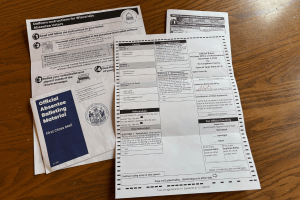
To check your voter registration, see your ballot, or find your polling location, visit the UpNorthNews 2026 voter guide for more information.