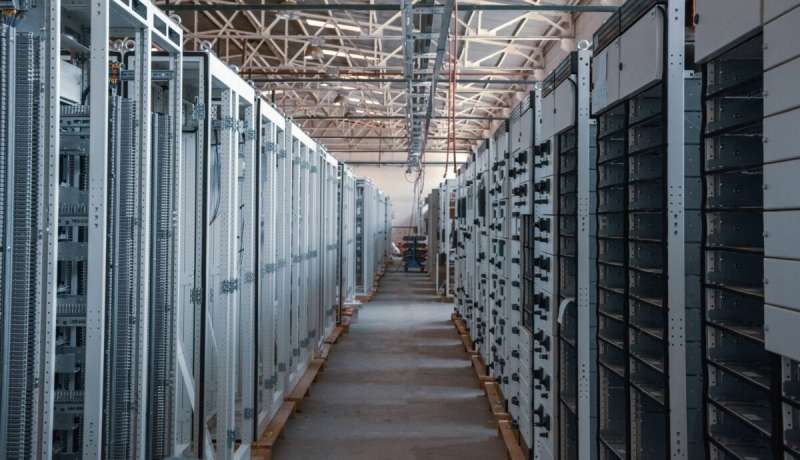
Whether residents like them or not, data centers are continuing to show up across Wisconsin. But for many, questions remain, like what actually are they?
We asked our newsletter audience to share their thoughts on data centers and any questions they may have. Many of our readers wanted to know what data centers actually do, the differences between them, and the impacts they have on Wisconsin’s environment and communities.
We’re here to answer these questions.
What are the different types of data centers?
Wisconsin is home to 53 of the United States’ 4,767 total data centers. These include both traditional data centers and artificial intelligence (AI) data centers—the ones receiving a large amount of opposition from residents.
Traditional data centers focus on computing and storage, similar to your phone or laptop. Many of these data centers had been in operation for years prior to the boom of AI and AI data center development.
AI data centers are the mega centers built primarily for artificial intelligence and require much more energy. These centers provide a source for AI models to be trained and operated.
Why are they coming to Wisconsin?
There are two main reasons you continue to see them popping up in Wisconsin specifically.
First, our state has a large amount of fresh water that can be used to cool the facilities. AI data centers’ computer chips run continuously and will overheat if not cooled properly. These centers utilize both air conditioning and fresh water for cooling purposes.
On average, about 110 million gallons of water are consumed by a medium-sized data center per year for cooling. A large data center alone can consume up to 5 million gallons of water per day.
Second, Wisconsin offers a sales tax exemption that was included in the 2023-25 budget, meaning data centers don’t pay state or local sales tax on equipment and building supplies. This exemption has resulted in around $2 billion in lost revenue.
This sales tax exemption was approved by the Republican-controlled Legislature and Gov. Tony Evers in an effort to attract economic development.
In general, however, Wisconsin is on the lower side of data center development compared to the rest of the country. A 2024 study found that of all the Great Lakes states, Wisconsin had the fewest data centers in operation compared to the rest of the states in the region.
What impacts do AI data centers have on Wisconsin?
While these facilities have the potential to increase job opportunities and economic growth, a Wisconsin Policy Forum report explained how they also strain the state’s water and energy infrastructure.
The Wisconsin Policy Forum also found that this economic activity comes primarily from the construction of the data centers as opposed to actual operations.
Additionally, a 2023 study found that 4% of the country’s total electricity was used by US data centers. According to the Energy Information Administration, federal officials expect that number to rise to 6.7-12% by 2028.
How do people feel about the centers?
Earlier this year, a Marquette University Law School poll found that about 70% of registered voters believe the costs of the data centers outweigh the benefits.
And Wisconsinites across the state have continued to voice their opposition to proposed data centers in their communities. Like in Greenleaf, where an AI data center plan was scrapped after residents and officials made it clear they opposed it.
Some of our readers have voiced their opposition to the centers as well:
“My thoughts have not changed regarding data centers. Wisconsin should say absolutely not to having them. That’s why we live here, so we can keep our pristine waters and not to have all the extra costs passed down to consumers.” — Patricia S.
“Wisconsin needs to eliminate the sales tax exemption. All Wisconsinites who pay taxes are paying for these data center companies to build and develop their businesses, and we often pay for water and electricity usage through raises in our rates. We do not benefit from their profits and our environment is damaged. In addition, they are often not good neighbors with noise pollution.” — Jackie B.
“AI data centers are an abomination. I object to unregulated AI that does not align with public interest. I object to the amount of energy and water use and its contribution to climate chaos. I object on the basis of land use and noise. I object to billionaire corporate takeover of the public interest.” — Laura B.
Where do Wisconsin candidates stand on data centers?
Both gubernatorial candidates Democrat Milwaukee County Executive David Crowley and Republican US Rep. Tom Tiffany have laid out their data center plans if they win the office.
According to his campaign website, Crowley will focus on local control when it comes to the potential development of the centers.
“Local communities should be able to make a decision of whether or not it’s good for their community,” Crowley said at an event in Eau Claire in August. “And if they don’t want a data center, they should be able to stop a data center in this state. But if the community decides that they do want a data center, the builder would have to use union labor. They need to make sure that they are paying for their own energy and paying for the infrastructure upgrades. They cannot pass one penny down to any Wisconsin taxpayer.”
Similarly, Tiffany’s campaign website states that he will also focus on local communities.
“I will make sure that we protect our farmland, and we keep America’s dairyland as America’s dairyland—not America’s data land,” Tiffany said at an August visit to a farm in Coon Valley.
Whether they like it or not, Wisconsinites will vote on the fate of data centers come November, with both candidates laying out the specifics of their plans for the facilities.