Attract the tiny, flying powerhouses to your garden or backyard with these do’s and don’ts.
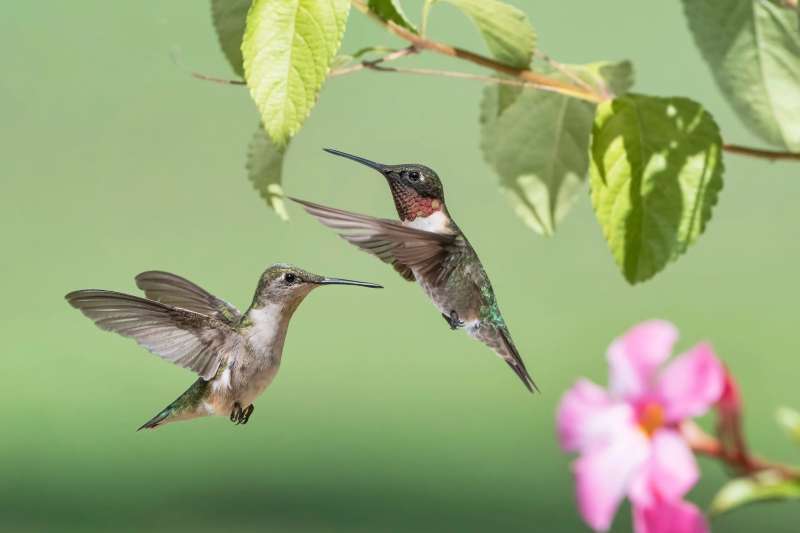
Spring in Wisconsin isn’t limited to brightly colored flowers — late April and early May also mark the appearance of arguably one of the planet’s prettiest flying creatures: the ruby-throated hummingbird.
To prepare for their annual migration to your area — and to learn how to attract these fast-moving birds to your backyard or garden — read on…
The Life of a Ruby-throated Hummingbird
According to the aficionados at Hummingbird Central, an online resource for information about annual hummingbird migration throughout North America, most hummingbirds spend their winters enjoying the warmth in Mexico or Central America and only migrate north to reach their breeding grounds when spring temperatures heat up. Those with a sharp eye may be able to spot these tiny birds as they make their migratory journey — hummingbirds migrate during daytime hours at a path low to the ground, allowing them to fuel up on flower nectar along the way.
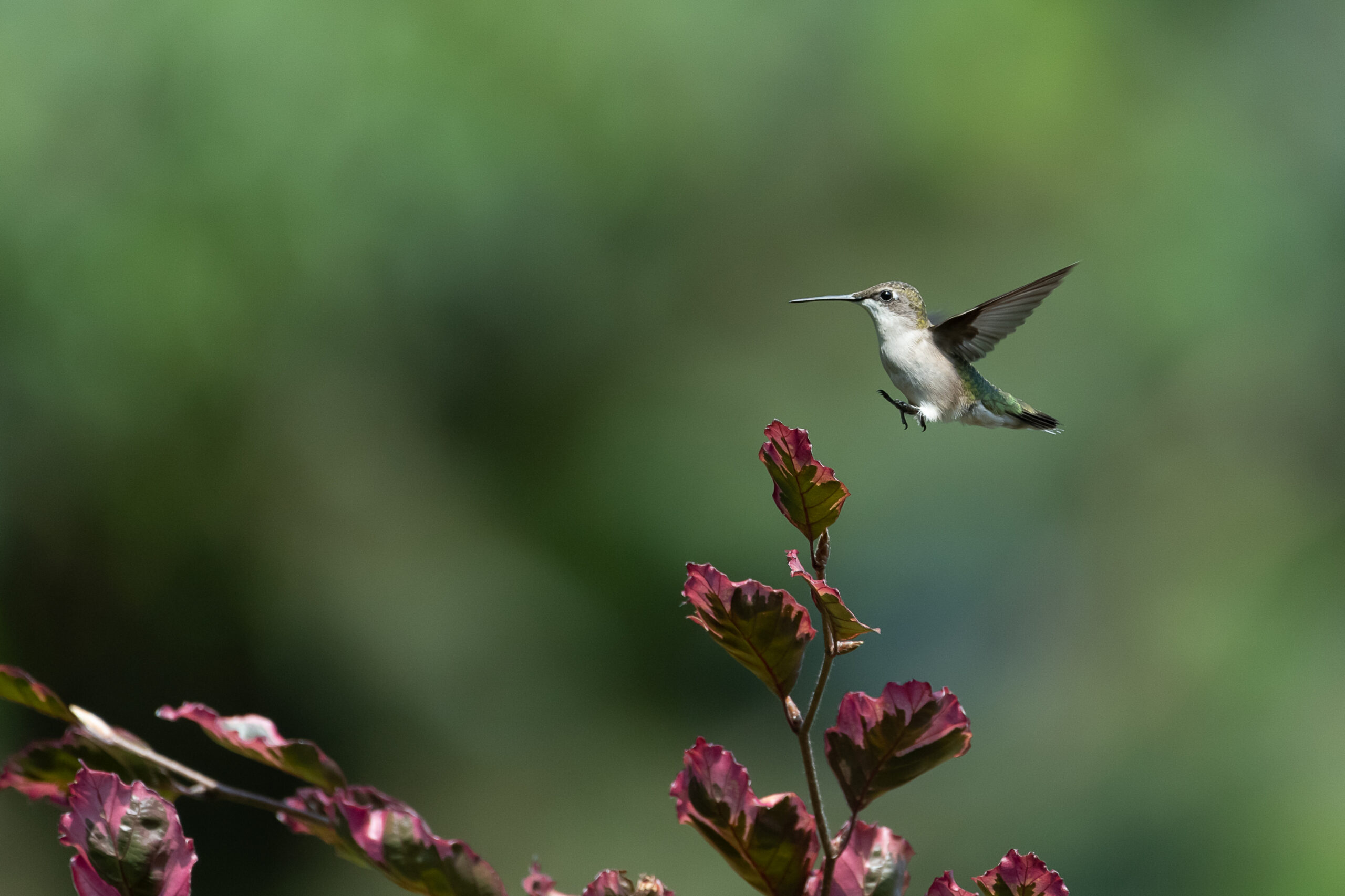
Researchers at the University of Southern Mississippi estimate that hummingbirds travel up to 1,200 miles during their migratory flight, and they don’t let gaining a few grams of body weight get them down. The same researchers were marveled to discover that some hummingbirds “double their body mass during migration and are still able to perform migratory flights.” Hummingbird Central notes that this weight gain is a critical process allowing hummingbirds to exert Herculean amounts of energy — while migrating, hummingbird heart rates reach 1,260 beats per minute, and their wings flap anywhere between 15 to 80 times each second.
Once hummingbirds reach their breeding grounds in the north, it’s time to get down to business. According to Hummingbird Central, these pocket-sized fliers don’t mate in pairs like many bird species. Instead, once the act is over, the male flits away to find other females with whom to mate. Meanwhile, the female is tasked with building a nest using spider webs, branches, plants, and lichens, not to mention incubating the eggs and raising the next generation.
Much like the pint-sized stature of the birds themselves, hummingbird nests are only about one-and-a-half inches across, and the two eggs that each ruby-throated hummingbird lays are each less than an inch long. According to the American Bird Conservancy, after a two-week gestation period, hummingbird nestlings emerge from their eggs under the watchful eye of their mother, who spends most of her time tending to the nest, leaving only to procure food.
Hummingbird hatchlings, also known as chicks, enter this world without their gorgeous plumage or their ability to stand, let alone fly. These small newborns, often weighing less than a dime, hatch with their eyes closed and covered in pink or brown skin. The American Bird Conservancy states that their feet take some time to grow before they can take their first steps, and they don’t usually grow their full set of feathers until they reach three weeks old.
Solely dependent on their mothers for the first month of their lives, hummingbird chicks dine on a diet of insects, full of the protein they need to grow strong beaks and bones. After about a month, the hatchlings take flight and leave the nest to begin their independent lives.
Knocked over by the miraculous events occurring right in your backyard or garden? Read on to learn some pointers on how to best attract and support ruby-throated hummingbirds in your area this hummingbird season.
The Do’s and Don’ts of Attracting Hummingbirds to Your Garden
Do put out a feeder to attract hummingbirds to your garden.
Ensuring that your yard or garden is the best landing spot for ruby-throated hummingbirds isn’t as simple as putting out a bird feeder and calling it a day. Susan Mahr, University of Wisconsin – Madison’s former statewide Master Gardener Program coordinator, says hummingbird feeders require maintenance at least once a week.
According to Mahr, the first step is to fill the feeder with homemade nectar. Opt for a ratio of three to four parts water to one part white, granulated sugar if nectar-producing flowers aren’t available in your area, and transition to a less sweet solution of four to five parts water to one part sugar when temperatures heat up and the birds need more hydration.
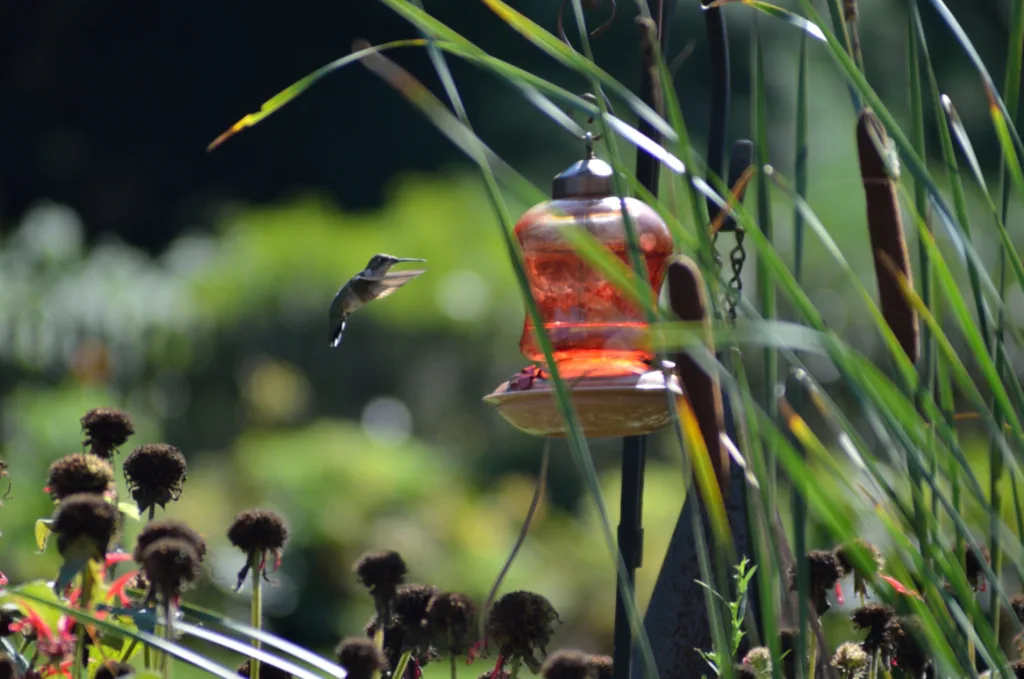
As FOX 6 News Milwaukee reports, you’ll need to make sure no food coloring is present in your nectar solution, as this could be harmful to the hummingbirds. Then, change out the nectar at least once a week through the early spring weeks, and replace the solution every couple of days as spring gives way to summer, and temperatures rise.
You’ll also want to clean your feeder with a solution made from one part vinegar to four parts water about once a week, the National Audubon Society says. If you can’t get rid of some of the sugary residue, try adding some dry rice to your solution, and vigorously shake the feeder to remove some of the particles. Before refilling your feeder with homemade nectar, be careful to rinse it well with warm water.
Don’t hang your feeder in direct sunlight.
The National Audubon Society recommends hanging your feeder in a shady area. Otherwise, your nectar solution may ferment, which would be harmful to the health of these tiny powerhouses.
Don’t forget to grow a variety of nectar-producing flowers in your garden.
It’s critical to remember that just because spring has sprung in the life cycle of a hummingbird, that doesn’t mean all flowers will be blooming upon their arrival to Wisconsin. Mahr herself grows salvia coccinea, commonly known as Texas sage or sage scarlet, in her greenhouse, which she moves outside on the first days of spring to greet any early arriving hummingbirds.
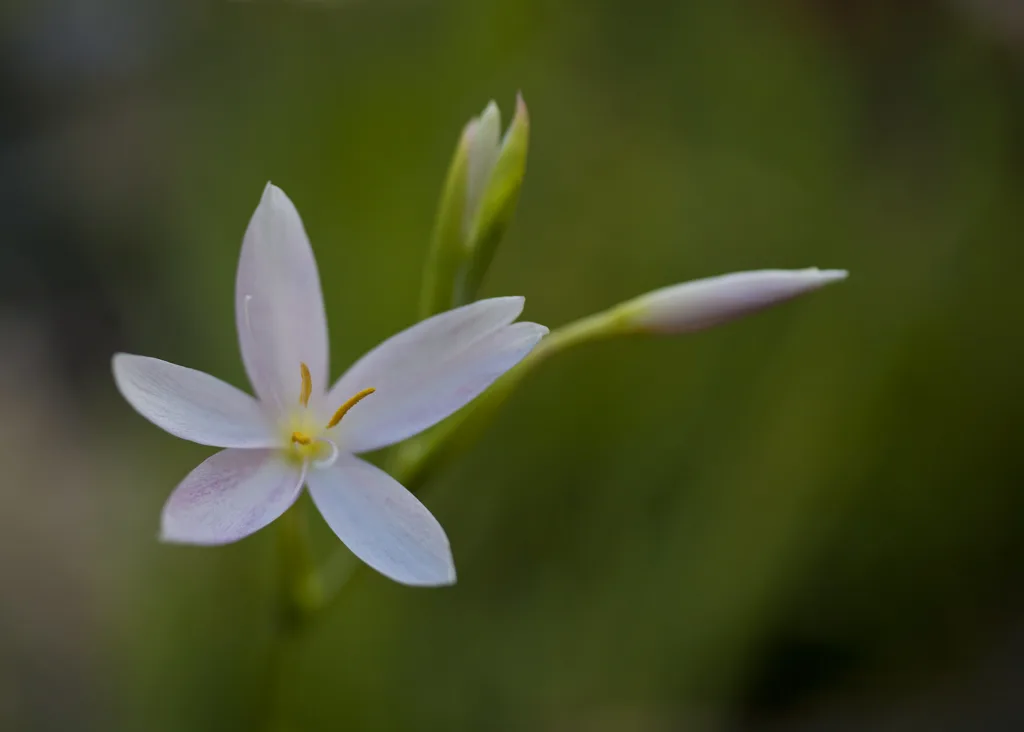
Though she notes that hummingbirds seem to prefer tubular flowers that are red, orange, or pink, they’ll also feed on other flowers. She recommends Wisconsinites seeking to feed hummingbirds plant trumpet vine, butterfly bush, coral bells, red morning glory, Mexican sunflowers, and blue anise sage, among others, to ensure these hungry travelers receive the nourishment they need to breed this hummingbird season.
This article first appeared on Good Info News Wire and is republished here under a Creative Commons license.