Reporting by Ricardo Torres and Francesca Pica, Milwaukee Journal Sentinel
Wisconsin is home to businesses and brands with devoted followings – in some cases customers who buy the same motorcycle for years, or regularly stop at a convenience store that’s today’s town square.
Some companies with Badger State roots are instantly recognizable – the roar of a Harley, or the American Family Insurance jingle – with a lasting national or international presence. Others have passionate local followings that drove steady regional growth.
Brands that stand out are “distinctive in some way that’s really meaningful to your customers,” said Scott Rex, marketing instructor at Marquette University.
“It’s that emotional connection, and you have to stay true to that,” Rex said.
“Sometimes that means not changing your brand … other times it means being smart enough and flexible enough to change what you’re selling to continue being true to what your customers are looking for, for whatever your brand means to them.”
We’ve assembled a short list of iconic brands with Wisconsin roots that have remained in the state even after establishing a national presence.
They employ thousands of people and are often seen as great places to work.
“Companies build relationships and they build connections and I think the iconic, long lasting brands also remember to build connections with their employees,” Rex said.
“A lot of brands see the employees as being equally important or more important than customers. And they work really hard to make sure their employees feel like they’re part of the plan and part of the brand.”
We started with a few basic ground rules:
- The company started in Wisconsin and its headquarters remains in in the state. So no Miller Brewing Co. on this list, for example, because it’s now part of Molson Coors and is headquartered in Chicago.
- No sports. Of course, the Green Bay Packers, Milwaukee Brewers and Bucks are businesses that were founded and operate in the state, but those brands operate differently than the businesses recognized in this story.
- The company needs to be in operation, which means no brands like Allis-Chalmers which ceased operating following bankruptcy in the 1980s.
- The businesses need to be recognizable and accessible outside of Wisconsin. So our apologies Leon’s and Gillies frozen custard stands, you’re both one of a kind but just that – one.
Kohl’s: a company that has its own kind of cash
Kohl’s Corp. is the only company on this list with its own currency: Kohl’s Cash.
The Menomonee Falls-based department store chain has grown to be a shopping destination since it opened its first store in Brookfield in 1962, after originally starting as a grocery store in Milwaukee in 1927.
Kohl’s has about 6,000 employees statewide, many of them at its corporate headquarters in Menomonee Falls, and more than 90,000 across the country.
Roughly 1,150 Kohl’s stores offer gifts, clothes, home goods and higher-end brands for holidays, job interviews, celebrations or other occasions.
Kohl’s stores are shopping destinations in many rural communities where they are significant employers, active in local charities and fundraising events.
During difficult economic times, Kohl’s has endured and been an option for shoppers who want the most bang for their buck.
Kohl’s CEO Michael Bender said the company is focused on catering to the “middle to low-income customer.”
“What they’re saying to us, very loudly … is please curate an assortment that makes me know what my situation is right now, which is I’m trying to make sure that the dollars I have stretch as far as they can,” Bender said.
Kohl’s recently added a “Deal Bar” to all of its stores where customers can find items for $10 or less.
Christie Raymond, Kohl’s chief marketing officer, said the company is “honored to be part of this community.”
“We are proud of our more than 40 Wisconsin stores and thousands of Wisconsin and Milwaukee-area associates,” Raymond said in a statement.
“In support of our hometown community, Kohl’s and Kohl’s Cares have given more than $165 million to Milwaukee-area nonprofits throughout the company’s history.”
Harley-Davidson, the open road defines freedom for customers
For more than 123 years, Harley-Davidson has defined freedom on the open road with a look and a style that is completely unique in transportation.
“Self-expression is American, and Harley-Davidson gave everyone an opportunity to express themselves through the motorcycle,” said Billy Lobacz, service and parts manager at Uke’s Harley-Davidson in Kenosha.
The sound of a Harley cycle is one that’s been heard throughout Wisconsin since the company was formed in 1903 in Milwaukee. It’s now internationally recognized thanks to a strong overseas presence.
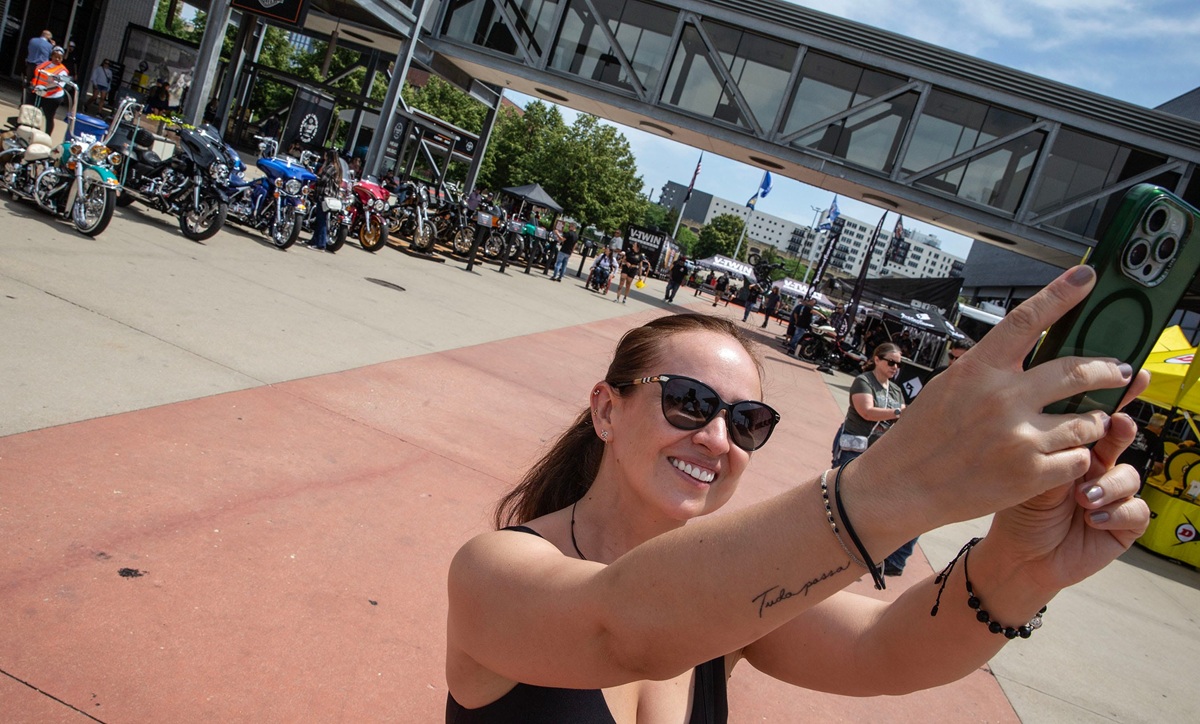
After Harley-Davidson provided tens of thousands of bikes to the military during both world wars, many of those riders became customers during peace time.
A major change came in 1969 when American Machine and Foundry (AMF) bought the company.
The economic difficulties of the 1970s caused AMF to put Harley-Davidson up for sale in 1980 and a year later 13 Harley-Davidson executives, including Willie G. Davidson, the grandson of co-founder William H. Davidson, and the late-CEO Rich Teerlink, bought the company from AMF.
Those 13 executives took a financial risk by bringing the company back into the fold, said Bill Davidson, special advisor to the CEO and global brand ambassador and son of Willie G. Davidson.
“I remember, I was very young at the time, my parents sat us down and said ‘We’re taking a financial risk on the company,’” Davidson said.
“Part of our DNA, if you will, we are much more than a motorcycles. We are about a lifestyle. We are about that pursuit of happiness, that pursuit of adventure, so there’s an emotional side to our products.”
CEO Artie Starrs is steering Harley to focus on dealerships, affordability and customization as the pathway to growth and attracting new customers.
“As the world’s most iconic motorcycle brand, Harley-Davidson is proud to call Milwaukee home. As we reflect on America’s 250th, we are proud to mark our 123rd year as the longest continuous motorcycle manufacturer in the U.S.,” Starrs said in a statement.
American Family Insurance: 100 years old, still transforming
American Family Insurance is one of Wisconsin’s largest and most recognizable companies. It’s the naming rights sponsor for the Milwaukee Brewers stadium and presenting sponsor of Summerfest. It has also supported the city’s July 3rd fireworks displays.
The Madison-based insurance company, founded in 1927, has around 10,500 employees and another 2,400 independent contractor agency owners. It operates in all 50 U.S. states.
In 2025, American Family reported $19.5 billion in revenue and $45.5 billion in assets. That’s up from $13 billion in revenue and $34 billion in assets in 2020.
In the early 2010s, the company shifted its business model in response to increased competition and changes in how people buy insurance due to the internet. At the time, the business was also concentrated in states vulnerable to tornadoes and other natural disasters, which present a huge hit to earnings when customers filed claims.
“We started looking real deeply at our business model and at where the world was headed,” then-CEO Jack Salzwedel said in 2019.
American Family began buying smaller insurance companies across the country, looking to expand its geographical footprint, boost brand recognition and diversify its sources of revenue.
In 2014, American Family also opened a data science and analytics lab near the University of Wisconsin-Madison campus. Four years later, it opened another office on Madison’s east side. The facilities serve as a tech hub for the company that also provides space for startups and community meetings.
In 2026, the company renewed its multi-year partnership with Summerfest. It has served as the festival’s presenting sponsor as well as naming rights sponsor of American Family Insurance Amphitheater since 2017.
Culver’s brings curds, butter burgers and custard to 26 states
Culver’s, the fast-casual franchise known for its butter burgers, cheese curds and frozen custard, has become the face of Wisconsin food for many across the country.
In 1984, Craig and Lea Culver – along with Craig’s parents George and Ruth – opened the first Culver’s restaurant in Sauk City. Since then, the fast-casual franchise expanded to more than 150 locations in Wisconsin and stores in 26 states.
Despite its growth, the company doesn’t just accept any franchisee who walks in the door.
“We’re picky about who we allow into our family of restaurants, and we have a system in place that says no to some and yes to others,” Craig Culver said.
That has helped the company maintain its standards across the different store operators. It also means that when a Culver’s opens in your neighborhood, it’s likely there to stay – the company’s franchisee failure rate is well below the national average.
Culver’s surpassed 1,000 locations in 2025, with a value estimated in the billions and more than 50,000 employees. That year, Julie Fassner took over as CEO. She had served as the company’s chief marketing officer since 2017.
Since 2020, Culver’s has opened at least 50 new stores each year. It’s looking to maintain that pace in 2026 with 59 planned store openings.
The company is particularly focused on Florida, with 14 store openings planned there this year. It also has plans to add three new Wisconsin locations in 2026.
Since 2013, Culver’s has raised more than $8 million for the Thank You Farmers Project, which invests in agriculture education and hunger relief efforts.
In 2025, 80 Culver’s locations raised $165,000 to help families impacted by the Abundant Life Christian School shooting in Madison.
“We’re passionate about making delicious food, but really, we’re in the people business — so when our communities need a place to gather to rally around their neighbors in need, we’re extremely proud to welcome them,” Culver said.
Kwik Trip fandom extends well beyond gas stations
Not many convenience stores have built a following quite like Kwik Trip’s.
The La Crosse-based chain is the site of wedding parties. Fans make a challenge of visiting as many stores as possible. They even line up to purchase Kwik Trip-branded underwear.
That loyal fandom is a result of Kwik Trip’s long-running strategy to expand from just the typical gas and convenience store options. That growth exploded after the company opened its own kitchen, bakery and beverage facilities.
“Before 2003, our food choices were limited to sandwiches in our cooler doors and hot dogs on the roller grills,” said Steve Wrobel, Kwik Trip spokesperson.
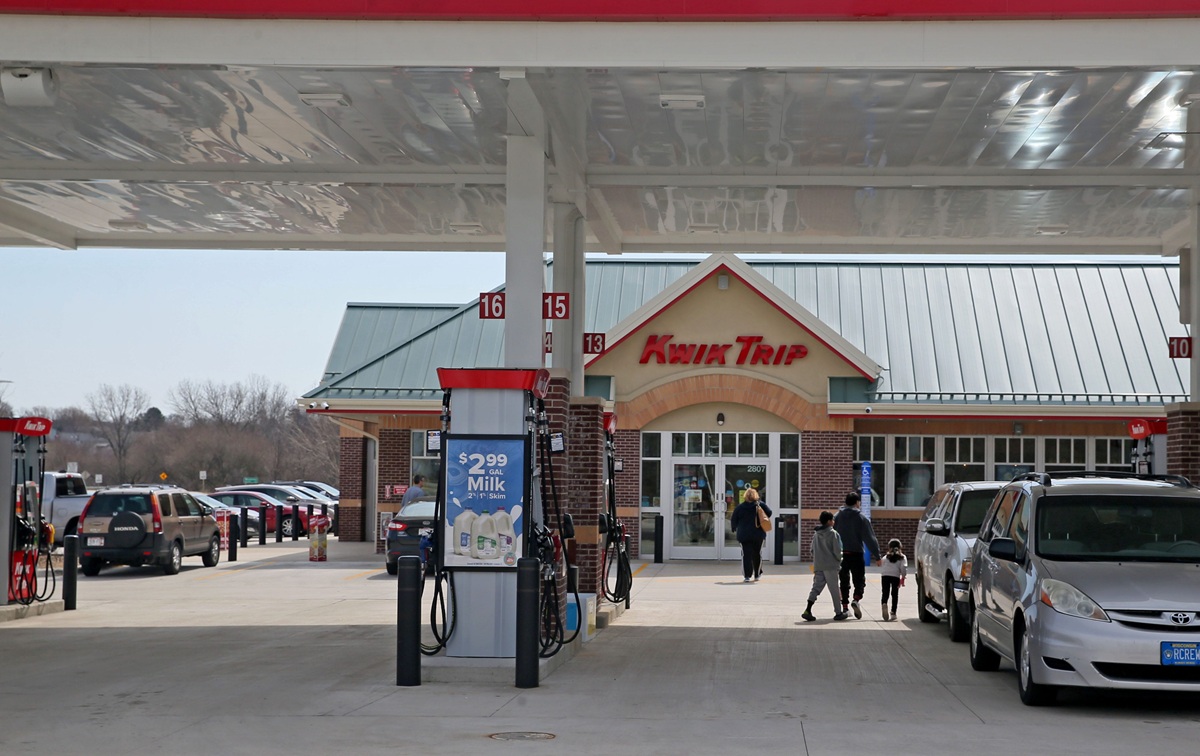
Now, more than 80% of the items sold in Kwik Trip stores are made and distributed by its own food operations division. They include hot grab-and-go meals, Karuba coffee and the Glazers donuts.
Kwik Trip was founded in 1965 in Eau Claire by John Hansen and Don Zietlow. The Zietlow family still runs the chain, which now employs around 38,000 people.
The company has 925 locations across seven states including Wisconsin, Minnesota and Michigan. It operates in Illinois, Iowa, North Dakota and South Dakota under the name Kwik Star, to avoid confusion with an Iowa-based convenience store chain.
Spokesperson Ben Leibl said Kwik Trip has been able to grow a loyal following due to three factors: guest service, a wide range of food options and cleanliness.
Leibl said the company is already well-established in Wisconsin, and is instead looking to increase its presence in Iowa, northern Minnesota and northwestern Illinois.
Kwik Trip also has plans to open its first Nebraska locations in the near future.
Trek name known for Tour de France, is now on electric cycles
Waterloo-based Trek Bicycle Corporation is known around the world due to its presence in the Tour de France.
Trek bikes were famously ridden by Lance Armstrong during his Tour de France races from 1999 to 2005.
Now valued at around $2 billion, Trek started in 1975 as a subsidiary of the Milwaukee appliance maker Roth Corporation. Founders Dick Burke and Bevil Hogg began producing touring frames from their Waterloo facility, hoping to compete in the middle- to high-end market.
Since then, the company has grown to employ more than 5,000 people and sell its bikes in more than 1,700 North American bicycle shops. It has also introduced a line of electric and mountain bicycles.
Trek raises money the development of cycling trails for public use. It partners the nonprofit Wisconsin Bike Fed to promote more bike-friendly cities and youth cycling education.
Every summer, it invites cyclists to participate in the Trek 100 ride.
Trek has also been credited with leading the industry in improving investments in women’s professional cycling teams.
“At Trek it was, ‘Let’s run a really good business, but let’s use the bike company to do really good things.’ Those really good things can range from creating a bicycle-friendly community to helping out the Boys and Girls Club. We do a lot of things here,” CEO John Burke said.
Coming out of the COVID-19 pandemic, Trek rode a boom in demand for bikes. But since then, the company has hit financial troubles. It underwent rounds of layoffs and restructuring as it tries to right the ship.
“If we don’t constantly change here and put ourselves under the microscope, we’re toast. The whole thing around here is continuous improvement. Everything we do, and I mean everything, we can do better,” Burke told the Journal Sentinel in 2011.
This article originally appeared on Milwaukee Journal Sentinel.
Related: A cow and Harley-Davidson? What Wisconsin is sending to Freedom 250 fair