Reporting by Jaeha Jang, Milwaukee Journal Sentinel
Salute Mexican Lounge in Egg Harbor has been forced to shut its doors on Mondays and Tuesdays due to staff shortage.
The general manager at Al Johnson’s Swedish Restaurant & Butik in Sister Bay has been working 100 hours a week, cooking and prepping food, because the kitchen is nine people short.
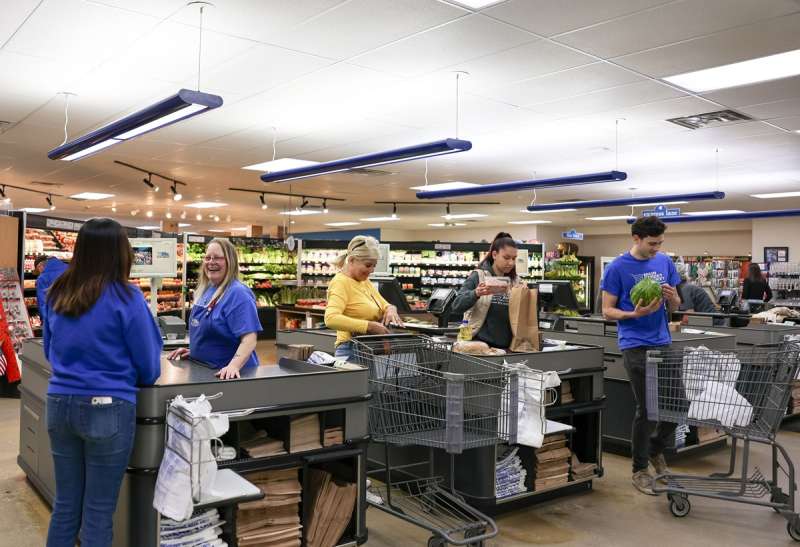
Main Street Market in Egg Harbor, one of the only grocery stores in the area, isn’t switching to its usual extended summer hours.
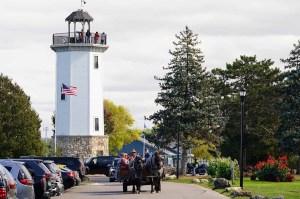
These businesses in Door County are all facing debilitating staff shortages this summer due to the absence of foreign workers who support a surge in summer tourism every year on temporary seasonal visas called H-2Bs.
These workers – hailing from countries like Colombia, El Salvador and Turkey – generally arrive in April, or May at the latest, to start working as the tourism season warms up.

But this year, unprecedented processing delays at U.S. Citizenship and Immigration Services and at the State Department, on top of an endemic shortage of H-2B slots, have left businesses in Door County waiting for workers to arrive well into the summer.
“It has been excruciating because our H-2B visa people haven’t been here,” Jaime Blossom, the front-of-the-house manager at Al Johnson’s, said. “That’s literally crippling.”
Glenn Mandel, the only immigration lawyer in Door County, said this year’s H-2B visa processing has been “without a doubt” rockier than past years.
“That’s a heavy burden on the business who’s counting on those workers,” Mandel said. “It creates a great deal of uncertainty, and with uncertainty goes anxiety.”
Even without this year’s processing delays, the government’s quota for H-2B workers every year, which is distributed through a lottery, is “woefully inadequate” compared to nationwide demand, Mandel said.
Processing delays, lottery system hurting businesses
Kim Jensen, who owns four businesses in Egg Harbor including Salute Mexican Lounge, said out of the 16 H-2B foreign workers she was expecting this year, only four have arrived.
“The whole immigration system, I feel, has been gutted, so they are not able to process even what we were told we were going to have,” she said.
Even though she and all her employees are working double shifts every day “just to stay open,” Jensen said they are burning out, and she expects the twice-weekly closure to spread soon to her other two restaurants and bakery.
If she shuts her restaurants’ doors just one day a week, it costs her $50,000 a month, Jensen said – a cost that she only expects to rise once “the season really kicks in” with the Fourth of July.
Blossom said she regularly hires around 18 H-2B visa workers every year, but none of them have arrived so far. Six of those workers are slowly going through interviews, she said – they just got their interviews in the past two weeks, while their visas started on April 1.
But the other 12 simply won’t arrive this year, Blossom said, because she was assigned to the lowest category in the annual H-2B lottery for employers for that group.
Every January, the Department of Labor randomly assigns potential H-2B employers into alphabetical groups — A through H this year — and employers in lower groups, regardless of whether they have had H-2B workers in the past or not, are not guaranteed workers.
Blossom put out hiring alerts immediately after she learned about her lottery result, she said, but she hasn’t had much success.
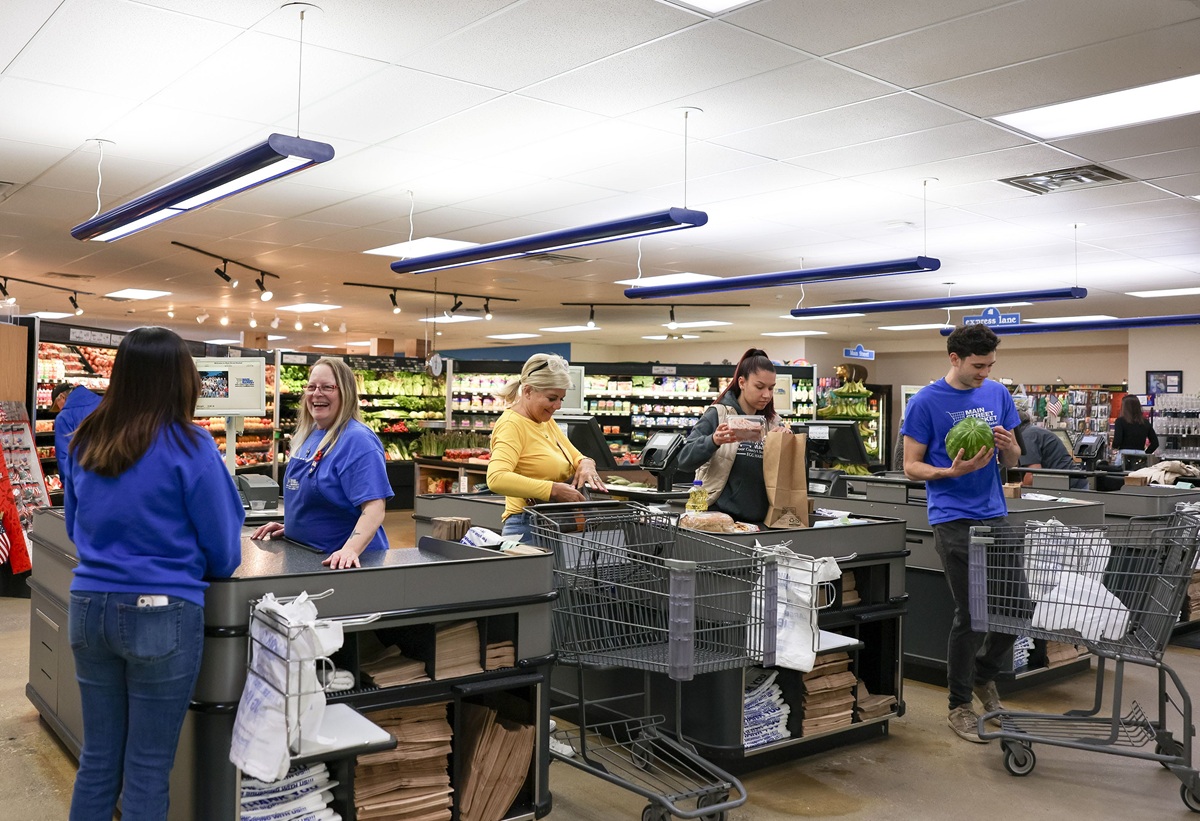
Kaaren Northrop, the owner of Main Street Market, also got the short end of the stick in the H-2B lottery this year and won’t be getting the seven workers she said she was planning the season around.
She has hired five to seven H-2B workers every year in the past three years, many of them returning, who have been “fabulous” employees in “pretty much everything” in her store – the meat department, the deli, the bakery, the cashiers and customer service – Northrop said.
“When you’re trying to replace seven full-time, experienced adults, it’s kind of difficult,” she said, adding that she needs a full staff to increase her hours of operation.
Kathy Navis, who owns Greens N Grains Natural Food Market & Café in Egg Harbor, said she tried hiring H-2B workers for the first time this year and was “really disappointed” with the process. She did not end up getting any H-2B workers because she was placed into the group G – a result that she said was not worth her time and effort dating back to last fall.
“I will not try again,” she said. “It’s very expensive and takes a lot of time and paperwork, and it’s not worth it to me.”
Northrop said the H-2B visa issues, whether it’s the new delays or the unreliability of the lottery, have a negative impact on tourism for Door County overall.
“If our guests are having a hard time going out to dinner,” she said, “because they can’t get in, because they’re not open, that’s not great.”
New obstacles, longer delays on the road to Door County
Three government agencies are involved in getting an H-2B worker from their home country to a seasonal American businesses like those in Door County.
First, the host business must receive a temporary labor certification through a process that starts as early as October, according to Mandel. Then, the worker must receive approval from USCIS, which is under DHS, and subsequently sign up for and pass a visa interview at their home country’s embassy or consulate, which is under the State Department.
The delays this year have been happening at both the DHS and State Department levels, according to Mandel. USCIS has been “erroneously” returning cases to immigration attorneys for invalid reasons, he said.
“My colleagues in immigration fields that are other immigration attorneys have reported very similar issues with respect to cases being delayed,” Mandel said. “This has never happened in the past, but frequently, the case gets kicked back to us for some reason that’s not a real reason.”
In one case, the agency claimed that a document wasn’t signed when, in fact, it was, Mandel said. While cases in past years went through USCIS in two to three weeks, he added, many recent cases have been “sitting there for months.”
On the State Department level, the waiting time for visa interviews at consulates has skyrocketed, leaving some potential workers waiting for over a month, depending on their home country, Mandel said. The State Department’s new social media vetting process may have also led to longer delays and some denials at that level, he said.
Mandel speculated that this year’s widespread delays are an attempt by the federal government to make legal immigration more difficult, although he noted that they may also be due to personnel shortage at USCIS and at the consulates.
A State Department spokesperson said in a statement to the Journal Sentinel that the government will take “the time necessary to ensure an applicant does not pose a risk to the safety and security of the United States and that he or she has credibly established his or her eligibility for the visa sought.”
“Every visa adjudication is a national security decision, and our embassies and consulates schedule interviews as expeditiously as possible while ensuring every applicant undergoes the thorough vetting required by U.S. law,” the spokesperson wrote.
This cycle is the first complete H-2B process – from the labor certification to the arrival – under President Donald Trump’s second term.
“We’re not in a particularly immigrant-friendly environment at the moment,” Mandel said. “I think there’s no secret there.”
Foreign seasonal workers have become essential – and irreplaceable
The State Department spokesperson said that the administration “recognizes that H-2B temporary workers provide American businesses significant labor that supports local economies across the country.”
Seasonal foreign workers are particularly important for small tourist regions like Door County, where there are not enough locals to fill the labor demand of tourists who pour in.
“We go from serving 100 people a day to 1,200 a day. It’s like night and day,” Blossom said, “and there are not enough residents who apply for jobs, unfortunately, or high school students or college students to fill the jobs.”
Jensen characterized the complications in H-2B visa processing this year as deliberate attacks by the federal government and as a “stupendous” error.
“Why is the government going after legal visa holders?” she said. “What happened to going after the bad people that are illegal?”
Returning H-2B workers, especially, are already vetted and familiar with many aspects of the specific businesses, Northrop said.
She also pushed back against the idea that H-2B workers are taking American jobs. The Americans in question, who would work these jobs over the summer, “just don’t exist,” she said.
No business owner in Door County would go out of their way to hire H-2B workers – filling out extensive paperwork with attorneys, paying for applications and flying the workers out – if there was a sufficient supply of American workers, Northrop said.
“We do not have the people to do these jobs. We just don’t,” she said. “So for the government to hamstring us and throw up barriers to hiring these people is so wrong, and I just don’t know how to get Congress and people in the government to understand that.”
This article originally appeared on Milwaukee Journal Sentinel.