Dozens of school districts across Wisconsin will once again go to referendum on April 1, asking for additional money from voters to help pay for daily operating costs and building improvements. In one small western Wisconsin community with a referendum on the ballot, lakefront properties and vacation homes are causing some angst for the rural residents.
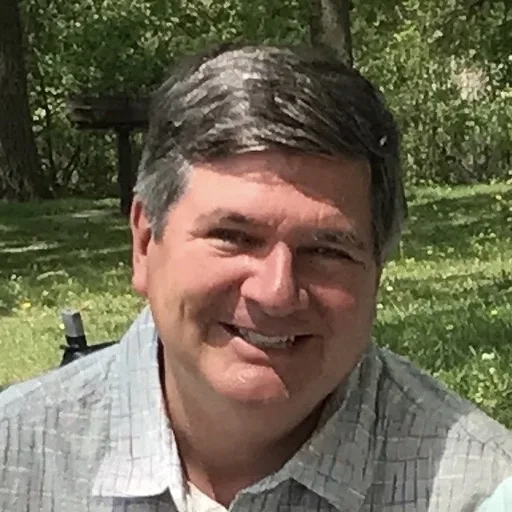
The president of the Lake Holcombe school board is worried. “If we don’t pass a referendum, we will have absolutely nothing left—we will have to dissolve our school and let the kids go to other places because we will not be able to keep the school open,” Brian Guthman said.
This April, nearly 20% of Wisconsin school districts in the state will ask voters to approve at least one referendum—that’s 81 districts.
The Lake Holcombe School District in Chippewa County is one of them. The district will ask voters to approve a non-recurring referendum for $900,000 per year for three years. At first glance, this might seem odd, given the many attractive and luxurious homes on the water that add so much value to the district. But that value is on paper only. The reality is that a lot of Lake Holcombe’s students don’t come from pricey lake homes.
“We have 60% free and reduced lunches,” Guthman said, even with $800 million of assessed valuation.
As a result of that high value on paper around the 2,900-acre Holcombe flowage, the district gets far less state aid than it would without the vacation and retirement properties. And that leaves barely 1,000 people in the rest of the rural community to make up the difference.
“Our school district is what we call a property-rich, poor school district,” Guthman explained. “The students who come to our school aren’t from families that are of the wealth of the properties that are around the lake.”
This reality of the rural, lower-income community that has a bunch of vacation homes, leaves rural residents paying relatively high property taxes.
And they’re not alone. In an example from FUND EVERY KID: Reforming Wisconsin’s School Funding Formula, a report by the conservative legal group Wisconsin Institute for Law and Liberty, local taxpayers in resort town Lake Geneva end up providing about 65% of the revenue to fund school needs, compared to the statewide average of about 47%.
That’s because of the complex formula that funds education in Wisconsin. While much of a school district’s funding comes from local property taxes and a small amount from federal funds, there’s also a significant portion funded by the state budget through general revenue (like your state income taxes.) The current formula provides very little state aid to districts with high property values, under the mistaken assumption that those districts are populated with a lot of wealthy families who can afford high local property taxes. However, it can also lead to a situation where a property-rich, cash-poor district receives little to no state aid.
“There are school districts in the state of Wisconsin that get absolutely no state aid,” a frustrated Guthman said. “We’re losing 15% per year and we’ll be down to nothing—that’s the way the formula is set up right now.”
Guthman said it’s an uphill battle all the way around. “So now we have to go to those same taxpayers on the lake that have [high] assessed valuations—maybe up to a million dollars—and they have to pay taxes on that.”
“We realize it’s tough—it’s a tough sell—especially if they don’t even have kids in the school district—it’s the second home for them.”
The district’s referendum informational brochure lays out the changes in property value and state aid over the years. In the 2000-01 school year, property value averaged about $183 million and the district received $4,453 for each student in state funding.
As for the 2024-25 school year, it shows property value now averages $772 million with the district receiving just $284 in state aid per student.
“We need state aid!”
Guthman, who was an educator for more than 40 years, said his district needs state aid.
“We need to change the funding formulas so we don’t have to go to referendum,” Guthman said. “Our community members are paying their state taxes and aren’t getting anything back for what they’re paying in—and consider that a lot of districts are getting a lot more state aid back because they’re not in this property-rich situation.”
“It’s all based on assessed valuation. We need to go away from assessed valuation and focus more on the needs of the students.”
State Sen. Kelda Roys (D-Madison) couldn’t agree more on student focus. “The answer is for the legislature to actually provide our kids what they need,” she said. “It shouldn’t matter if you live in a rural or urban area, it shouldn’t matter how much your parents have.”
“You deserve and are entitled to the freedom to learn and to a high-quality public education. It’s actually in our constitution.”
She says the Republican-led legislature hasn’t been delivering and hasn’t been funding schools. “Kids haven’t gotten an inflationary increase in a generation.”
“That’s unacceptable,” Roys said. “That’s why we need to make it clear that the governor cannot sign any budget that fails to give our kids what they need to thrive.”
District faces dissolution
With a number of referendums under his belt, Guthman wishes districts didn’t have to organize them. “The time and energy it takes to pass these referendums takes away from the education of students—you’re spending time trying to pass a referendum instead of teaching kids in the classroom.”
While he’s been through the daunting process before and has had a supportive community with successful referendums, he knows one failed vote would send waves rippling through his little community. “It’d be catastrophic—the school is the community in Lake Holcombe.”
He said if the referendum failed, the school would have to be dissolved. The dissolution process is then out of the district’s hands—controlled by the School District Boundary Appeals Board. If dissolution were to happen, residents would still pay school taxes, no matter where their students are reassigned to.
Guthman hopes, as he has in the past, it doesn’t have to come to that. “The school is the center of our community. We know if we close our school, we will lose our community.”