Reporting by Alec Johnson, Milwaukee Journal Sentinel / Milwaukee Journal Sentinel
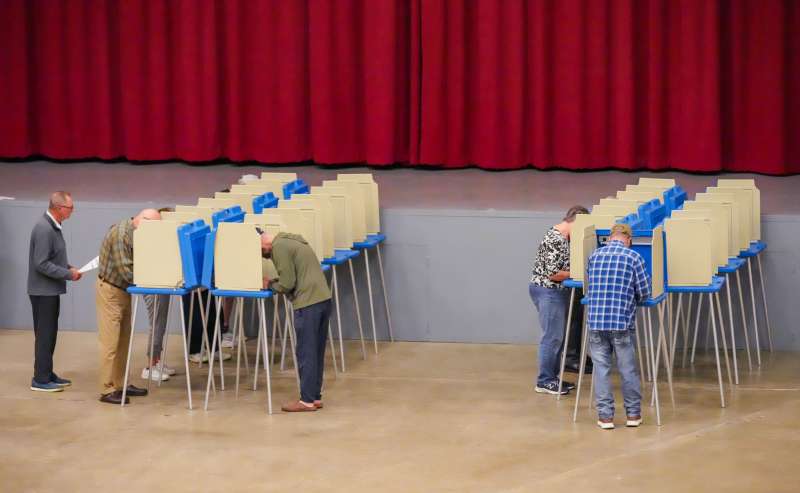
Schools are increasingly turning to referendums to keep themselves afloat operationally or to upgrade their aging facilities. While that has worked for some districts, the strategy failed this year for over a third of districts; 58.1% of school referendums statewide passed in 2026, according to a recent Wisconsin Policy Forum report. The forum said that while that passage rate was higher than 2025, it was a significant drop-off from the 70.1% passage rate in 2024.
In the wake of those failed referendums, school districts are having to consider other options, including whether to go back to referendum again, find ways to reduce spending, consolidate with other districts or even potentially dissolve.
In the rural Gillett and Siren school districts, referendums failed Nov. 3 after previous attempts in April also failed. Before the November election, both districts had said dissolution was one possible option they would consider if their referendums failed.
“Dissolution, cuts, and/or passing a referendum would all be key things the board has to think about unless something changes with how school districts are funded. Dissolution is not an option any of our board members wants to see come to be, but they also do not want to provide an education that is substandard for our students,” Gillett Superintendent Nathan Hanson said in an email to a reporter.
The district’s referendum website reiterated Hanson’s point: “More and more districts around the state are facing a similar problem as Gillett. More and more districts are discussing the real possibility that their local district could close. While this is the last option our school board wants to consider, it is a very real situation we could need to consider.”
The Siren School District in Burnett County in far northwestern Wisconsin is facing the same problem. “Without additional financial support, the district may eventually need to evaluate reorganization, consolidation, or dissolution,” said a Siren School District referendum presentation.
But Siren School Board President Katie Tewalt said dissolution would be the last option the board considers. Consolidation is another possibility. But regardless of which option the district decides on, it will take time.
“It would take over two years for the process to happen. So no matter what, if we were to consolidate tomorrow or dissolve tomorrow, it would still be two years that we need to run the school (district),” she said in a phone interview.
Tewalt said Siren has talked to neighboring districts about the possibility of whole grade sharing and shared services, adding that the district already shares some of its services with several other districts. The district will continue to look at the possibility of consolidation and whether that’s feasible.
“We’ve met with neighboring districts, and at this point no one’s showing any interest in doing a consolidation, but that would let us have the most say in what merging districts would look like and avoiding doing the dissolution, which leaves us no say in the matter and in the hands of the state,” she said.
Consolidation is a possibility in southeastern Wisconsin, where the Mukwonago Area and Palmyra-Eagle school districts are considering that possibility. Both school boards were considering initial resolutions this week on consolidating the districts. That would be the first step toward looking into whether consolidation is viable there.
Voters rejected an operational referendum in the Palmyra-Eagle School District on Nov. 3. Palmyra-Eagle also tried to dissolve in 2019, but the state School District Boundary Appeal Board denied it.
Of the 155 referendums school districts put on the ballot statewide in 2026, 80% asked communities to raise the tax levy to fund district operations, according to the Policy Forum report. Of those operational referendums, 54.4% passed.
In explaining their reasons for asking for additional money for operations, districts cited state-imposed revenue limits that are not keeping up with inflation, the need for more staff to meet more student needs, declining enrollment and “a tight labor market and especially high inflation after the pandemic’s peak,” the forum said in its report.
Gillett and Siren were among 16 school districts statewide to retry referendum attempts in 2026, the forum’s report said. Only five of the 16 – Brillion, Dodgeville, Iola-Scandinavia, Whitefish Bay and Winter school districts – succeeded. For Dodgeville, it was the district’s fourth consecutive referendum attempt since November 2024, the report said. Hustisford was cited by the forum as the example of what can happen following multiple failed referendums.
The forum also noted the challenges rural school districts in the state have due to their size and geographic locations.
The forum’s report said the state’s revenue outlook and the balancing of other funding priorities will play a role in whether recently elected Democratic legislators and Democratic governor-elect David Crowley can keep their campaign promises of increased school funding.
Contact Alec Johnson at 262-875-9469 or alec.johnson@jrn.com. Follow him on X at @AlecJohnson12.
This article originally appeared on Milwaukee Journal Sentinel: Rural Wisconsin school referendum failings sign of challenging times
USA TODAY Network via Reuters Connect