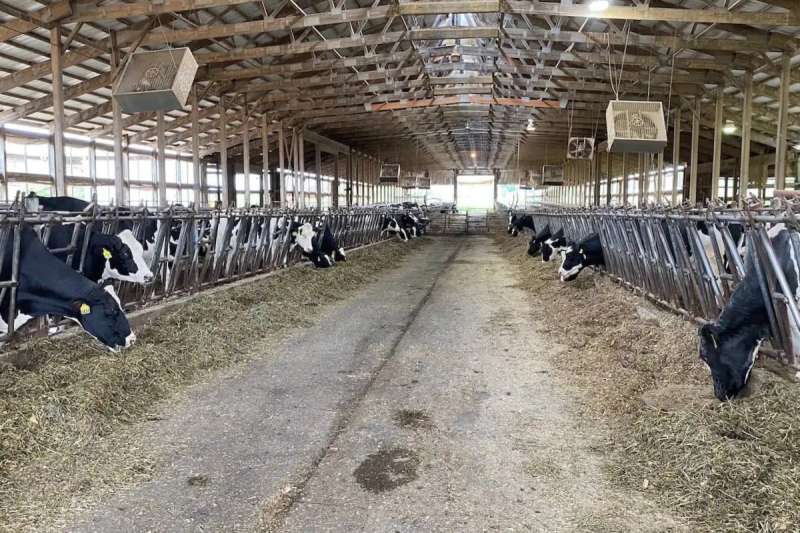
When it comes to which of the nation’s 435 congressional districts contribute the most to America’s food supply, Wisconsin’s 3rd District, represented by US Rep. Derrick Van Orden (R-Prairie du Chien), is consistently near the top when it comes to milk and cheese, cattle and calves, corn and beans, poultry and eggs, and forage crops like alfalfa.
This is why a national Farm Bill has long been a top priority for that district’s member of Congress.
But the Farm Bill is no longer a rare example of something that bridges parties as well as the rural-urban divide. It used to contain win-wins for rural farmers needing markets and urban markets needing a stable food supply. The latest moves to further delay or sabotage a new Farm Bill illustrate the differences between Van Orden and Democratic challenger Rebecca Cooke of Eau Claire.
With farmers hurting from trade war tariffs, Iran war oil shortages, diesel fuel above $6 per gallon, rising health insurance premiums, foreign beef flooding the US market, and higher prices in their barns and their kitchens making bankruptcy a more looming threat, rural voters in the 3rd District are weighing which candidate can finally end the drought of functional ag policy.
What exactly is the Farm Bill?
What’s known as the Farm Bill is often a package of bills that help coordinate a broad range of industries: farming, food processing, crop insurance, nutrition assistance, research, food safety, global trading, conservation and forestry programs, rural internet service, and more. Because it’s so encompassing, bipartisanship has always been the path of least resistance.
But the Senate Agriculture Committee voted Tuesday along party lines to advance a Republican version that won’t attract the Democratic votes needed to pass the full Senate. And the Senate version is different from what passed the US House earlier this year.
To paint the dysfunction in a picture: If Congress were a dairy barn and its output was bipartisan legislation, it would be fair to say the cows have gone dry and the bulk tank is empty while the manure pile out back is growing — and hopes for a new Farm Bill are its most recent deposit.
That gridlock takes us to this year’s election in the 3rd District and how Van Orden or Cooke would represent western and parts of central Wisconsin over the next two years.
Cooke: End tariffs, diminish corporate dominance
Cooke, who grew up on a dairy farm, is part of a bipartisan chorus criticizing President Donald Trump’s haphazard trade war tariffs that “have created trade tensions globally and cut off agricultural marketplaces,” according to her campaign website. Cooke would rather return to an era where America sought out new export markets to reward the productivity of Wisconsin farmers.
Like many Democrats, Cooke sees using antitrust law to break up the corporate dominance as a remedy for farmers’ financial woes, but it’s a tool that has been largely dormant in Washington’s toolbox of late. Meanwhile, corporations have held monopoly or near-monopoly power over farmers’ prices after years of mergers and a reduction in competition in the industry.
“I think that people voted for Trump for this America First agenda and thought that he was going to put the interests of working farm families first, and it’s been exactly the opposite,” Cooke said during a June visit by Trump to Chippewa County. “This really flies in the face of what people were promised out on the campaign trail from both of these candidates and what they got in return.”
Van Orden: Tariffs, aid, and rotisserie chicken
Trump’s tariffs caused $34.6 billion in losses to farmers’ export markets in 2025, according to the American Farm Bureau, but Van Orden believes farmers have faith that the president’s trade war will even out sales between the US and other countries.
“Our farmers understand that we have to level the playing field. And how do you do that? You do that with these tariffs,” Van Orden has said. “In order to get to the long term, you have to get through the short term, and that’s the reason that this money’s going back to people in the agriculture industry.”
Van Orden may think farmers understand Trump, but a Farm Journal poll of nearly 1,000 farmers shows nine of out ten of farmers say the war with Iran is impacting their business through higher costs — and nearly 40% consider themselves “persuadable” and more willing to vote for a different party than usual, including 35% of farmers who “usually vote” Republican, and 15% of farmers who say they “always vote” Republican.
Trump has undercut another part of the Farm Bill that Van Orden touts: an expanded safety net for crop insurance and disaster relief. Reporting by Politico shows Trump had approved only 23% of disaster requests from states whose governor and two senators are Democrats, compared to approving about 90% of requests from states with Republicans in those positions. Trump has denied requests for Wisconsin while falsely claiming to have won the state in 2020. (He did not.)
Rather than defend politicizing disaster aid, Trump joked about it recently in South Carolina.
“We spent more than $2 billion in FEMA funding,” Trump said while campaigning for Republican US Senate candidate Michael Whatley. “You know, you’re waiting for some additional funding […] and I’m gonna get that to you, Michael. Now if Michael loses, I’m not sending it. No, I’m only kidding. You’re getting it. You’re gonna get it, Michael. He’s been bugging me.”
Van Orden brags that he introduced a Dairy Business Innovation Act that would support dairy farmers in production, development, marketing, and distribution, but the standalone bill has not been passed and will only become law as part of a full Farm Bill, if it ever passes.
Other wins cited by Van Orden include expanding varieties of milk in schools, year-round sales of E15 fuel, and allowing SNAP recipients to buy rotisserie chicken.
SNAP cuts put the Farm Bill in peril
Whether the topic is agriculture or almost any other campaign issue, Van Orden’s pitch to voters will center on the so-called “Big Beautiful Bill” that slashed spending for a broad range of services. Cuts to SNAP — the Supplemental Nutrition Assistance Program, colloquially known as “food stamps” — total more than $187 billion nationwide over 10 years. By raising work-reporting requirements and freezing the formula that determines how much help families get, even as food prices rise, tens of thousands of recipients in Wisconsin are at risk of losing coverage or have lost it already.
Democrats have tried multiple times, without success, to fully or partially restore those cuts, including in the Farm Bill. Van Orden’s defense of the cuts to SNAP borrows talking points from how he talks about cuts to Medicaid, by falsely claiming the cuts will only affect people who aren’t eligible for the benefits.
The future of a Farm Bill may come down to an election year game of chicken since many congressional Democrats won’t support a package until SNAP cuts are addressed. Republicans like Van Orden may claim the lack of progress is evidence that Democrats don’t support farmers, even though SNAP support has always been a foundational part of a Farm Bill. Cooke will point to her own background as evidence that she’ll fight to get farmers a better deal in Washington, DC than what they’ve received since Van Orden took office four years ago.