#image_title
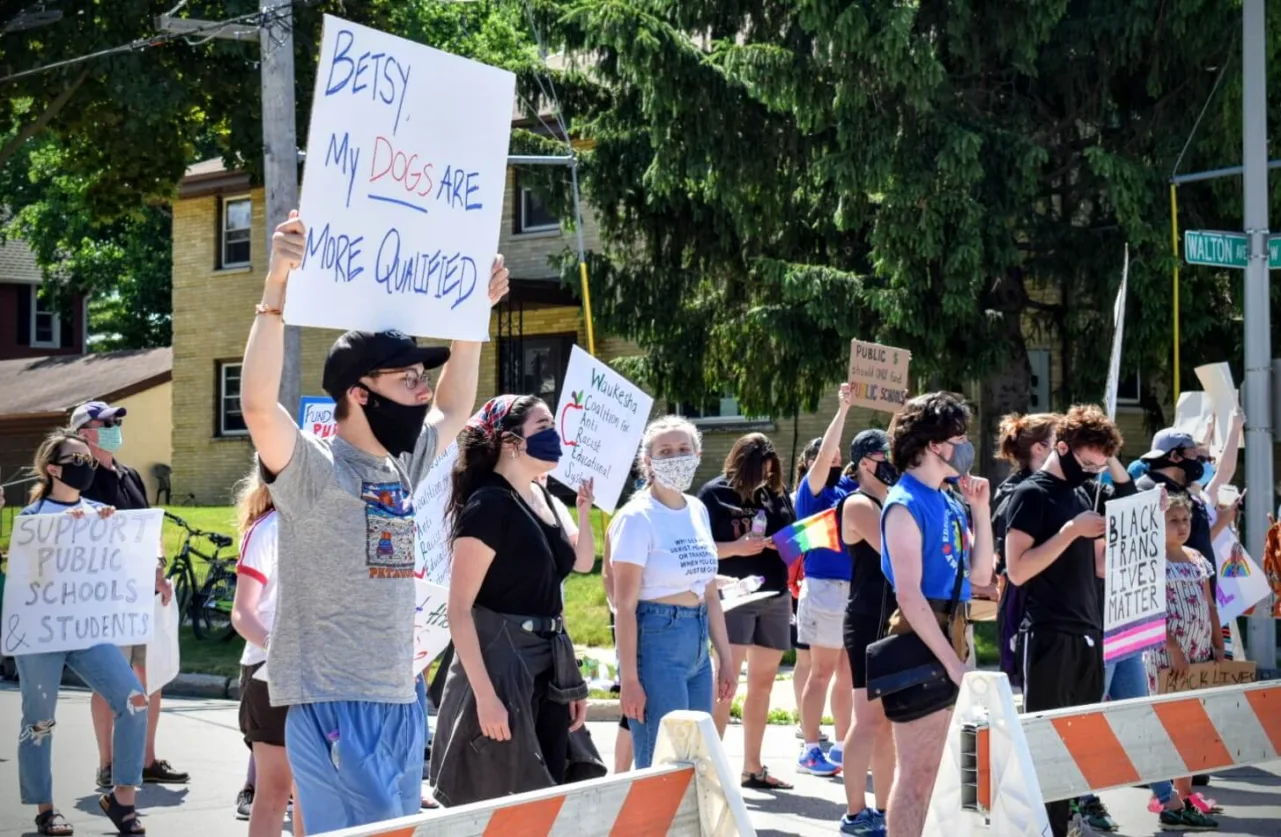
Divided government means Wisconsin taxpayers will continue to pay for two parallel school systems.
Any bipartisan agreement in the Wisconsin Legislature will, by necessity, have a little something for everyone to like—and hate. Unfortunately, there’s something very significant to hate in a new deal between Gov. Tony Evers and legislative Republicans that reforms the outdated way state government spends your money on schools and local governments.
Wisconsinites have been paying—quite unnecessarily—for two parallel school systems, including one that disproportionately benefits wealthier households at the expense of our local public schools. The new budget agreement not only keeps intact the taxpayer-supported vouchers for private and religious schools, but many more tax dollars for each voucher.
Thanks to a record state budget surplus, lawmakers and Evers have the resources to improve how the state shares its tax revenue with cities, counties, towns, villages, and public school districts. Unfortunately, split control of state government means Republicans were not going to lift a finger to improve the shared revenue system without getting a chunk of cash for vouchers as well.
According to reporting from the Milwaukee Journal Sentinel, state voucher payments would increase from $8,399 to $9,500 for every elementary and middle school student, and from $9,045 to $12,000 for each high school student. This will exacerbate the inequity in state support for kids in public schools, as the new agreement only raises spending on public school students by $300 each and raises state-imposed spending limits on school districts.
The Journal Sentinel quotes public school advocates who want Evers, a former state superintendent of public instruction, to scuttle the agreement and fight for greater public school funding. An Evers spokesperson noted the deal provides “historic increases to state-imposed revenue limits and general aids for schools, and the first increase in special education funding in 10 years.”
The impending tradeoff of increased public school funding in exchange for increased voucher funding was foreshadowed once Evers won reelection last November. It doesn’t make it any less acceptable that taxpayers have to continue paying for two systems, but an Evers loss would have only accelerated the Republican war on public schools.
So long as gerrymandered maps give Republicans a disproportionately larger number of legislative seats compared to their general public support, we are stuck getting double-billed and shortchanging Wisconsin’s proud tradition of supporting free public education.
Author

Support Our Cause
Thank you for taking the time to read our work. Before you go, we hope you'll consider supporting our values-driven journalism, which has always strived to make clear what's really at stake for Wisconsinites and our future.
Since day one, our goal here at UpNorthNews has always been to empower people across the state with fact-based news and information. We believe that when people are armed with knowledge about what's happening in their local, state, and federal governments—including who is working on their behalf and who is actively trying to block efforts aimed at improving the daily lives of Wisconsin families—they will be inspired to become civically engaged.


This billionaire’s PAC is spreading a big lie about Tammy Baldwin, Medicare, and taxpayer savings
Restoration PAC, funded by Uline’s Richard Uihlein, twists the significance of forcing Big Pharma to negotiate for lower bulk pricing on Medicare...

New Biden rules deliver automatic cash refunds for canceled flights, ban surprise fees
In the aftermath of a canceled or delayed flight, there’s nothing less appealing than spending hours on the phone waiting to speak with an airline...

Opinion: It’s time for Congress to fight for small businesses instead of big corporations
May is National Small Business Month. Our elected leaders need to show leadership all year long. For the past 27 years I’ve been fortunate to pursue...
Biden makes 4 million more workers eligible for overtime pay
The Biden administration announced a new rule Tuesday to expand overtime pay for around 4 million lower-paid salaried employees nationwide. The...