In his latest TV ad, Rep. Tom Tiffany is standing alongside a cow in a barn while explaining his latest campaign.
“The cost of living is udderly ridiculous,” Tiffany jokes. “I’m running for governor to make life more affordable.”
But Tiffany was part of Republican control of the Wisconsin Legislature over the past 16 years and is in the majority now in the US House, so it is worth asking what his record as a legislator and a congressman says about his priorities when it comes to the affordability of things like utility bills. His votes over the years reveal a pattern of support for policies that lead to higher energy costs for consumers while simultaneously receiving thousands of dollars in energy industry campaign contributions.
Tiffany supported natural gas exports that raised prices
On the first day of President Donald Trump’s second term, he signed a stack of executive orders aligned with what he called his “drill baby drill” energy policy, including the declaration of a national energy emergency, even though the US has been the world’s top producer of oil and natural gas. One of the executive orders sped up exports of liquified natural gas (LNG). The resulting global increase in demand caused prices to rise. The consumer group Public Citizen said prices soared for customers connected to gas utility services, “driving up the costs for households by nearly 21%. In total, gas utility bills spiked by $16 billion in 2025, forcing the average family to pay nearly $181 more during Trump’s first year in office.”
But Tiffany was ahead of the curve, cosigning a letter in February 2024 urging President Joe Biden to lift a pause of LNG exports that had been put in place because of concerns about higher consumer prices. That same month, Tiffany voted for a bill that would have made it easier to increase LNG exports. He voted for a similar bill in November 2025.
It was around that time that Xcel Energy was announcing its customers were about to see a 15% increase in natural gas prices.
Tiffany supported Trump’s rollback of green energy cost savings
July 4 will mark the first anniversary of the signature piece of Trump’s agenda passed by Republicans in Congress, the so-called “One Big Beautiful Bill Act” (OBBBA). Overflowing with unrelated items like Medicaid cuts, attacks on women’s healthcare rights, and large tax breaks for corporations, the bill also rolled back investments and incentives related to energy sources that don’t involve fossil fuels.
The provisions aligned with Trump’s remarks to oil industry executives during the 2024 campaign that they should give him $1 billion, which would be “a deal,” he said, because of the resulting tax breaks, rollbacks of regulations, and disinvestment from cleaner energy sources, despite its potential for job growth, consumer savings, and climate improvement.
Energy Innovation, a non-partisan energy and climate policy think tank, calculated that the OBBBA would repeal nearly $3 billion in clean energy investments in Wisconsin, “holding back economic growth, costing jobs, and forcing families and businesses to pay higher energy bills.” The Center for American Progress estimated the removal of energy improvement opportunities for consumers would increase electricity costs by about $80 per year in Wisconsin. Energy Innovation said Wisconsin’s annual energy bills would increase by $420 million annually by 2030.
Tiffany was an enthusiastic supporter of Trump’s megabill, having established a strong track record in favor of oil, gas, coal, and mining in northern Wisconsin.
“I believe you have to be able to utilize your natural resources to be prosperous,” Tiffany told a telephone town hall shortly after the bill was signed. “You know, whether it’s forestry, mining, oil, gas, and, of course, agriculture. And I would say to you, tourism, also … and if we get rid of that red tape, we are going to be able to see more businesses created, especially in these regions where we get to utilize our natural resources.”
Tiffany voted to gut a utility watchdog group
As a state legislator in 2015, Tiffany was a member of the powerful Joint Finance Committee when he voted to eliminate funding support for the Citizens Utility Board (CUB), a utility consumer watchdog group that a year before had persuaded the state’s Public Service Commission (PSC) “to reduce utilities’ initial rate proposals enough to save customers a total of $161 million,” according to reporting from the Milwaukee Journal Sentinel.
The next year, with CUB forced to make major staffing cuts, the PSC approved rate hikes for Alliant Energy that doubled the monthly fixed customer charge.
Tiffany supports Iran war, opposes proposal to fight fuel price gouging
In 2022, amid concerns about potential price gouging for fuel after Russia’s invasion of Ukraine, Democrats proposed establishing a federal standard for price gouging. Tiffany voted against the measure, which passed the House but failed to pass in the Senate.
When Trump partnered with Israel to launch an attack on Iran earlier this year, the resulting bottleneck in oil export traffic caused fuel prices to soar past $4 per gallon in Wisconsin, but Tiffany voted against a resolution that would have forced the president to get congressional approval before launching further strikes.
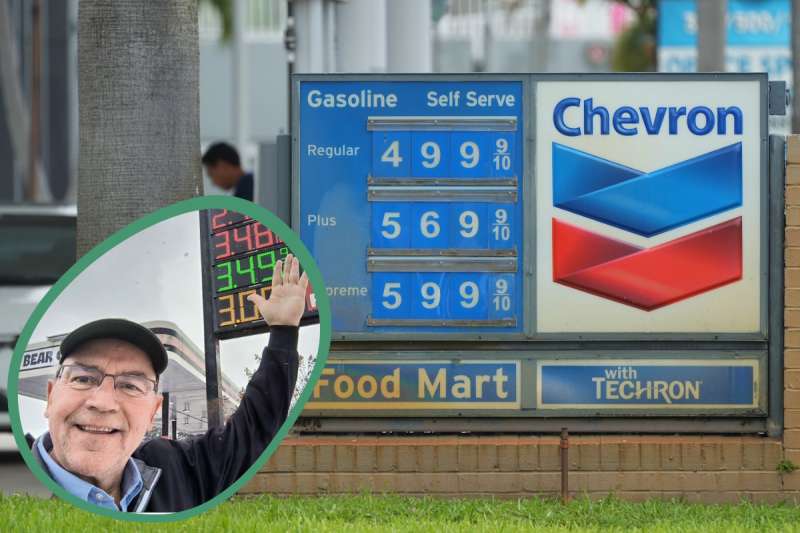
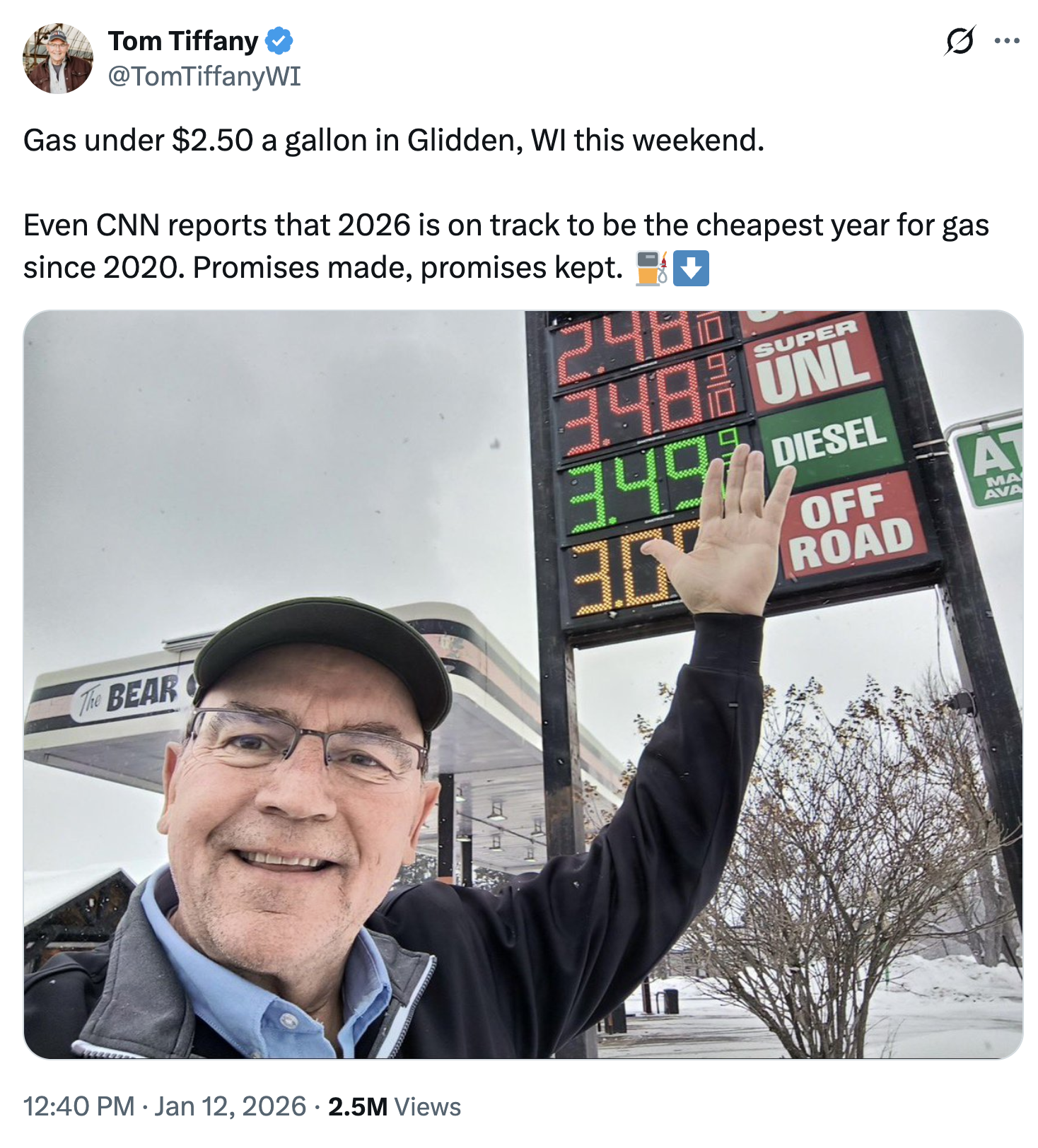
Ironically, just a few weeks prior, Tiffany posted a photo of himself pointing at a gas station sign and crowed, “Gas under $2.50 a gallon in Glidden, WI this weekend. Even CNN reports that 2026 is on track to be the cheapest year for gas since 2020. Promises made, promises kept.”
Industry donations to Tiffany
Campaign donation records shared with UpNorthNews show Tiffany has received nearly $25,000 from corporations, executives, and lobbyists connected to the energy and utility industries — just over $20,000 to his congressional campaign account from Xcel Energies, Alliant Energy, WEC Energy Group, Chevron, and Enbridge, and $3,500 to his state legislative campaign coffers during his tenure there from Xcel and WEC.