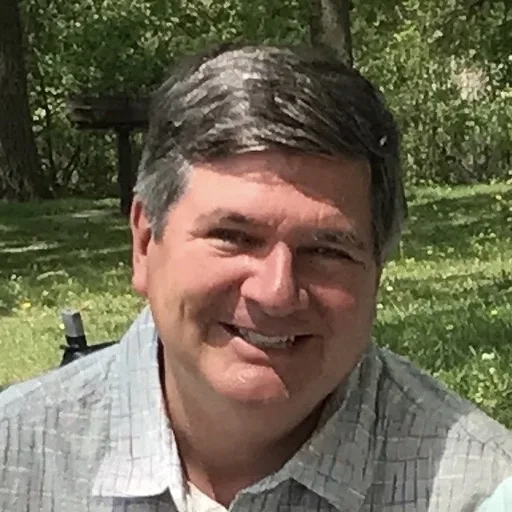
John Gaier knows a thing or two about Wisconsin’s school districts, especially rural ones. He’s been a teacher and an administrator in rural western Wisconsin districts for more than 40 years.
“But in my work in the state, I’ve gotten to know a lot of people from all kinds of school districts—school districts of all sizes and in all locations—and what I find out is that kids are the same everywhere.They have needs and they face the same issues in suburban and urban school districts.”
No matter the geographic location, Gaier’s passion is fulfilling those universal needs of students, spanning from emotional support to developing necessary skills for the future.
The cost of vouchers on rural Wisconsin schools
What isn’t universal for urban and rural school districts is how the Wisconsin Parental Choice Program (WPCP) affects them.
School vouchers can disproportionately hurt rural Wisconsin districts because state funding follows students to private schools, draining already tight public budgets.
“If the kids choose to go to a voucher school, the district loses that amount of aid—whatever that transfer amount is,” Gaier said. “We just have smaller budgets—so when those kids leave, it’s probably a higher percentage of the budget, when it happens in rural schools.”
Rural districts cover large geographic areas. Even if a district loses a handful of students to vouchers, they can’t easily cut building maintenance, bus routes, or administrative costs. If students leave across different grade levels, the district loses thousands of dollars but still must employ the same number of teachers.
“Let’s say that we have one kid per grade for a decline—that’s 13 kids,” Gaier explained. “Imagine that you’re getting $12,500 per kid.”
“That funding goes away,but if it’s one kid from every class—every grade level—you can’t reduce the staff because the grade levels went down by one student. But you do lose the finances from those kids, so that becomes very challenging.”
Gaier isn’t opposed to parental choice, but said he is concerned about how it’s funded.
“For taxpayers, it’s important to know that local taxes can increase based on kids going to voucher schools because the districts lose aid,” Gaier said. “The amount that gets transferred to the private schools actually comes out of public schools—so they have to tax for that loss of money in aid, which increases local property taxes.”
“I don’t know if people really realize that that’s how the system is funded.”
Another distinction is school availability. Many rural areas do not have private schools within a reasonable distance. Urban centers have a dense concentration of private schools, giving families many choices within a few miles.
In contrast, rural counties often lack nearby private schools, creating “school deserts” where rural families may have no private choice options within a reasonable driving distance. Families in small towns may pay local property taxes that fund the voucher program, but they lack the physical infrastructure to actually use a voucher, effectively subsidizing private education for wealthier urban or suburban families.
Tiffany, fellow Republicans push for vouchers
Republican US Rep. Tom Tiffany’s history of supporting the expansion of private school vouchers and cutting public education funding during his tenure in the Wisconsin Legislature has directly impacted his rural districts by siphoning state aid away from local public schools. He fought to make sure even extremely wealthy people could use it to pay for their kids’ private school tuition.
“Where does that leave the Wisconsinites, many of them in rural communities, that Tiffany is paid to represent?” asked Lucy Ripp, a spokesperson for A Better Wisconsin Together. She said it leaves residents “high and dry.”
As a congressman, Rep. Tiffany joined his fellow Wisconsin Republicans and voted for the federal Educational Choice for Children Act (often called Trump’s Education Freedom Tax Credit), which offers a dollar-for-dollar tax credit for donations to non-profit scholarship-granting organizations.
The federal framework requires individual states to opt-in so families can access funds. Gov. Tony Evers vetoed legislation that would have required Wisconsin to join, preventing local students from utilizing the scholarships.
As a 2026 candidate for Wisconsin governor, Tiffany has campaigned on the promise that he will officially opt the state into the program if he takes office.
Democratic Sen. Kelda Roys, who’s also running for governor, said Tiffany has a long-standing legislative record of aggressively championing “school choice” initiatives.
“Private voucher schemes are draining our public schools of the resources that they need,” Roys said. “When you see that property tax bill and you think that all that money is going to public schools, it’s not true.”
“A lot of it’s actually being diverted into private, unaccountable voucher schools that can discriminate against kids. Tom Tiffany was one of the driving forces behind privatizing public education. We need to reinvest in public schools so that every kid in the state thrives.”
While public schools act as a safety net to ensure universal access to education, private schools can be selective about who they admit, Gaier said.
“You know, public schools in Wisconsin are the only ones that always say, ‘Yes—you’re welcome here and we will do everything we possibly can to help you reach your potential,” he said. “Other institutions can say no and so to me, that should be a source of pride for public education across the state—‘everybody’s welcome here.’”