“This has been my passion for my entire career,” said lifelong Wisconsinite Tom Stolp.
Stolp leads the nonprofit organization Restoring Lands’ mission to protect and restore Wisconsin’s natural landscapes through strategic conservation and community partnerships.
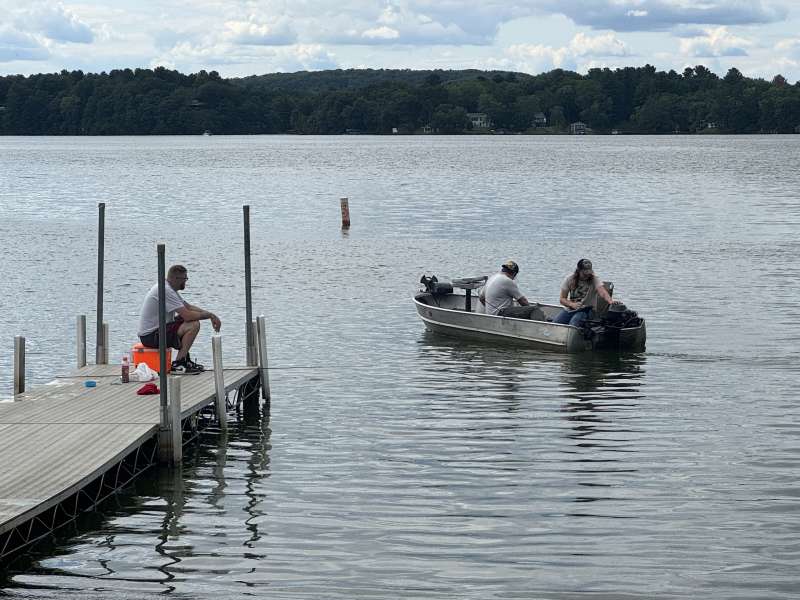
“Our conservation community, of which I’ve been a proud member for almost 20 years, has always come together—whether you’re interested in hiking and bird watching, or hunting and fishing—we’ve all agreed that protecting Wisconsin’s outdoors for future generations is something worth working together on,” Stolp said.
Restoring Lands: A Wisconsin Land Trust is a nationally accredited, community-based conservation group that protects, connects, and restores natural areas, open spaces, and water resources in southeastern Wisconsin. Before that, Stolp was in the same capacity at the Ozaukee Washington Land Trust.
“I’ve worked for 18 years advocating for conservation programs, specifically the Knowles-Nelson stewardship programs, because this, unfortunately, isn’t the first time that we’ve been faced with the prospect of going without funding,” Stolp told UpNorthNews.
Wisconsin’s lifeline for land, water, and recreation
For nearly 40 years, the Knowles-Nelson Stewardship Program protected Wisconsin’s lakes and streams, secured wildlife habitat, and provided world-class recreational opportunities, as stated on its website. This year, for the first time in its history, the program received no new state funding or bonding authority after the Republican-controlled Legislature failed to pass a reauthorization agreement before the legislative session ended.
From day one, however, Stolp said, it’s been a bipartisan program: ”It’s in the name.”
Knowles-Nelson honors two “very strong conservation leaders in Wisconsin’s history,” said Stolp. Warren Knowles, a prominent Republican governor and conservation pioneer for Wisconsin, and Gaylord Nelson, a Democratic governor, state legislator, US senator, and the founder of Earth Day.
Stolp said the majority of Wisconsinites value the Knowles-Nelson Stewardship Program’s goals of forever conserving land and water for future generations. “It has served an important lesson and reminder to lawmakers that this is a program that is above the partisan fray of a lot of our political system, that conservation and preserving land and waters for future generations is something that is universally supported by Wisconsinites, and year after year we conduct polling that affirms that fact,” he said.
Administered by the Wisconsin Department of Natural Resources, Knowles-Nelson has invested in all 72 counties across Wisconsin, helping protect more than 750,000 acres of land and funding thousands of local projects. Funds support local governments, land trusts, and nonprofits, matching dollar-for-dollar to build trails, boat launches, and parks. Stolp said that’s why it’s so popular.
More than 99% of Wisconsinites live within five miles of a Knowles-Nelson stewardship project, according to Stolp. “So whether it’s your neighborhood park or a large nature preserve that you go and visit, or it’s the boat launch that you use to go out and get fishing, there’s a very good chance that Knowles-Nelson’s stewardship program played a key role in creating that access to the outdoors,” he said.
Why did the bipartisan land protection fund lapse?
Knowles-Nelson remains in state statutes, but it is a program in name only, following a state budget rejection and stalled legislative compromises.
“There’s a lot of politics to blame for why that’s happened,” said Stolp.
In his 2025-27 state budget proposal, Gov. Tony Evers asked to extend the grant program for ten years with $100 million in annual funding to ramp up land conservation and park maintenance. Republicans stripped that provision from the budget immediately.
State Sen. Jodi Habush Sinykin (D-Whitefish Bay)—who was an environmental lawyer— calls the defunding and expiration a form of “Republican retaliation” because she and other Democrats believe Republicans gutted the program to punish the state after GOP leaders lost a major legal battle over legislative power.
Over the past several years, Republicans on the Legislature’s Joint Finance Committee used an anonymous veto system to selectively block funding for some Knowles-Nelson projects instead of going on the record with a public vote.
A 2024 state Supreme Court ruling in a lawsuit filed by Gov. Tony Evers against the committee’s co-chair, Republican Sen. Howard Marklein of Spring Green, found that the “legislative veto” violated the constitutional separation of powers because it was blocking executive branch funds that had already been approved by the legislative branch in the state budget.
“Unfortunately, I think a few lawmakers in the Republican majority were very frustrated by that decision, and so they’ve committed to making it very difficult for us to find a path forward to renew funding for Knowles Nelson’s Stewardship program,” said Stolp.
Grassroots volunteers like Rick Bechen of Oregon in Dane County are critical of Republican state lawmakers, specifically pointing to Marklein, accusing him of using “smoke and mirrors” to claim support for the popular program while actively stripping its funding from the state budget.
“When Marklein’s Republican cohorts in the Senate and Assembly advanced a bill that covered a small fraction of what the program required, they admitted that its chance of passage was none,” Bechen wrote in a column for the Oregon Observer. “It conveniently provided political cover for members who were up for reelection to say they voted for Knowles-Nelson and then blame Democrats when it failed.”
“What’s clear from the failure to pass Knowles-Nelson is that Howard Marklein and his Republican colleagues care more about scoring political points than the public they’re supposed to serve. Howard Marklein is no friend to our parks, trails, and wildlife areas. It begs the question of who he’s really representing.”
Bechen said, “When your public fishing, hunting, camping, hiking, or boating facilities close, or your property taxes go up to keep them open, it’s important to remember who did this to you and your community.”
What will it take to bring Knowles-Nelson back?
Future grants for local parks, wildlife habitats, and outdoor recreation no longer have dedicated state backing. Conservation groups are forced to rely on private donors and alternate funding to replace the missing state matching dollars for ongoing land purchases.
Stolp says bringing the program back will likely depend on future legislative compromises or shifts in state government following upcoming elections.
Stolp says bringing the program back will likely depend on future legislative compromises or shifts in state government following upcoming elections. He’s optimistic anyway. Talking to lawmakers in both parties, he says most want to see the program continue, and he expects new legislators to take office next year regardless of which party ends up in control. “We’re very confident that we can forge a new coalition of pro-conservation lawmakers from Republican and Democratic sides of the aisle to get Knowles Nelson’s stewardship program refunded for the coming decade,” said Stolp.
Habush Sinykin said while the program is dormant, she has a message. “I encourage you to share how these places impact your life—whether it’s a fishing trip with the kids or a quiet morning walk before a busy day,” she said. “This bipartisan program adds value to our lives and our state, and I remain committed and confident we can come together next year to get this program reauthorized and funded.”
Sen. Kelda Roys (D-Madison), a candidate for governor, said her connection to Knowles-Nelson is personal. Her stepfather, a conservation lawyer, helped start the program and is the reason it carries the Nelson name.
“One of the things I want to do as governor is to restore emergency funding to that program rather than try to wait for the state budget to be passed, which is going to take months,” Roys told UpNorthNews.
“We cannot afford to let Wisconsin’s beautiful conservation legacy wait any longer.”
Stolp, who has spent nearly two decades on this work outside of electoral politics, comes back to something simpler than a coalition count or a funding number.
“I think the Knowles-Nelson Stewardship Program is really Wisconsin’s promise that the places that deserve to be protected should be protected and that those really belong to our children,” said Stolp. “It’s a promise to future generations that the same outdoor traditions that we enjoy in Wisconsin today—those traditions will be available for future generations.”