In Reedsburg, the school district runs its own free food market. It’s called The Den, and families can leave with groceries without filling out an application or proving their income.
The district covers about 260 square miles of Sauk County farm country. For some families, the nearest reliable grocery store is a 20-minute drive.
Superintendent Tom Burkhalter told UpNorthNews in February that fewer students were signed up for free school meals, even though families were still struggling.
“Our numbers are down, and I know our need is not down,” he said.
Schools like Reedsburg are absorbing a decision made in Washington.
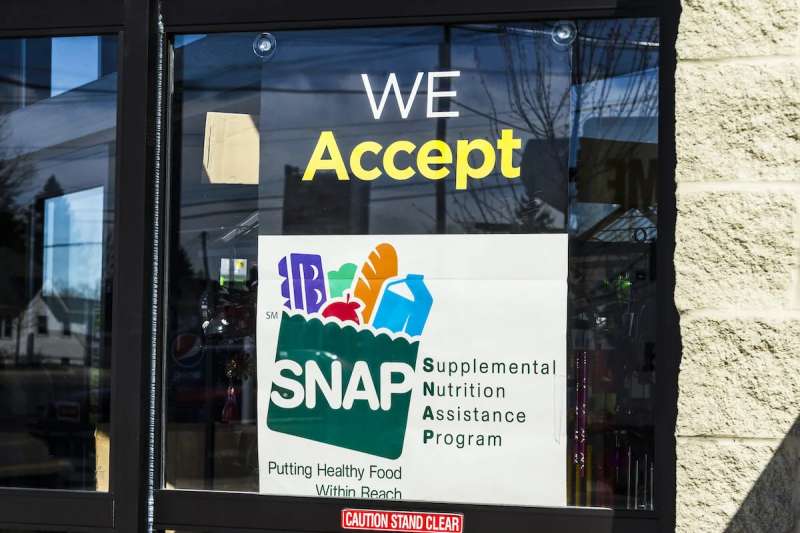
In July 2025, President Donald Trump signed the budget law Republicans called the One Big Beautiful Bill Act (OBBBA). At the time, about 688,000 Wisconsinites got FoodShare, the state’s name for SNAP. By April, about 33,000 fewer did, according to state health department data reported by Wisconsin Public Radio.
New work rules now cover adults ages 18 to 64 without a child under 14 at home, including parents of teenagers. Many refugees and other legally present immigrants lost eligibility in July.
Feeding America estimates 1 in 5 children in eastern Wisconsin now lives in a food-insecure household. That’s the highest rate since the Great Recession.
“More families are turning to food pantries not because they aren’t working,” Monique Kelley, CEO of Feeding America Eastern Wisconsin, said when the data came out in July.
Losing FoodShare doesn’t just shrink a family’s grocery budget. It can also take a child off the school’s free meal list, which creates a paperwork issue. Kids in FoodShare households are signed up for free meals automatically. But once the benefits stop, parents have to apply on their own, and many don’t know an application is even necessary.
Those automatic sign-ups matter for schools, too. If at least 25% of students qualify for FoodShare, the school can serve free breakfast and lunch to everyone, regardless of income. With fewer families on FoodShare, some schools could fall below that threshold and lose that option.
Some Wisconsin students have already lost free meals for all. Kenosha Unified stopped serving free lunch to every student at 17 schools this fall, saying the money that funded the program dried up.
More changes may come from Washington. On Nov. 10, the US Department of Agriculture proposed ending an eligibility shortcut used by more than 40 states. By the agency’s own count, roughly 1.78 million children could lose automatic access to free meals. Most would still qualify if their families filled out an application. Comments are due Dec. 10.
Teachers have long said hungry students struggle to focus, and researchers have found evidence to back those claims. Universal free meals lifted math scores in New York City and South Carolina, and some schools that offer free meals to everyone have seen attendance improve.
In Nekoosa, a Wood County city of about 2,500, Nikki Stearns saw the need up close. She helped the school district start a food pantry in late 2024. In its first months, it served 38 people. A year later, she told the Wisconsin Examiner it was serving about 200 children.
“So many of my kids are hungry,” Stearns said.
Statewide, child hunger is up 60% over five years, the Office of Children’s Mental Health found in September.
Wisconsin taxpayers now cover more of FoodShare’s costs. This fall, the state’s share of the program’s administrative bill jumped to 75%, roughly $32.4 million per two-year budget.
A bigger bill could follow. Beginning in fall 2027, states that make too many payment mistakes will have to fund part of the benefits. Wisconsin’s 5.72% error rate in 2025 cleared the 6% cutoff. Slipping above it could cost the state as much as $205.5 million each year.
To keep that rate down, Gov. Tony Evers signed a GOP bill in March, sending about $72 million to FoodShare to staff a job training program. Republicans attached a condition: Wisconsin must ask federal officials to let it bar FoodShare purchases of candy and soda. Evers said he disliked the ban but described the deal as “one of those things we call compromise.”
Some Republican lawmakers see FoodShare as a federal program with federal problems. Senate President Mary Felzkowski (R-Tomahawk) put it plainly during last year’s shutdown: “This is a federal issue.”
Democrats have tried another route. Sen. Sarah Keyeski (D-Lodi) and her colleagues have pushed a Healthy School Meals for All bill to offer free breakfast and lunch to every student. It hasn’t gotten a vote in three sessions.
The math in Madison changed on Nov. 3. Democrats won control of both legislative chambers, and David Crowley was elected governor. A day later, Assembly Democratic Leader Greta Neubauer (D-Racine) listed free school meals for all students among the ideas her caucus is weighing.
“We recognize this is a huge opportunity,” Neubauer said.
Universal school meals wouldn’t restore anyone’s FoodShare benefits; Congress controls those. What they could do is make sure a child’s lunch no longer hinges on a parent’s paperwork.
In Reedsburg, where free-meal sign-ups are falling and the need isn’t, families will be watching what lawmakers do once they’re sworn in this January.