$75 million added, but $1.4 billion in repairs needed
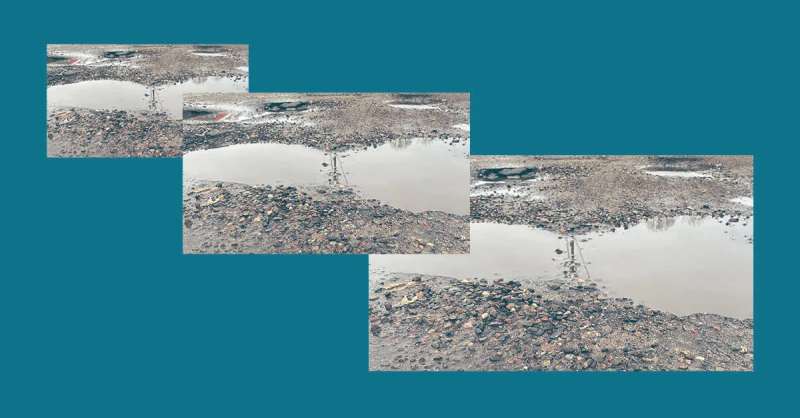
Every time Clark County Highway Commissioner Brian Duell compiles a list of transportation projects in need of repairs, he runs into the same problem: The number of roads riddled with potholes and bridges in need of upgrades is much larger than the amount of available funding.
This year the county near the state’s center, sandwiched between Eau Claire and Marathon counties, is scheduled to spend $4.3 million on transportation-related work. That total would be significantly higher if the county were to fix all of the needed roads and bridge work, Duell said.
“The need is always more than the funding we have available,” Duell said. “We haven’t had a sustainable highways funding source for years, and without that, we just pick the worst of the worst to do and put off the other projects until later.”
Clark County isn’t alone in its struggle to maintain roads. County highway commissioners, town board members and residents fed up with bumpy roads from across Wisconsin said state funding for roads and bridges must be increased. Failing to do so will not only make for rough rides but will hinder the state’s economy, they said.
State roads expenditures have been a much-discussed issue for the past decade as years of flat funding under the Republican-controlled state Legislature amid rising costs have many complaining about crumbling travel routes and infrastructure. To help alleviate that, $400 million was added for roads and bridges as part of the 2019-21 state budget.
County officials applauded the transportation bump-up. But after more than 10 years of state funding for roads failing to keep pace with the need, more must be done in ensuing budgets to restore Wisconsin’s transportation system to passable condition, they said.
The additional transportation dollars were “a good first step,” to address the poor condition of state roads, said Robbie Krejci, St. Croix County highway commissioner. “Now the real challenge is how do we get to a sustainable funding model.”
In an effort to boost transportation funding, last week Gov. Tony Evers announced a one-time $75 million infusion from the state’s Multimodal Local Supplement (MLS) fund for 152 transportation-related projects across the state. That money will go toward road projects in 84 towns, 34 cities and 34 villages, work many local government officials across Wisconsin said wouldn’t be possible without the additional dollars. The maximum grant for any one project was $1 million.
One community, Kimberly, in Outagamie County received $1 million for a roads project through the MLS program. But other government municipalities sought funding too, but didn’t receive it, said Dean Steingraber, the county’s highway commissioner.
The Rusk County town of Murry, in northwestern Wisconsin, also failed to receive requested MLS money. Town Chairman Peter Boss said the town only has enough money to repair one mile of road every three years. He expressed frustration at failing to obtain dollars for two road projects there.
“The state funding we get isn’t nearly enough,” Boss said, noting he would have to triple money he receives to adequately repair roads in his town.
The state Department of Transportation said it received more than 1,600 applications statewide through the MLS program to repair failing roads and bridges, and install bicycle/pedestrian paths. Costs for those projects totaled about $1.4 billion.
The unfunded projects figures are proof of the growing number of crumbling roads across Wisconsin in recent years, Outagamie County Highway Commissioner Dean Steingraber said. In fact, he said, the 1,600 figure is artificially low because in many locations, including his county, officials didn’t seek dollars for many of the projects in need of repairs.
“We only applied for funding for the roads in the worst shape,” Steingraber said, “because we know there isn’t nearly enough funding out there. The $75 million was only going to scratch the surface of the real need.”
Wisconsin’s failing roads were created by years of inadequate funding amid rising costs, he said. With local governments spending constrained by tax levy limits that can only grow slowly from year to year, and a lack of enough state dollars, those governments are forced to borrow money to fix roads.
Outagamie County officials have borrowed $5 million annually in recent years for road work. But that can only happen for so long before it breaks the budget, Steingraber said, stretching other governmental departments thin in the process.
“Our county supervisors are telling us we have to do something else. This isn’t sustainable,” he said.
Krejci said roads in his county on the Wisconsin-Minnesota border are heavily traveled as the region close to the Twin Cities continues to grow in population. A $10 per-vehicle registration fee adopted in 2008 provides nearly $900,000 annually, adding to road repair money. “But even with that we are struggling to maintain our infrastructure funding,” he said.
Krejci and others said the state must find a way to come up with ongoing funding for its portion of road payments. In recent years legislative Democrats have proposed adopting a gas tax to help pay for road maintenance, but the Republican-controlled Legislature has refused to approve that measure.
Lawmakers from both parties said they’re concerned about the future of road funding in the state despite the new revenue allotted for transportation as part of the current budget. Duell said he’s worried too. In recent years Clark County has gotten by with short-term borrowing for road repairs, but that isn’t sustainable long-term, he said.
“There are options being discussed,” Duell said, “and I don’t know what the best answer is. But I do know we have to do something to put more money into our infrastructure if we want to keep our system going.”