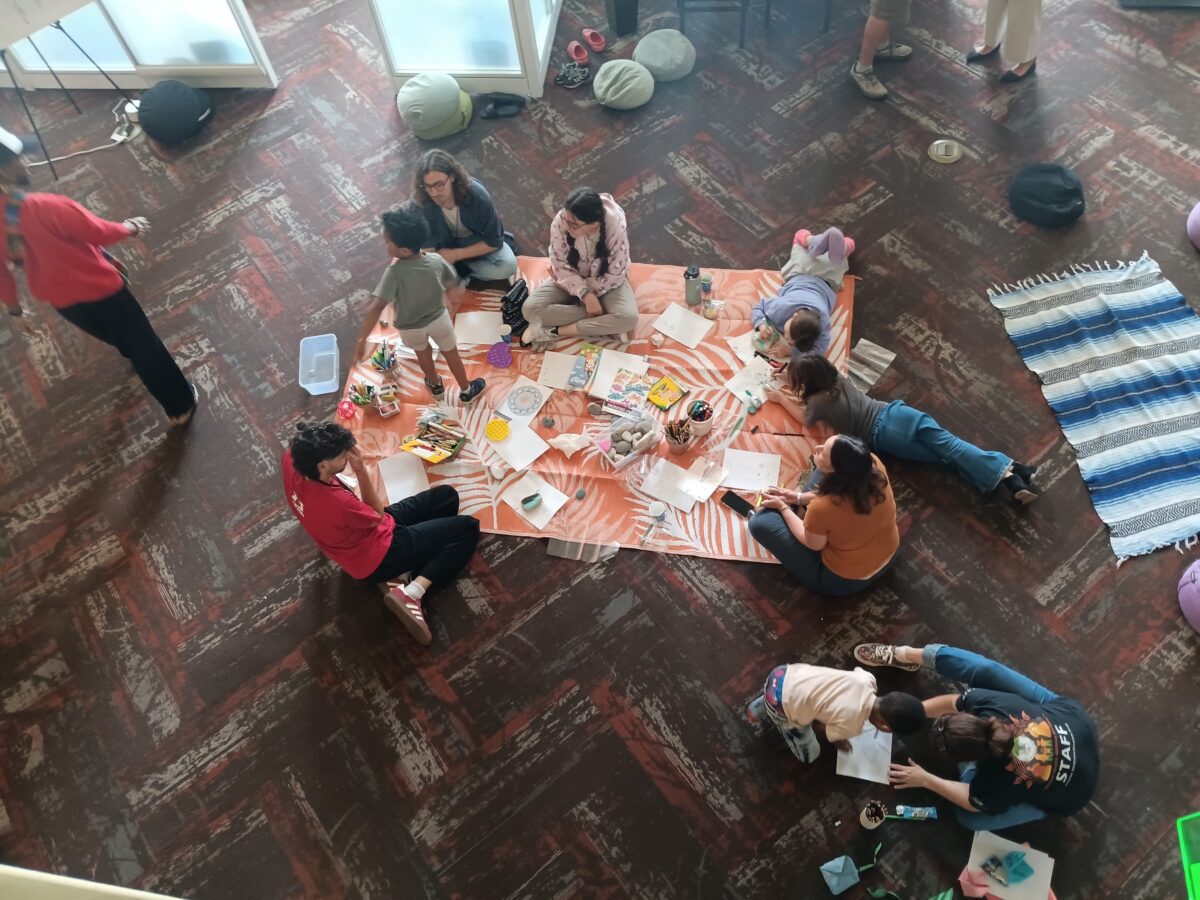
A youth group session at HIR Wellness Institute. HIR stands for "healing intergenerational roots." The institute focuses on healing generational trauma within Milwaukee's Indigenous community. (USA Today via Reuters Connect)
It’s not uncommon for Indigenous people to feel distrustful or on guard when around White people, explains Lea Denny.
That distrust is passed from ancestors after centuries of betrayal, land theft, cultural oppression and genocide against Indigenous peoples by colonists.
Denny is the founder and CEO of an institute in Milwaukee addressing generational trauma among Indigenous peoples.
“They feel like it’s happening all over again,” Denny said of the subconscious emotions Indigenous people may feel in today’s society.
That feeling is part of the generational trauma at the root of many issues faced in Indian Country today, including depression, anxiety, suicide, addiction and domestic abuse. Scientists continue to learn more about generational trauma; it has been studied in descendants of slaves and Holocaust survivors as well.
Healing that trauma is the reason why Denny founded the nonprofit HIR Wellness Institute in 2017. It is located within the Forest County Potawatomi Community’s Wgema campus in Milwaukee, the site of the former Concordia College. HIR stands for “healing intergenerational roots.”
Its counselors are survivors of trauma and violence, and focus on a blend of evidence-based practices, neurosciences and Indigenous healing traditions. The institute especially focuses on offering support groups and crisis care for survivors of violence, including domestic, sexual assault, trafficking and the epidemic of MMIW (murdered and missing Indigenous women and girls).
As a licensed professional counselor working in the field of mental health, Denny, who’s of Native Hawaiian and Filipino heritage and married to an Oneida tribal member, found the Western approach was not fully adequate for Indigenous people.
She said Western psychology tends to focus on individualism and strengthening the person. Denny said that’s fine, but she also saw a need in the Indigenous community to delve deeper into their roots.
Many Indigenous cultures traditionally view people as connected to each other and everything in the world, and strengthening the health of the community is vital.
That’s why group, or even community, therapy is an important part of the institute. A key group is the Daughters of Tradition, and more recently the Sons of Tradition.
The groups focus on building cultural identity, leadership and advocacy skills, and sisterhood or brotherhood for young people. “One of the greatest barriers to care is your voice being silenced,” Denny said.
She said the groups help strengthen a person’s voice, not only by building confidence, but through sisterhood or brotherhood.
“Their greatest strength is a group of women who can protect you,” Denny said of the Daughters of Tradition.
She said the many of the girls in the program will offer each other a lifetime of protection and care.
Denny said the goal of the groups is not to teach Indigenous culture, but to create a space where culture can be shared without judgment.
Different tribal nations have different ways of using culture, such as when to smudge with sage smoke, when to use sweetgrass, and different thoughts about the meaning behind ribbon skirts or shirts, or ceremonial songs and dance.
The institute serves about 1,800 people per year through its model, developed by Denny, called “community activated medicine.” The model focuses on supporting collective grieving and collective healing.
About 80% of the institute’s clients are female, 76% are Indigenous and 94% are survivors of domestic violence or sexual assault.
Much of the institute’s $1.7 million in funding in 2023 came from federal grants, but that money is starting to dry up under the Trump administration. And the federal grants that do still come in have stipulations attached regarding the administration’s opposition to diversity-equity-inclusion standards. For example, it can’t be used for programs addressing the decolonization of historical trauma or White supremacy.
Denny is hoping to build more of a donor base to decrease reliance on federal funding, as well as asking tribal nations for more support for Indigenous people living in Milwaukee.
Frank Vaisvilas is a former Report for America corps member who covers Native American issues in Wisconsin based at the Milwaukee Journal Sentinel. Contact him at [email protected] or 815-260-2262. Follow him on X at @vaisvilas_frank.
This article originally appeared on Milwaukee Journal Sentinel: Indigenous practices help heal trauma passed down through generations
Reporting by Frank Vaisvilas, Milwaukee Journal Sentinel / Milwaukee Journal Sentinel
USA TODAY Network via Reuters Connect
Author


How photography became one Wisconsin man’s way of protecting the Apostle Islands
Peter Wagner’s photography journey began more than 50 years ago when his brother handed him a 35 millimeter camera. Now, he's using his skills to...
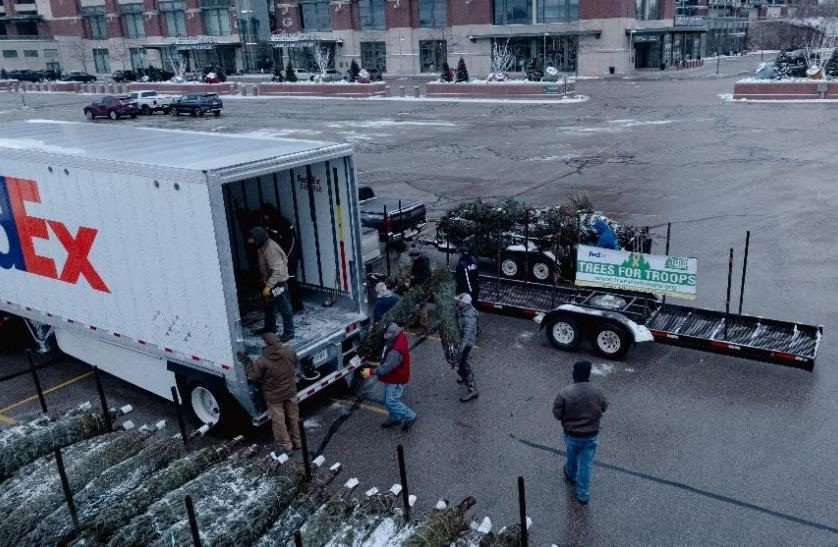
Wisconsin growers donate over 700 Christmas trees through Trees for Troops
Thanks to the generosity of Christmas tree growers from around Wisconsin, there will be some holiday cheer for men and women serving in the...

‘Sleep Out’ event provides shelter and education on homelessness
Tyrone Baldwin is homeless and was in his tent on Milwaukee’s north side in early 2025 when a wet, heavy snow caused his tent poles to break. The...
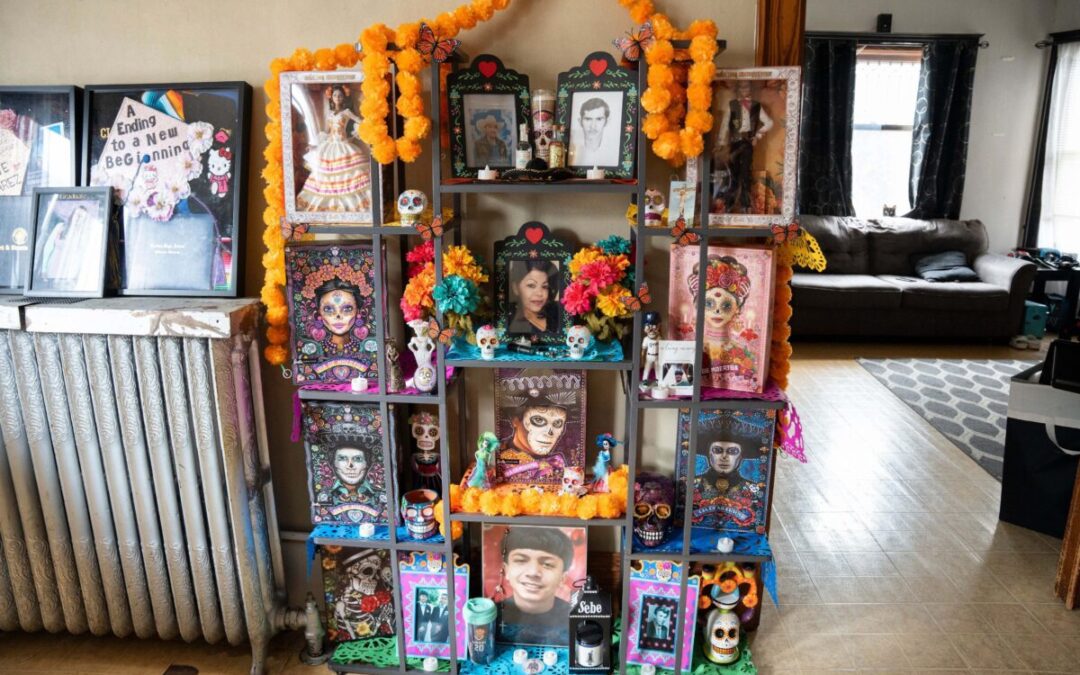
How Milwaukee families keep memories alive through Día de los Muertos ofrendas
It was completely dark outside, and in the house, the night Cinthia Borunda-Valadez put an image of her father-in-law on her ofrenda, nearly a year...