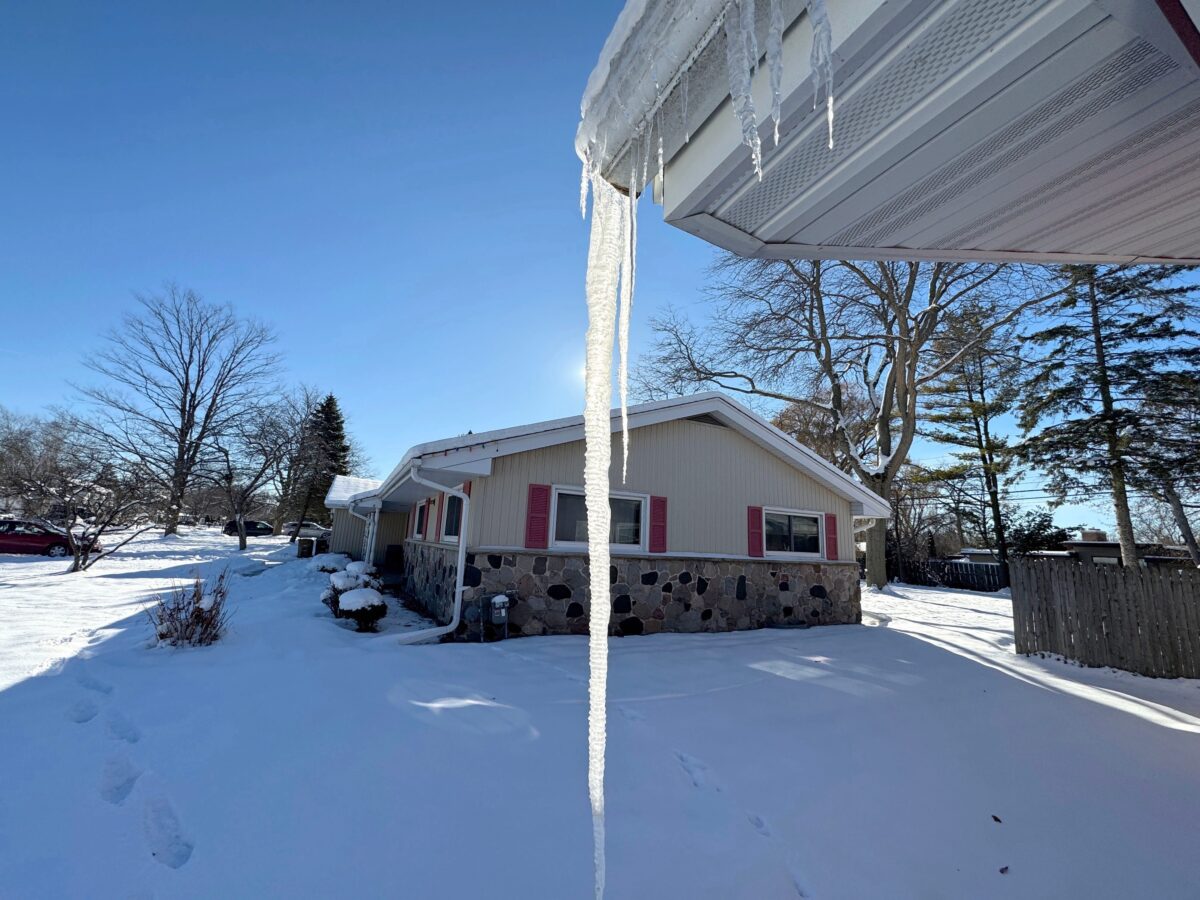
A large icicle hangs from a home in Bayside on Sunday, Dec. 7, 2025. (USA Today via Reuters Connect)
Tis’ the season for ice dams, Wisconsin. When icicles hang from the edge of your home’s roof after snowfall, it’s a sign this fickle, recurring winter concern might be plotting a leak into your home.
Here’s what to know about ice dams and how to prevent damage.
What is an ice dam?
When snowfall builds up on the top of a home, heat from the building’s insulation, chimneys and roof vents, and from the sun causes the snow on the roof to melt.
That water runs down the roof to the typically cold and unheated gutter at the edge of the home or the base of the roof’s valleys and refreezes, according to Nashotah-based Wisconsin Ice Dam Solutions, which sells ice dam prevention products. But the snow on the warm parts of the roof will continue to melt.
Eventually, the continued cycle of water running down and refreezing forms an ice dam that grows up the roof, preventing water from flowing down to the gutter, roofing experts previously told the Milwaukee Journal Sentinel.
That can lead the water to creep into shingles, causing leaks or water damage to a home’s attic, ceiling, drywall and floors.
What damage can ice dams cause on houses?
Most damage caused by ice dams is typically found in the ceiling and external walls closest to the gutters, roofing experts previously told the Milwaukee Journal Sentinel.
Moisture in the attic, water stains on ceilings or walls and peeling paint are the first signs of damage.
When unchecked, ice damming can cause internal damage and mold issues, leading to expensive repairs, according to Wisconsin Home Improvement, a Menomonee Falls home energy improvements and insulation business.
In extreme instances, excessive amounts of snow can also cause roofs to collapse, but that’s less common for homes and more likely to occur on flat, commercial buildings, the Journal Sentinel previously reported.
Why do ice dams happen?
Improper ventilation and not enough insulation in the attic cause ice dams.
Some homes designs force all the snow into a particular area of the roof, making a single spot more prone to issues that can’t be solved by improved ventilation.
When temperatures warm up, ice dams that have formed on roofs around Wisconsin will start to melt, leading to leaks. Bay windows are also vulnerable to leaks due to poor insulation.
If a home has a lot of snow on its roof, is that cause for concern?
Just because there’s snow on your home, it doesn’t mean you’ll automatically run into problems caused by ice dams, experts previously told the Journal Sentinel.
But the sight of big icicles hanging from the gutters, ice patches on the roof or previous ice dams in the past are all signs that a homeowner should beware, Josh Klimas, general manager at Milwaukee’s Ridge Top Exteriors told the Journal Sentinel Dec. 10.
“The ideal situation is to eliminate the ice dam before getting interior damage,” Klimas said.
“If the melting snow and water can’t go anywhere, eventually they’ll get into your house.”
Attics are key for mitigating ice dams
A balanced insulation system in the attic will keep more heat inside the home and can improve ice dam outcomes, according to Klimas.
“The best scenario is to have your attic as close to the outside temperature as possible so the snow melts in a uniform manner,” he said.
Most roofs aren’t properly ventilated, Klimas said.
Homes with a balanced ventilation system have an equal amount of air entering the roof at the eaves and exiting the attic out the exhaust vent at the home’s ridges, Klimas said.
How do I prevent and manage ice dams?
To prevent ice dams after snowfall, homeowners can get rid of excessive snow with snow roof rakes.
Klimas advises to rake the top layer of snow, and not all the snow, to avoid shingle damage.
Removing the snow prevents extensive snow melt. But a rake may not be a reliable fix for the cold season, and it’s a challenging physical task for some.
Crews with Ridge Top Exteriors use a high-pressure steamer called the Arctic Steamer to safely removing ice and snow without damaging shingles. Klimas said crews are currently using the steamer for the first time since 2021, a sign this winter is snowier than usual.
Homeowners can ward off future ice dams by taking stock of their home’s ventilation and the insulation in their attics.
Businesses in the area, including Wisconsin Home Improvement, offer free home energy audits to can survey for leaks and evaluate insulation and ventilation. That can help identify whether your home is at risk of ice dams, and lead to insulation upgrades and other services to mitigate ice damming in the future.
Contractors can also install systems like ice and water shields or heating cables to prevent any damage from occurring due to ice dams.
Klimas warns that while those shields are designed to help protect from ice dams, but that doesn’t prevent ice dams from forming.
“You can do everything absolutely perfect and still get ice dams just because we live in Wisconsin,” Klimas said.
Hannah Kirby contributed to this article.
This article originally appeared on Milwaukee Journal Sentinel: What to know about ice dams, how to prevent them in snowy Wisconsin winter
Reporting by Bridget Fogarty, Milwaukee Journal Sentinel / Milwaukee Journal Sentinel
USA TODAY Network via Reuters Connect
Author


Wisconsin wellness tips: Staying safe this winter
How to stay safe and warm this winter in Wisconsin. If you’ve lived any amount of time in Wisconsin, you know winters can pose serious risks to the...

Is more Arctic air coming? Snow, harsh freeze possible in Wisconsin for Thanksgiving
Wisconsin is in store for a warmer weekend, but could see a return of Arctic air around Thanksgiving as models suggest a possible "wobble" in the...
Has cooler fall weather finally arrived in Wisconsin?
Freeze warnings are in effect across much of Wisconsin and the Great Lakes region this week, as overnight temperatures dip low enough to threaten...
Record-shattering flood hits Milwaukee County
By: Isiah Holmes Neighborhoods across Milwaukee County are continuing to recover from record-shattering flooding over the weekend. Inundated...