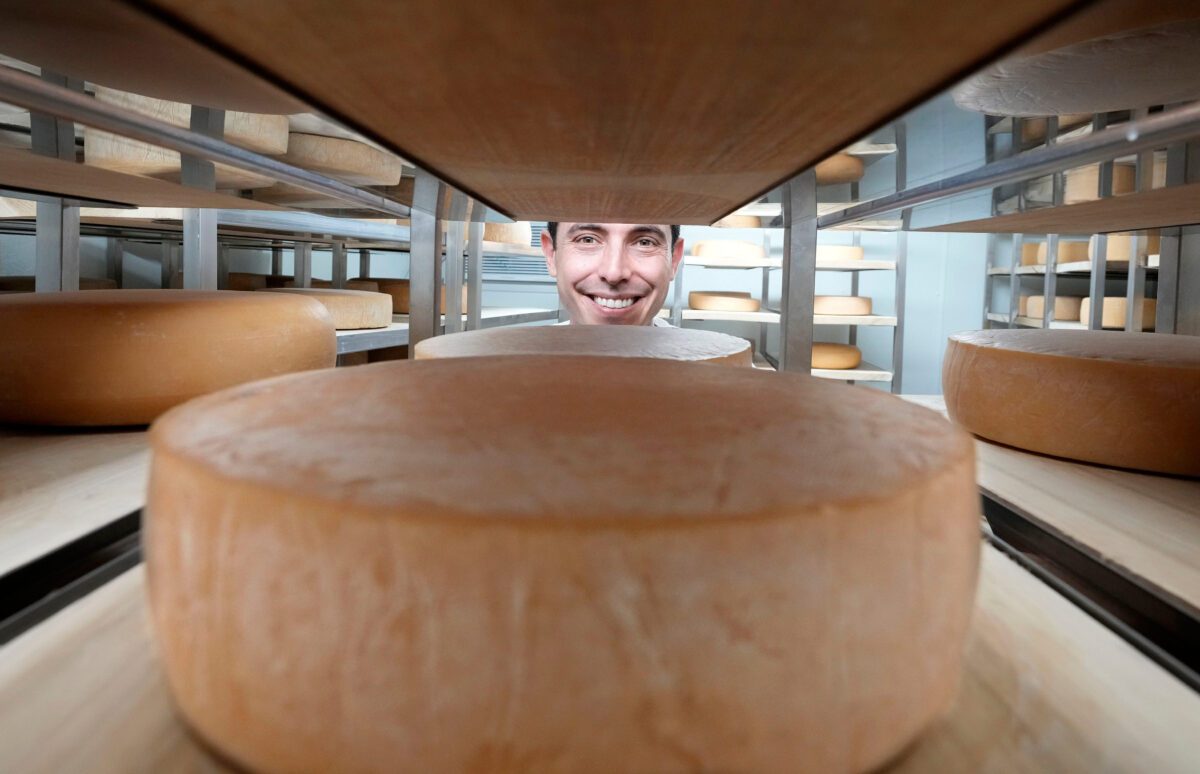
Alpinage Artisan Cheese owner Orphee Paillotin is seen through a rack of raclette wheels in the company's cheese cave in Oak Creek, where the Alpine-style cheese is aged for two months or more. The young company produced its first wheel of cheese a year ago and has been growing ever since. (USA Today via Reuters Connect)
Wisconsin takes pride in being the “America’s Dairyland,” but with that title has come some unique laws and certifications to protect the integrity of the state’s dairy industry.
Here are some uniquely Wisconsin dairy laws, rules, regulations and certifcation programs that set Wisconsin’s dairy products a part from others.
Wisconsin restaurants, schools, hospitals and prisons can’t serve margarine
For nearly six decades, it was against the law to buy yellow margarine in Wisconsin. While you can now buy it in any grocery store, don’t expect to be served yellow margarine with your toast at your favorite breakfast place, unless you specifically ask for it.
State statute still prohibits restaurants from serving margarine as a substitute for butter unless the customer specifically requests it. Additionally, the law generally prohibits margarine from being served to students, patients or inmates as a substitute for butter at any state institution.
First-time violators can be fined between $100 and $500, face imprisonment up to three months or both. A repeat offender can see a fine between $500 and $1,000 and up to one year in jail.
The law evolved from a 72-year ban on margarine, enacted in 1895, to protect the state’s dairy industry. The law banned the manufacture and sale of yellow oleomargarine, prompting many Wisconsinites to cross state lines in the 1950s and 60s to buy it.
While the statewide ban on yellow margarine was lifted in 1967, the ban on serving margarine at restaurants remains. Despite a 2011 effort to remove the state’s lingering margarine restrictions, they have stuck around.
‘Wisconsin Cheddar’ is more than just a name; rules and regulations define what qualifies
In 2024, Wisconsin cheese made up 25.2% of all U.S. production — more than any other state — with its 14.2 billion pounds of cheese produced, according to the U.S. Department of Agriculture.
“Wisconsin Cheddar” is more than just a brand name in the Badger State. In order to protect the integrity and reputation of Wisconsin cheese, the state has specific regulations for it.
“Cheese” is defined as a dairy product prepared from the pressed curd of milk, according to a Wisconsin Department of Agriculture, Trade and Consumer Protection rule. The following varieties with or without rind formation are classified as “cheese,” per DATCP:
- Brick or Muenster
- Cheddar
- Colby
- Granular
- Monterey (Jack)
- Swiss
- Washed Curd
Beyond a formal definition, DATCP rules outline specific requirements for the different cheeses. To be considered premium grade AA Cheddar in Wisconsin, the flavor of the cheese must be “highly pleasing,” according to rule 81.40(1). Grade B Cheddar only needs to be “fairly pleasing,” per rule 81.42(1).
All other types of cheeses have similar standards mentioned in DATCP’s rules. While standards for what makes a cheese “highly pleasing” or “fairly pleasing” are not clearly defined, the DATCP regulations do include definitions for 11 color, 22 texture and 18 flavor characteristics; 25 finish and appearance characteristics; and four grade attributes.
Wisconsin Master Cheesemaker Program is one-of-a-kind in the nation
Beyond its rules and regulations to ensure high quality cheese production, Wisconsin is the only state that requires a licensed cheesemaker to oversee all commercial cheese production.
Wisconsin cheesemakers looking to hone their craft are in a unique position to earn a certification mark through the rigorous Wisconsin Master Cheesemaker’s Program, the nation’s only advanced education program for cheese making.
Wisconsin’s prestigious “Master’s Mark” of quality is only granted to cheesemakers who have graduated from the Wisconsin Master Cheesemaker’s Program. In order to be accepted into the program, applicants must currently be making cheese in a Wisconsin plant and hold a Wisconsin cheesemaker’s license for a minimum of 10 years.
Candidates can seek certification for up to two of 36 cheese varieties to specialize in at once, each time they enter the three-year program. The varieties chosen must be ones they have been making for at least five years, according to Dairy Farmers of Wisconsin.
Since 1994, nearly 100 cheesmakers have completed the Wisconsin Master Cheesemaker’s Program. There are over 1,200 licensed cheesemakers total in Wisconsin.
Wisconsin is the only place outside of Switzerland where one can formally become a Master Cheesemaker, according to the Master Cheesemaker Wisconsin 2025 directory.
Anna Kleiber can be reached at [email protected].
This article originally appeared on Milwaukee Journal Sentinel: What makes Wisconsin ‘America’s Dairyland?’ These quirky laws and regulations could hold the answer
Reporting by Anna Kleiber, Milwaukee Journal Sentinel / Milwaukee Journal Sentinel
USA TODAY Network via Reuters Connect
Author


The Eagle River Ice Castle: A 92-year-old winter tradition
Northern Wisconsin is home to its own beautifully constructed castle, but only for a short time when the weather is just right. Not many Wisconsin...

10 of the best cut-your-own Christmas tree farms in Wisconsin
Make your holidays merry and bright with an experience to remember. Visit one of the best cut-your-own-tree farms in Wisconsin this season. Dashing...
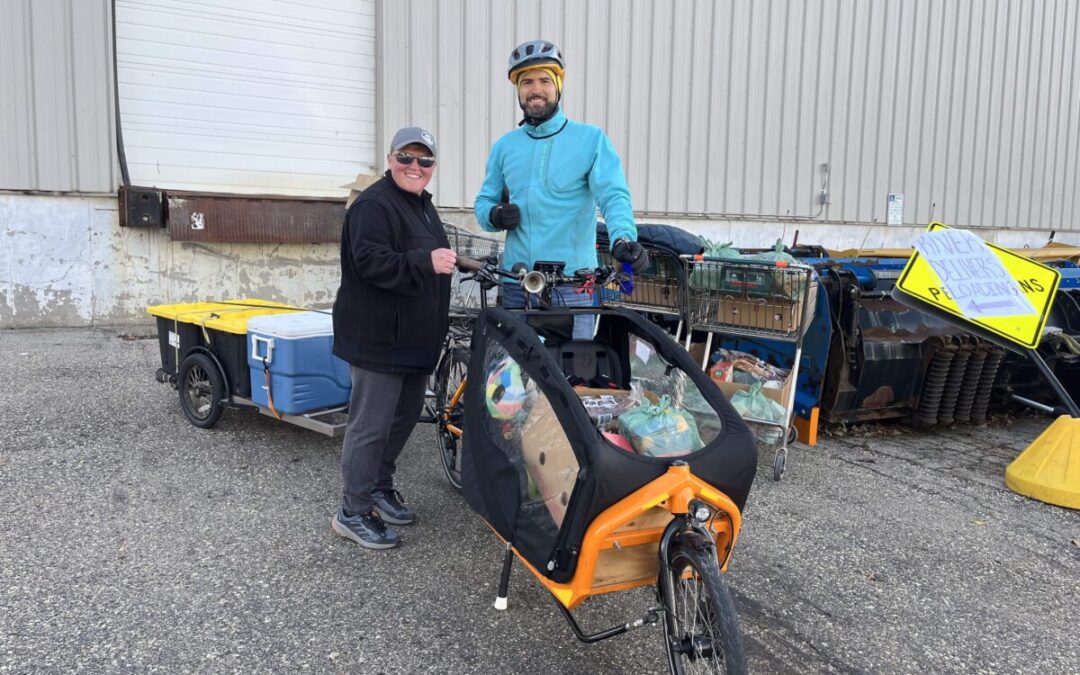
Bikes for Kids Wisconsin launches new grocery delivery program
Bikes for Kids Wisconsin teams up with The River Food Pantry to pilot ‘Meals on 2 Wheels’ initiative. This fall, Bikes for Kids Wisconsin piloted...

Bikes for Kids Wisconsin hosts Giving Tuesday Telethon to donate bikes to children in need
A Wisconsin nonprofit is raising money to donate bikes to children in the community. Bikes for Kids Wisconsin will host its annual Giving Tuesday...