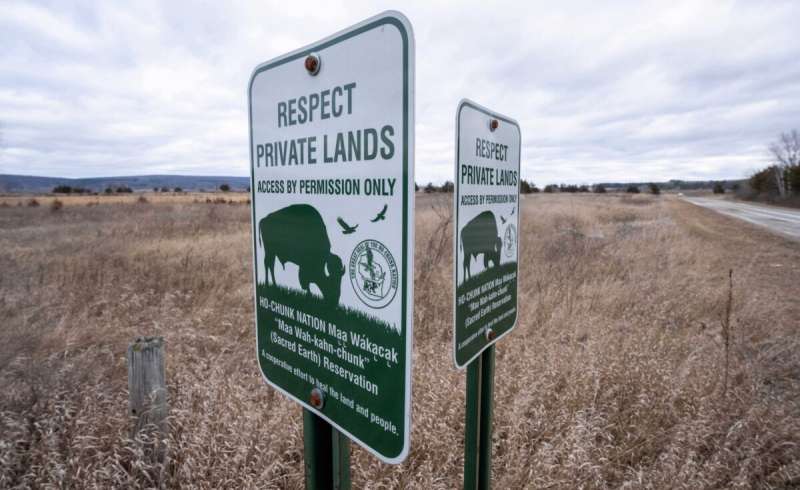
The land which once held a massive munitions plant near Devil’s Lake State Park has had many chapters.
From the prairie home of the Ho-Chunk Nation, to fertile farmland for European settlers, to the plant itself and decades of cleanup of toxic waste left behind, it has transformed several times.
Here are historical highlights of its time as the former Badger Army Ammunition Plant and what has happened since:
October 1941: Plans for the Badger Ordnance Works start as the U.S. prepares to enter World War II. The plant is slated to produce nitrocellulose propellant for guns and rockets.
March 1942: Workers travel to the site to build the infrastructure for the plant. At the peak of construction, nearly 11,000 workers are on site, working to complete 900 “units.”
May 1943: Propellant manufacturing begins, first shipment is sent out to weapons plants via train.
1944: Another blitz of construction builds sites for the production of rocket propellant, with construction wrapping up in 1945, just as World War II was ending.
July 1945: Four men are killed in an explosion at a nitroglycerine neutralizing house at the plant.
September 1945: The plant is placed on standby as the war ends.
1951: The plant is reactivated to produce propellant for the Korean War. Conditions were less urgent, but the plant produced nearly as much propellant for the Korean War as it did for WWII. Near the end of the Korean War, a new facility was built to manufacture a different type of propellant.
1960s: The plant is reactivated for the Vietnam War.
1961: The plant name is changed to Badger Army Ammunition Plant.
December 1969: An attempted bombing is carried out by a nephew of one of the men killed in the 1945 explosion. The man and other Vietnam War protesters would later go on to bomb Sterling Hall at the University of Wisconsin-Madison.
March 1975: The plant is placed on standby status, effectively terminating operation.
1977: The Army begins assessing environmental damage and contamination at Badger.
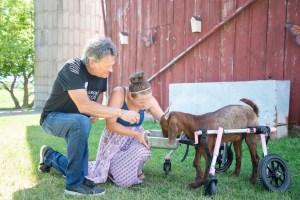
1980: Animals are brought to the Badger site to establish the Dairy Forage Research Station, established by the University of Wisconsin and the U.S. Department of Agriculture.
1990: Contaminants are found in the private wells of residents who lived near Badger. The Army starts routinely monitoring private wells.
1998: Badger Army Ammunition Plant is decommissioned as it was considered “excess.” The lengthy process of decontamination begins.
2001: The Army dredges Gruber’s Grove Bay to remove toxic sediment. The bay was re-dredged several times after, including in 2006.
2004: Residents are notified about pollution, particularly regarding ethyl ether, a chemical that can cause alcohol-like effects if consumed in high doses.
2011: The Army floats an idea to establish a public drinking water system for the residents around Badger.
2015: More than 1,500 acres of land are transferred back to the Ho-Chunk Nation. According to the Badger History Group, this was the first time the Army returned land to an Indigenous people.
2016: Using data collected since 2000, the Army substantiates that plumes of contamination are moving and identifies locations for additional monitoring wells.
2017: The Army abandons its plan for a public drinking water system, saying it had acted beyond its authority in greenlighting such a proposal.
2018: More than 3,000 acres of the site opens to the public as the Sauk Prairie State Recreation Area.
2020: A prescribed burn on the former Badger Army land ignites propellant residue left over from production. The fire produces orange smoke, and as a result, the Department of Natural Resources halts prescribed burns to keep staff and the public safe.
2025: The Army continues to hold meetings to share information about the status of remediation and to gather input on a proposed vegetable oil injection strategy.
Laura Schulte can be reached at leschulte@jrn.com and on X @SchulteLaura.
This article originally appeared on Milwaukee Journal Sentinel: A timeline of the storied history behind Wisconsin’s former Badger Army Ammunition Plant
Reporting by Laura Schulte and Madeline Heim, Milwaukee Journal Sentinel / Milwaukee Journal Sentinel
USA TODAY Network via Reuters Connect