Reporting by Frank Vaisvilas, Milwaukee Journal Sentinel
The hours are long and sometimes frustrating.
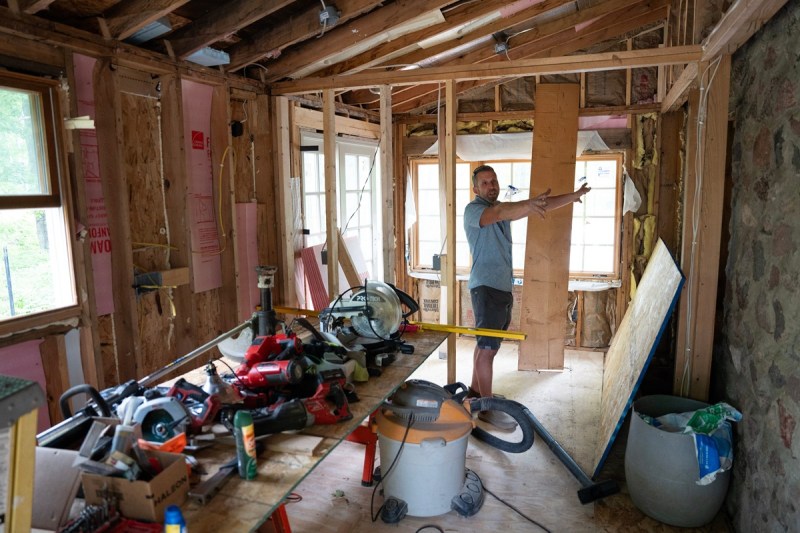
Lon Allen and his sister Chrystal Wedde continue trying to restore a historic home to its former grandeur on the Stockbridge-Munsee Mohican Reservation in northeast Wisconsin.
They’re heartened when other tribal members stop by, as they often do, to lend a hand. The home means so much to the tribe. It represents a turning point in the tribe’s history, a time when it was finally able to call Wisconsin a real home.
“This project has brought so many people of our community together,” said Dennis Zack, whose family has been helping clean up the site.
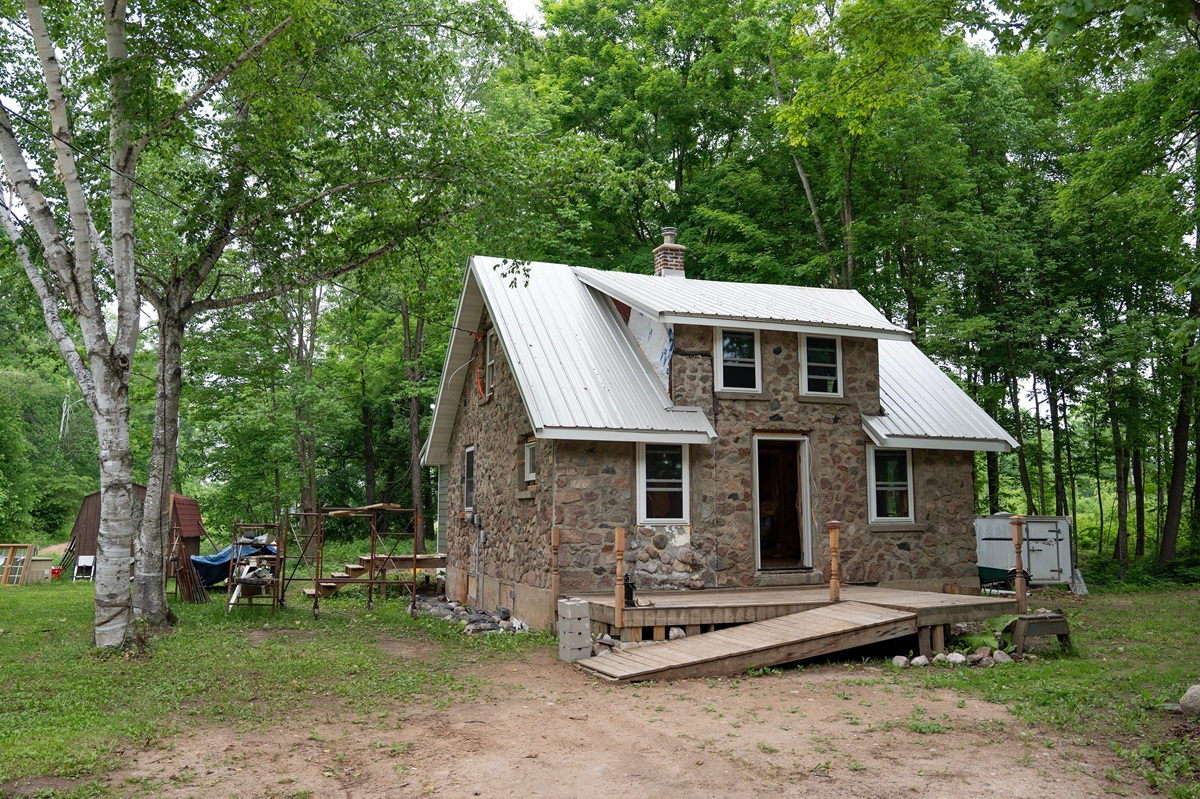
The stone house being renovated is one of 16 built on the reservation in the 1930s as part of President Franklin D. Roosevelt’s New Deal, specifically his Works Progress Administration. Each one is a Craftsman-style house built to harmonize with the immediate surroundings, and although all of them seem similar, they have different details. They were the first permanent homes for the Mohican people after being forced to leave their homelands in New York and Massachusetts shortly after the Revolutionary War.
Fourteen stone houses are left from that period, many in need of repair.
“I just always loved the history of them,” Allen said. “When I see them in disarray, I just have to work on them. The craftsmanship in them is just absolutely amazing.”
The home he’s working on in Bowler was lived in by the same family, the Churches, for 88 years, beginning in 1936. Clifford Church was the last of the family to move out, in 2024, and the home sat abandoned for a couple of months before Wedde purchased it with the purpose of restoring it with her brother. Clifford died of cancer in January 2026 at 76.
Karrie Nieto, Clifford Church’s daughter, said the family is grateful the home is being restored. Her father, who died of cancer in January at 76, wasn’t able to keep up the five-acre property in his final years. She said the family also is honored the community recognizes the home’s history and wants to preserve it.
“Chrystal loves her tribe and the land, and does so many things that give back to the community,” Zack said. “She remembers the past and has an eye for the next seven generations.”
Many tribal nations share the “Seven Generations” principle, which dictates that actions, such as preserving history and environmental stewardship, should be done with an effort to sustain the tribe and the world for at least seven generations into the future.
Wedde, 45, an enrolled Mohican tribal member, and Allen, 49, who is not enrolled but who was adopted by Wedde’s mother, have created a Facebook page about the project where community members can offer input on renovations, such as which color a wall should be.
The siblings also often invite members of the Church family to tour the home. The family reminisces and comments on how the home used to be, which Wedde and Allen take into account as their work progresses.
Nieto said she remembers running around the surrounding woods when she was young, and other details like using the outhouse and not having running water until 1974.
“I remember going to the river, picking berries, cutting wood, apples in the fall, sugaring in the spring, wood ticks, the stars, and the laughter and joy of time with relatives,” she said. “I remember Grandma’s cooking, the old wind-up phonograph, the dogs, and tooling around the community with Grandpa Dewey.”
Allen said they plan to make notes of some of the Church family stories and collect some of their old photos and put them in a time capsule buried in the house.
“It’s been a huge rejuvenator for me,” he said. “There’s been many tears shed from the family as they reminisce.”
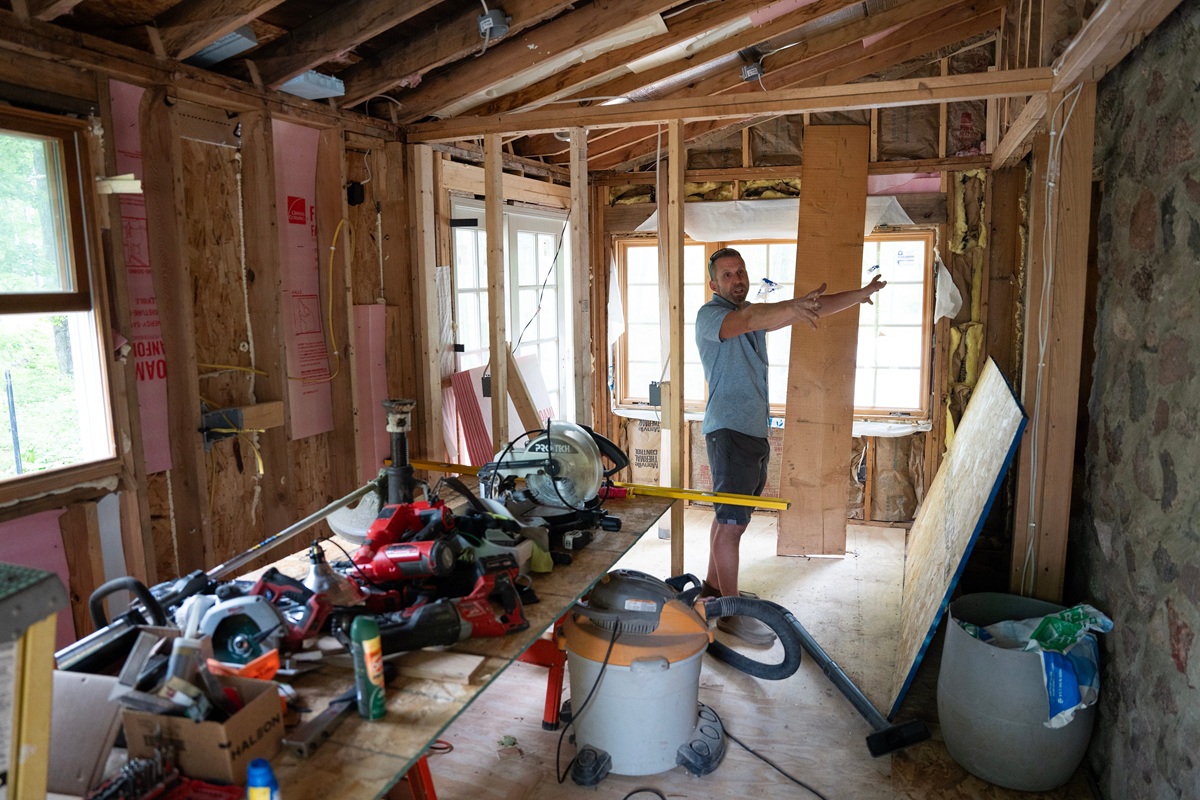
Allen, who works as a heavy engineer mechanic, spends many of his evening and weekend hours on the property.
He said he had to tear off most of the indoor walls and outdoor siding because much of it was rotten and had mold.
The home was built with no insulation, electrical systems or indoor plumbing, and what was added over the years often was poorly done, or is now in disrepair or outdated. Allen said it’s been a challenging experience to restore and update a historic home with modern conveniences, but little by little he’s figuring it out.
Because of those previous poor additions the home was not eligible for the state’s or nation’s historic registry, but Allen and Wedde are hoping that changes with the careful and thoughtful renovations.
While none of the stone homes on the reservation are listed with the National Historic Register, the siblings plan to apply for that prestigious accreditation when renovations are complete.
Either way, it’s been a labor of love for the siblings and community members.
The restoration likely would not have been possible without help from the community, including donations in time, expertise and materials. Some community members who assisted happen to own and operate local construction companies. These include RJC Seamless Gutters out of Bowler, Schultz Concrete, Terry and Elizabeth with Telford Equipment Consulting Corporation, Matt Putnum with Putnum Logging. Other individuals include Karmen Mason, the Church family, their mother Sharon Wedde and the many community members who stopped by offering to help clean and tidy up the property, including the Zacks.
A shameful chapter of American history
The Stockbridge-Munsee Mohican Nation consists of more than 1,500 members and 40,000 acres of land adjacent to the Menominee Reservation. Mohican business operations provide nearly 900 jobs in Wisconsin and more than $25 million in wages.
But there was a time when the tribe’s continued existence in Wisconsin was in question, and the stone homes are a reminder of the tribe’s hard-fought roots in the state.
The story of how they arrived in Wisconsin represents a shameful chapter of American history.
The Mohicans were one of the few tribes to side with the colonists against the British, and they had helped the Americans win the Revolutionary War. They fought in key battles, including the Siege of Boston and Saratoga. General George Washington himself visited tribal members’ homes in Stockbridge, Massachusetts, shortly after the war to personally thank them for their service and celebrated with an ox roast feast, according to tribal historians.
But as massive waves of European immigrants arrived in the U.S. after the war, they coveted Mohican properties in New York and Massachusetts.
Mohicans were forced out of their homes after 1802 in favor of new immigrants. They tried to settle in several areas of the country, such as near Muncie, Indiana, before being forced to move again. The Stockbridge-Munsee Mohicans arrived in Wisconsin between 1822 and 1829 and eventually settled a reservation in Shawano County in 1856.
But they lost much of their land to logging companies by the 1870s and even more of their land because of the Dawes Allotment Act. Many tribal members could not pay their property taxes and lost their allotments within 20 years.
Under FDR’s New Deal and the Indian Reorganization Act of 1934, the federal government returned more than 1,000 acres to the Stockbridge-Munsee Mohicans. The government also provided low-interest loans to construct houses, and that’s when the WPA built the 16 houses. The stone was locally quarried and the rubble walls laid in irregular courses about 14 inches thick.
Wedde and Allen said they are planning for renovations to be finished this summer with an open house planned for the fall.
They plan to sell the renovated home to a tribal member. They said there are other of the 14 remaining original WPA stone homes in need of renovation and have their eye on a few for their next projects. Allen hopes the process will be easier next time around now that’s he’s learned so much about restoring these historic homes.
Frank Vaisvilas is a former Report for America corps member who covers Native American issues in Wisconsin based at the Milwaukee Journal Sentinel. Contact him at fvaisvilas@usatodayco.com or 815-260-2262. Follow him on X at @vaisvilas_frank.
This article originally appeared on Milwaukee Journal Sentinel.