At the end of August, Meta agreed to improve safety for its young users and pay a staggering $17.1 billion settlement following a landmark federal trial over children’s online safety, the largest since Big Tobacco paid $200 billion in the ‘90s. Four states, representing 47 states across the country, alleged that the social media giant collected data on kids under 13 and intentionally designed its platform to be addictive for young users.
RELATED: Wisconsin set to receive $313M from Meta in landmark child safety reform settlement
It’s a major development in the battle for kids’ online safety against Big Tech, but surely far from the last.
“We’re at a point where companies like Meta have had 20 years to make their platforms safe,” said Katie Paul, director of the Tech Transparency Project. “They have proven time and again that regardless of what they state in their policies, that is not playing out in reality.”
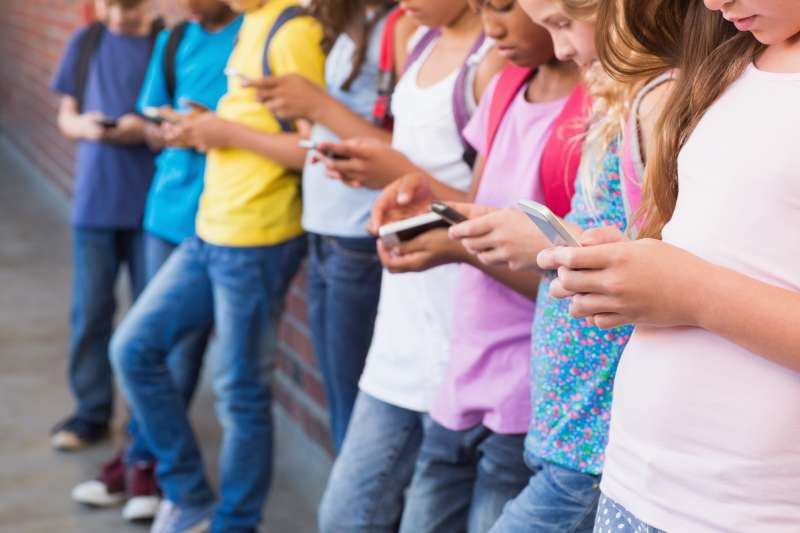
As kids head back to school in Wisconsin, parents, teachers, and state legislators are keenly aware of the risks associated with these platforms. Lawmakers, for their part, are trying to curb screen time in classrooms by implementing phone bans in schools and warning about the risks.
“These extreme measures are only being taken by policymakers because the companies have not taken the measures themselves and done anything meaningful in terms of actually protecting children,” Paul said.
How screen time affects kids
Screen time is a hot-button issue these days. A 2026 McGraw Hill Global Education Insights Report showed excessive screen time was the biggest obstacle to student success, according to 1,300 educators surveyed. Of those, 86 percent of K-12 teachers said they’re concerned about students’ mental health, their ability to focus, and their ability to regulate their emotions.
And while many educators report being cautiously optimistic about some tech tools, such as artificial intelligence (AI), 42 percent view social media as a net negative, underscoring growing concerns about the impact of platforms like Meta, TikTok, and YouTube on students’ concentration and learning.
As part of the Meta settlement, the tech giant promised to restrict users under the age of 18 to two hours of app time each day, implement age verification measures, alert users to their time spent on the app, remove ‘like’ counts, prevent the use of filters, and allow users to shut off the video autoplay feature. How and whether they follow through with those promises—and others included in the settlement—remain to be seen.
Dr. Roxy Etta is a state specialist in child development and parenting at the University of Wisconsin-Madison Division of Extension. She said that while the metric for healthy internet use in children has been screen time for several years, the American Academy of Pediatrics recently updated its recommendations to ensure that “screens don’t replace the daily activities that support healthy development.”
“Not all screen time is equal, and the research really tells us that what matters is what children are doing, what they’re getting from media, and what screen use might be crowding out or replacing,” Etta said.
While the AAP still recommends no screen time for kids under 18 months and a maximum of 1 hour per day for kids ages 2-5, there are fewer hard-and-fast rules for school-age kids and teens.
Instead, Etta says parents should be asking: “Are they getting enough sleep, getting enough face-to-face time, play and outdoor time, and free play and, like, just offline activities? And when those things are getting crowded out, that’s when we really start to see the effects.”
Negative side effects of too much screen time often mimic those of addiction or depression in teens, including secrecy, mood changes, and sleep deprivation. Kids’ grades might slip, or they could lose interest in other hobbies, Etta said.
But kids can’t always be trusted to put the phone down when these signs crop up, which is why parents, teachers, and lawmakers have to step in.
“Their prefrontal cortex isn’t fully developed, and it doesn’t finish developing until your, like, 20s. That’s the area of the brain that is responsible for your executive functioning, decision-making, and knowing what’s good for you and trying to choose that,” Etta said.
That’s especially true with social media platforms such as Meta, designed to reel users of all ages in and keep them scrolling, using what Etta described as “that unpredictability of not knowing when you’re going to get that next video that you really like.”
Meta fights back
Just because Meta has agreed to a settlement doesn’t mean the company is admitting guilt.
“The company has been insisting for years now that they’re doing so much to protect kids, and yet these court cases show that there certainly was a lot more that they could do, and it took taking them to court to the tune of billions of dollars for them to actually commit to that,” Paul said.
Young users make up a large portion of Meta’s base. Unlike tech giants like Google and TikTok, which have multiple revenue streams, Meta has just one.
“Meta only has its social media advertising revenue. That’s it. So if you cut off kids or any portion of teens—who are the biggest money drivers for the company and the lifelong users they’re trying to hook—you’re cutting off a big chunk of potential revenue that could meaningfully hurt their business,” Paul said.
That’s why Meta has fought tooth and nail against major bans in countries such as New Zealand and Australia, where users under 16 are prohibited from using social media of all kinds. In the European Union, lawmakers are moving toward a ban for users under 13 across 27 countries.
“Even when states have tried to step up, we see aggressive lobbying by tech companies, Meta in particular, and one of its trade association groups, Net Choice, to push back against any meaningful legislation,” Paul said, adding that Meta’s lobbying efforts have been even more aggressive than those of Big Tobacco and Big Oil.
The company has even employed its own users to challenge potential bans.
The Tech Transparency Project reported on Meta’s efforts to use social media influencers to fight the ban this year, hosting ‘momfluencers’ at high-end events where they were given talking points for sponsored posts. The influencers were told to say the bans were ineffective and that Meta actually offers safer guardrails for young users.
The Tech Transparency Project’s May 2026 investigation found that the company built a network of hundreds of creators. That includes paid doctors and psychologists, not just “momfluencers.” Meta recruited them through “Screen Smart” events, run with help from influencer marketing agencies.
And it’s not just a US strategy. A follow-up investigation from Rest of World found the same tactics playing out in India, Canada, and Indonesia. Meta is pitching parental-control tools abroad as a softer alternative to the under-16 social media bans that Australia, Brazil and Indonesia have already passed. Roughly 22 more countries are reportedly weighing similar laws.
Wisconsin lawmakers consider further action
Meta isn’t the only platform distracting students or risking their online safety, which is why lawmakers in Wisconsin are pursuing a more holistic approach by banning phones in schools during instructional time.
Last year, Wisconsin Gov. Tony Evers signed a law that required all schools to implement cell phone use policies by July 1 of this year.
A 2025 Policy Forum report found that most schools in the state already had policies in place, but these policies varied widely across districts. The report also showed that a growing number of states across the country had adopted policies.
In some schools, the ban means that students can carry a phone, but it can’t be visible during instruction; it can be stored in backpacks or lockers.
Etta said bans like this one help preserve the relationship between teachers and students by regulating phone use at a higher level, outside of classroom control.
“The draw is just really real and very hard for students to break, and very hard for teachers to individually have to manage,” Etta said. “That’s really where the law is coming into place by taking the responsibility and onus off of individual teachers and things on the school level.”
Americans increasingly support similar bans for middle school and high school kids, according to a 2025 Pew Research Study.
“School is not just a place for learning,” Etta said. “It’s one of the most important places where kids practice being human.”