While tech leaders warn that continued use of artificial intelligence (AI) could have long-lasting consequences, Wisconsinites and local lawmakers have been sounding the alarm about how the technology is making online scams faster, more convincing, and harder to detect. Reports show the combination is impacting everyday Americans’ ability to save for the future.
Wisconsinites are losing over $1.2 billion, roughly $240 per resident, to online scams, and they’re not alone. Nationwide, Americans lost over $148 billion to online scams and crimes in 2025, a 25.8% jump from 2024, with most scam reports coming from social media platforms with direct messaging features.
These scams have hit older Americans particularly hard. More than three-quarters of older adults reported at least one scam attempt in the past year, averaging $38,500 per complaint, according to the FBI’s Internet Crime Center. Meanwhile, as stories reveal that tech companies like Meta are profiting from ads that promote scams—and President Trump agrees to allow top tech firms to “self police” their AI development—some elected leaders are pushing for legislation to hold those tech companies accountable.
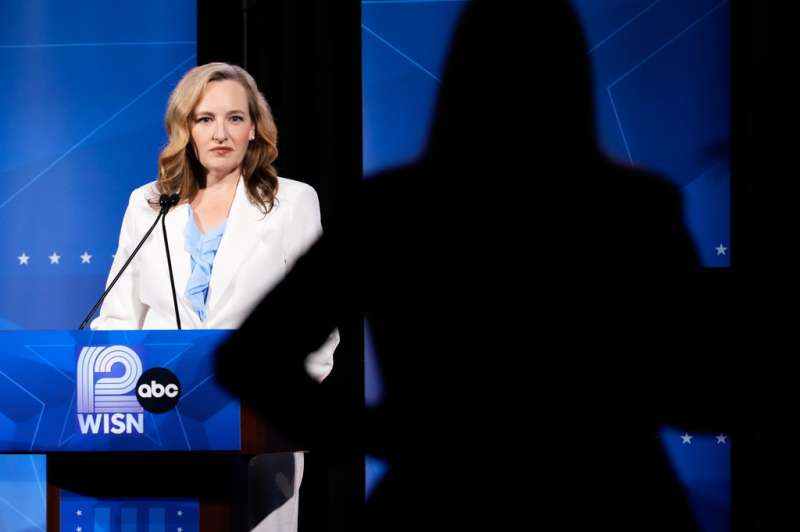
On Sept. 30, Sen. Kelda Roys (D-Dane County) and the Wisconsin Alliance for Retired Americans Executive Director Nancy Stencil will join local seniors and community members at the Goodnam Community Center as part of a nationwide day of action organized by United to Stop Online Scams, a coalition of more than two dozen consumer, older adult, and tech accountability groups from across the country urging Congress to examine how platforms profit from scams and to make fraud prevention a legal obligation rather than a voluntary one.
In a letter sent to several House and Senate committees, the organizations ask that federal law require platforms to take reasonable steps to prevent, detect, and respond to fraud, and to be transparent about how those systems work.
“So many of us scam survivors carry so much shame,” said Kate Kleinert, a Pennsylvania widow who lost $39,000 to a romance scammer who contacted her through a Facebook friend request during the COVID-19 lockdown, and whose story is featured in the United to Stop Online Scams campaign PSA.
In an exclusive interview with reporter Ashley Adams, Kleinert said the money lost does not capture the full cost of the scam for victims or measure the shame someone feels when they have to tell family and friends. It also doesn’t measure the loneliness that can follow, or the people who never report what happened at all because of the embarrassment.
Kleinert added that one of the biggest problems is how society talks about scams. She believes too much attention is placed on whether someone was “smart enough” to recognize the deception. She said scammers aren’t looking for stupid people—they’re looking for human beings.
“They’re manipulators,” Kleinert said. “They learn how to manipulate.”
Related: “They get in your head, they get in your heart”: The high cost of online scams in Pennsylvania
The Madison event will kick off at 12 p.m. Central Time with a national livestream featuring lawmakers across the country before the Motion Picture and Television Fund debuts a new public service announcement featuring Kleinert and showing how AI tools like voice cloning and deepfake video make it easier for scammers to deceive Wisconsinites.
The Wisconsin event is one of several happening simultaneously across the US, with similar events in Arizona, Colorado, Michigan, New York, Carolina, and Pennsylvania. For more information about United to Stop Online Scams, including the full list of coalition members, policy priorities, and how to take action, visit UnitedToStopOnlineScams.org.
Related: Wisconsinites are losing a lot more money to online scams than we thought