After an extreme drop in voter turnout in 2016, a new local group went right to work rebuilding energy and communicating urgency.
Both President Donald Trump and former Vice President Joe Biden have clear paths to victory if they win Wisconsin on Election Day—and perhaps no voting bloc in the state could be as important to the outcome as Black voters, particularly in Milwaukee.
Four years ago, Black voter turnout dropped 19% statewide compared to the 2012 election as Trump eked out a victory by fewer than 23,000 votes. Lots of fingers pointed straight to Democratic stronghold Milwaukee County—where about 70% of the state’s Black population lives and turnout saw a sharp decline—as analysts tried to comprehend Hillary Clinton’s shocking loss.
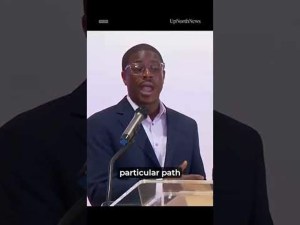
A year after the 2016 election, political activist Angela Lang made headlines when she set out to make sure no one could point their finger at Black voters if Trump wins Wisconsin in 2020.
Lang founded Black Leaders Organizing for Communities, or BLOC, a group focused on voter mobilization and registration on Milwaukee’s predominantly Black North Side that has knocked on about 300,000 doors and sent over 360,000 calls and texts in its quest to register and energize voters. It’s all part of an effort to avoid a repeat of 2016.
“When enough people remove themselves from the political process because they think they’re not adding to it, then it’s really kind of a self-fulfilling prophecy,” Lang told UpNorthNews last month.
Lang helped shift the narrative around Milwaukee’s Black voters. She argues that neither the Clinton nor the Trump campaign did enough to reach people of color. Clinton infamously didn’t campaign a single time in Wisconsin, a premier battleground state; Trump’s racist track record as a celebrity and presidential candidate did little to inspire confidence. Trump and Clinton ended the election as the least-popular major party nominees ever, since at least 1956 when Gallup started tracking candidate popularity.
The 2016 election was also the first presidential election under the state’s strict voter ID law passed under Republican Gov. Scott Walker. The law, which requires voters to present photo IDs to cast a ballot and to upload an image of a photo ID if requesting a ballot or registering online; the requirement disproportionately prevents people of color from voting.
And unbeknownst to the general public at the time was the 2016 Trump campaign’s “deterrence” strategy in which it used a trove of data on 200 million Americans to micro-target ads on social media. Millions of voters—mostly people of color—including 35% of all Black voters in Wisconsin were targeted for deterrence, meaning the Trump campaign actively tried to get them to stay home rather than attempt to win their vote.
Thousands of Black voters in Milwaukee were targeted in Trump’s deterrence effort, and turnout plummeted in areas targeted.
“If we had turnout in those places alone—forget about the rest of the state, just those wards—it’d be a different story today,” Milwaukee Common Council President Cavalier Johnson told UpNorthNews earlier this month. “And I’m sure that that’s the case in other African American communities across the United States.”