A rule written under the Obama administration would have been a boon to small organic farms, but the Trump administration killed it. Now Agriculture Secretary Tom Vilsack might bring the rule back.
Editor’s Note: This article was published in collaboration with The Wisconsin Idea, a project of In These Times magazine.
Under the Trump administration, small organic farms were hurt when the US Department of Agriculture cut off a proposed rule to protect their farming practices. Now, those farmers are getting a new opportunity to guard their niche against large corporate players while ensuring quality living conditions for animals.
As large farmers found ways to infiltrate organic farming in the early 2000s, small and mid-size organic producers worried that cheaper products flooding the market would put them out of business. Then, in the waning days of President Barack Obama’s administration, those smaller organic farmers saw help on the way: the 2017 Organic Livestock and Poultry Practices (OLPP) rule.
In addition to requiring that organic dairy operations only use organic cows, the rule would have added new regulations to ensure improved living conditions for organically raised poultry by stipulating that they must be able to access outdoor areas. It was a response, in part, to some large chicken producers using screened-in locations as a way to meet requirements for providing the animals with outdoor access.
However, the rule wasn’t enacted by the time President Donald Trump took office and his administration withdrew it; the US Department of Agriculture claimed it lacked the authority to enact the rule and that existing regulations were strong enough.
“We were waiting for implementation of this, and then the brakes got put on,” said Mariann Holm, who inspects organic farms to ensure they are operating in conformance with regulations and operates a 100-acre organic farm near Elk Mound with her husband.
The absence of such standards has left open loopholes that allow some large producers to sell their products as organic without meeting all of the same stringent requirements that small organic farmers abide by, such as humanely raising animals and keeping them in good living conditions.
Now the rule—intended to protect the organic label through improved animal conditions and enable smaller-size organic farmers to better stay in business—is up for discussion again. US Agriculture Secretary Tom Vilsack recently announced that the OLPP rule, which pertains mostly to poultry, will be reconsidered and possibly expanded upon. The process of devising new regulations is expected to take six to nine months, he said, and will be made by the USDA’s National Organic Standards Board.
“We intend to reconsider the prior Administration’s interpretation that the Organic Foods Production Act does not authorize USDA to regulate the practices that were the subject of the 2017 Organic Livestock and Poultry Practices (OLPP) final rule,” Vilsack said in a June statement.

Organic farmers and advocates said Vilsack’s announcement marks a major step forward in enacting meaningful organic standards that will help protect smaller producers.
“There is a lot out there that is protecting the standard of organics. But we want to improve it and make it more robust,” Holm said of OLPP regulations.
According to Lori Stern—executive director of the Midwest Organic & Sustainable Education Service (MOSES)—with large farms expanding into the organic market because they see the potential for profit, organic livestock regulations are necessary to protect smaller organic farmers who aren’t willing to compromise organic standards and can’t compete in terms of efficiencies of scale with big producers.
“There is a fear about what will happen to the [organic] market generally if standards are relaxed,” Stern said. “It is a huge concern. [Not enacting the standards] undercuts the actual cost of doing business, and that makes it more difficult for the organic farmers.”
The vast majority of Wisconsin organic farmers are abiding by organic rules, Holm said. But, many are concerned about organic operators in other parts of the country operating large farms that are allowed under the current weaker regulation. Those producers can sell items more cheaply, hurting smaller organic producers who are abiding by the rules.
Approving organic livestock standards would not only help smaller producers compete in the market, but would give consumers more confidence that the products they purchase actually are organic, said Wisconsin Farmers Union President Darin Von Ruden, who operates a 50-cow organic dairy farm between Cashton and Westby.
“Being able to differentiate their products through organic farming has helped many family farms remain viable. In order to maintain the value and integrity of organic agriculture, we support the enforcement of a strong national standard,” Von Ruden said. “The Organic Livestock and Poultry Practices rule strengthens the standard and closes loopholes that weakened public trust in the organic standards.”
RELATED: Farmers Show the Dairy State Has More Than Just Milk and Cheese
The rule also mandates that dairy farmers use organic cows after initially transitioning their herds to that kind of farming. However, some larger farmers transition in new non-organic cows each year, something the OLPP rule would prohibit.
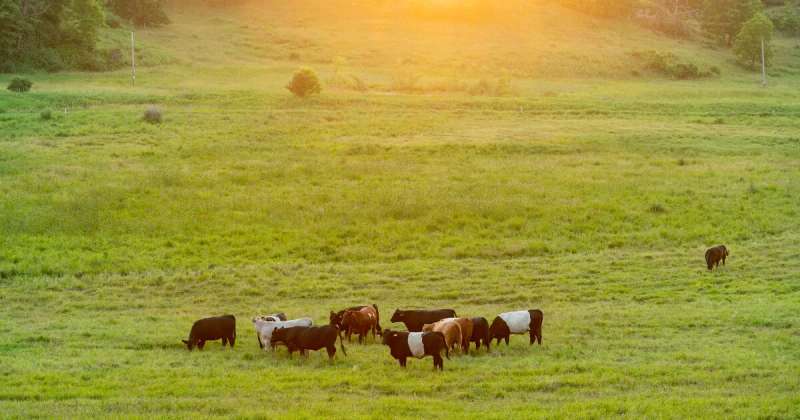
When organic dairies began, there was a lack of organic heifers to add to herds, prompting some farmers to use non-organic cows. However, as organic dairying has become established, these days there is no shortage of organic cows, Holm and others said.
“You do it once,” Holm said of transitioning to an organic dairy herd. “You don’t get to transition more animals every year.”
The OLPP rule wouldn’t be a cure-all for the myriad challenges facing farmers, but it would be an important step in ensuring a more fair system for smaller organic farmers, Holm said, noting both Republicans and Democrats have failed for decades to address the needs of farmers.
“The farmers I talk with all want this to happen,” Holm said. “They want the level playing field. They want organic to mean organic.”
Stern said she believes consumers want that too. They want to trust that when food is labeled as organic, the animals were raised with space to roam and that their living conditions met other organic requirements, she said. Given the previous popularity in much of the agriculture sector for the organic livestock standards, Stern is optimistic they will be adopted this time around.
“People want animals to be raised in a healthy environment,” she said. “You are what you eat.”